Lifestyle/Community
Is religious education enough?

Education is often understood as a pathway to opportunity. But what happens when a child’s education is shaped almost entirely by the religious community into which they are born?
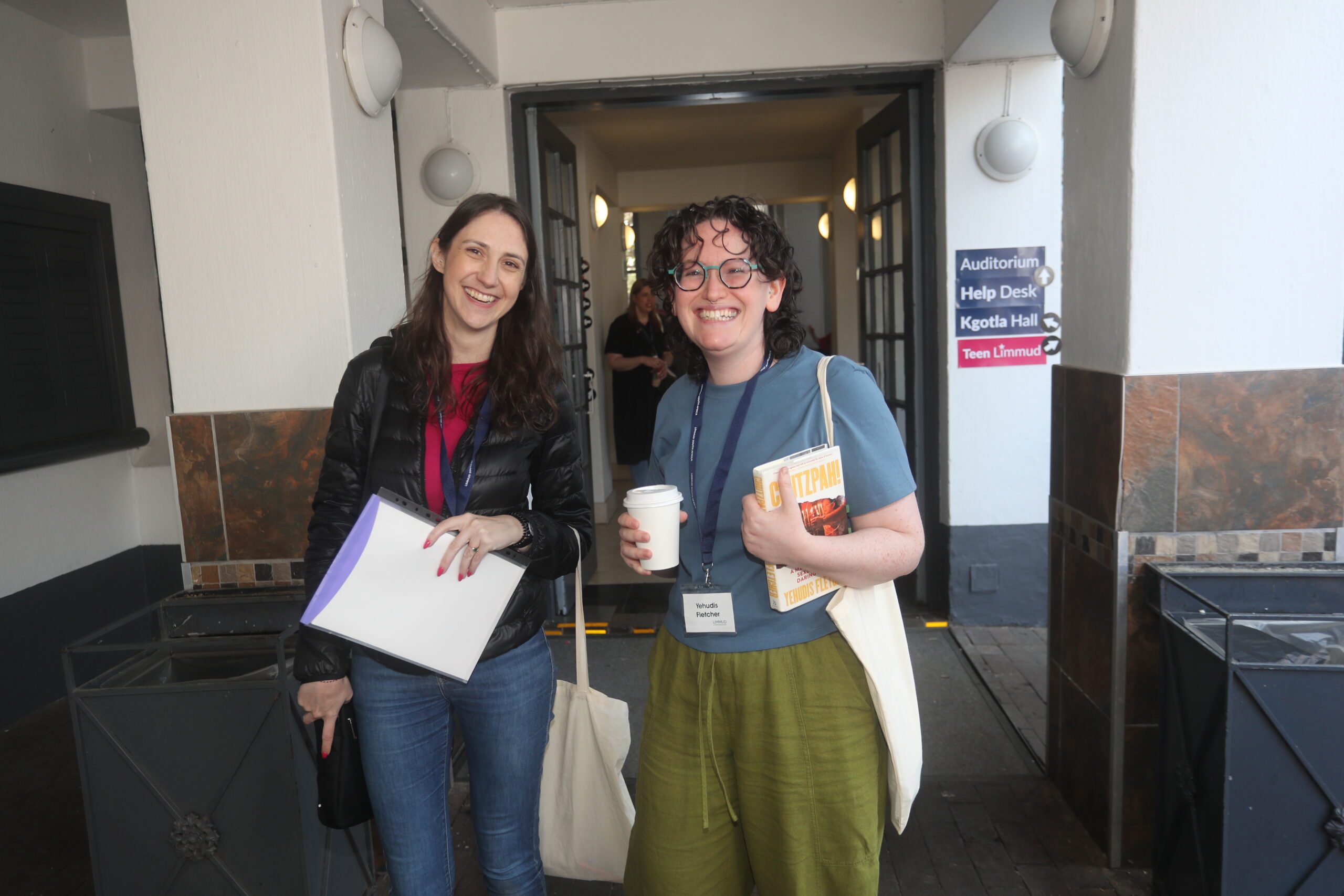
That was one of the central questions author Yehudis Fletcher explored in a Limmud Johannesburg talk on the limits of religious freedom. She examined the tension between parental choice, religious practice, and a child’s right to an education that gives them the freedom to determine their own future.
Raised in a close-knit Litvish Haredi community in the United Kingdom (UK), Fletcher grew up immersed in religious life, with limited access to secular education and the wider culture. She has since become a prominent advocate for education reform and safeguarding within Haredi communities.
Fletcher stressed that her talk was not intended as a criticism or attack on the Haredi community. “I don’t slam the door on my way out; I haven’t left, that’s the point. I’m here because I love this community and I care about it, and we can do better,” she said.
Particularly for boys, education in some Haredi communities begins at around age three and focuses heavily on religious studies. Secular education is introduced only after boys have mastered Hebrew reading, and is often limited to subjects such as English and maths. A small amount of time is devoted to this, only about half an hour to two hours a day. By Barmitzvah age, such education may have largely or entirely ended.
Fletcher emphasised that the value or quality of religious learning itself isn’t in question. Rather, the concern is that the limited secular education can restrict young men’s opportunities.
“That’s not to say there’s anything inherently wrong with learning Gemara to such a level at a young age. The problem is that this education doesn’t necessarily facilitate access to economic opportunities as an adult, and it can significantly restrict people’s options as they get older,” she said. “What can they do? How can they earn a living? When you combine that with early marriage, which is widely accepted as the transition into adulthood, and restrictions and expectations around contraception, you could be 25, have a growing family, and have had little or no access to secular education.
“Haredi children who don’t receive any or very limited secular education will likely never be able to read or understand what has been written or discussed about them, and the liberal right to deny them access to education. Between the question of the state’s right to intervene and the parents’ right to educate their children as they see fit is the child’s own right to education, protected under Article 28 of the 1989 United Nations Convention on the Rights of the Child,” she said.
Fletcher explained that the UK courts had explored the limits to religious freedoms, or what religious schools can reduce their secular curriculum to in the 1980s, when Talmud Torah Machzikei Hadass School went to court after challenging an inspection by Ofsted, the UK’s Office for Standards in Education.
“What was concluded was that a child needs to be educated to the point at which they can operate outside, that they can flourish outside their own community. And the language that was used was a ‘suitable’ education. I have so far not succeeded in getting the department to define a suitable education,” she said.
Fletcher said Haredi parents had also challenged London’s decision to restrict free school meals to state-funded primary schools, arguing that many Haredi families face higher levels of poverty and food insecurity, but have little choice but to use independent schools. The High Court rejected the challenge and a subsequent appeal. In Stamford Hill, 97.2% of Haredi children reportedly attend independent schools.
“The parents want to be a part of the larger institution that will give them free food. But not that same institution that will give them the guidelines for their education curriculum. So, from the side of the parents, they want to choose which parts of this broader institution they will adhere to and which they won’t. But you don’t get to do that,” she said.