Featured Item
SA women blaze trail for other Jewish communities

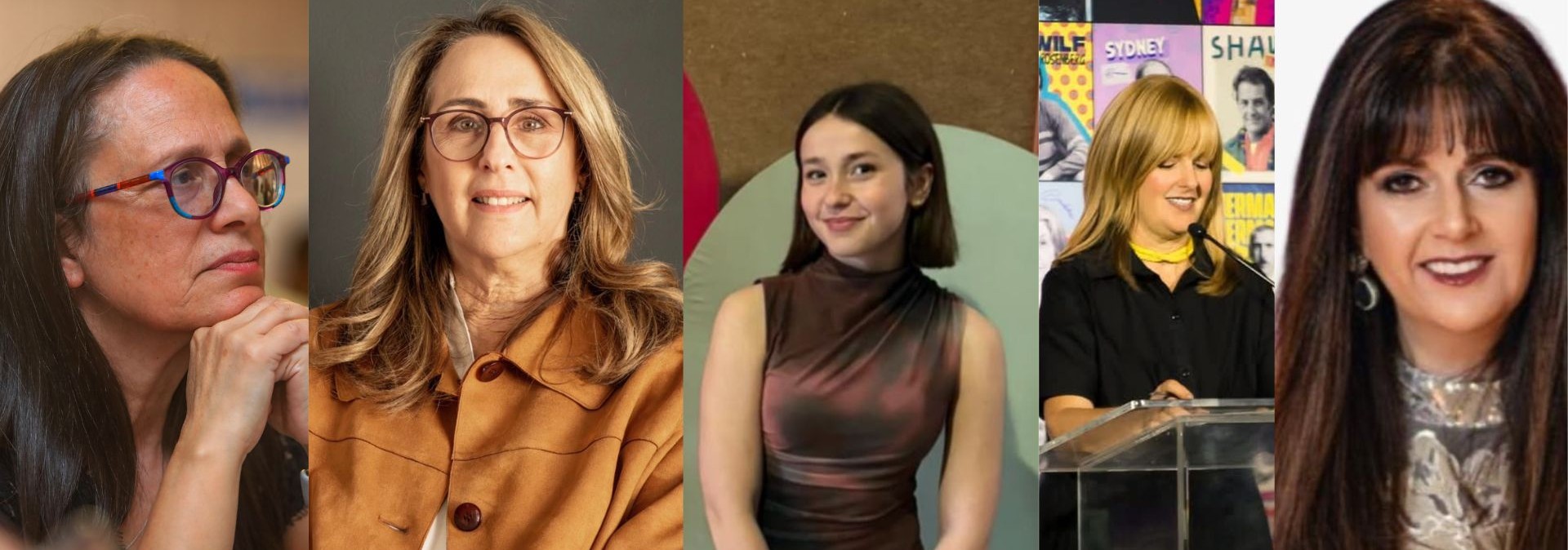
Women are not only central to Jewish communal life, but they run the main communal organisations, too. Wendy Kahn is the national director of the South African Jewish Board of Deputies (SAJBD); Stacey Dembo is executive director of the South African Zionist Federation (SAZF); Ariellah Rosenberg is chief executive of ORT South Africa; Bev Schneider is national director at the Jewish National Fund South Africa; and Sasha Said is national chairperson of the South African Union of Jewish Students (SAUJS).
“Leadership should reflect the community it serves. The example we set today will shape the Jewish community our children will inherit tomorrow,” says Dembo.
Rosenberg agrees, saying however that “women are still sometimes judged through contradictory expectations. A woman must be confident, but not too forceful; empathetic but not perceived as soft; ambitious, but never self-promoting. The same directness that is accepted from a man can be interpreted differently when it comes from a woman.”
Dembo adds, “There is no single way in which women lead, but many women bring a powerful combination of strength, emotional understanding, and practical thinking. They often see both the bigger picture and the people and families behind it.”
“In our office, care is not separated from leadership. We can be focused, firm, and demanding while still noticing when a colleague is struggling or when a family needs support. Women often understand that kindness and strength are not opposites. Some of the strongest women I have met are also the most caring.”
Kahn says the South African Jewish community is somewhat of a trailblazer when it comes to women running communal organisations, with Marlene Bethlehem having been the SAJBD’s first female national chairperson and later national president, starting in 1995.
“In the past few years, we’ve heard major Jewish communal organisations around the world comment on the appointment of their ‘first’ woman president or chair. We had our first in 1995, and others have followed and are following,” she says.
Kahn, who is celebrating 20 years as national director of the SAJBD this August, says that when she started, she’d walked into a cold, dark office with rows and rows of photos of past SAJBD presidents looking down on the new woman director taking office.
“I grinned, thinking what these austere, stern-faced men must be thinking,” she says. “There was one woman, however, who beamed down from my walls, the remarkable Marlene Bethlehem, who led the Board during our country’s transition to democracy, forming close relations with Nelson Mandela, even accompanying him on his official visit to Israel. Marlene heralded an exciting new chapter for the SAJBD and our community as she ushered in a woman-led representative body of the South African Jewish community.”
However, Rosenberg asserts that though there are many more women in leadership roles, there is still no equality between the genders.
“Visibility should not be mistaken for equality. We should ask not only how many women are present, but whether they hold real decision-making power, control meaningful budgets, and are considered for the most influential roles. My observation is that women have moved into professional and executive roles considerably faster than into the lay leadership positions that control budgets and appointments. The chief executive is often a woman. The chair and board members frequently are not,” she says.
Schneider believes communal leadership should reflect the diversity of the communities it serves. “Women bring valuable perspectives, experiences, and approaches to leadership, and organisations are stronger when they benefit from a broad range of voices around the decision-making table,” she says. “Representation also matters because it encourages younger women to believe that leadership opportunities are open to them and that their voices are valued.”
“A room of people with similar backgrounds and similar assumptions reaches consensus quickly and is wrong more often than it realises,” says Rosenberg. “Homogeneous leadership does not produce bad intentions; it produces blind spots, and blind spots become institutional habits. Women bring experiences and insights that may otherwise be absent when priorities are set.”
Currently on the SAJBD executive, the chairs of its three largest regional councils, the national chairperson, three vice-chairs, and the national director are all women. Fifteen years ago, when Kahn joined Twitter, she chose “@broadattheboard” as her handle; today they refer to much of their leadership as the “broads at the Board”.
“When we attend global Jewish conferences, we are struck by the male-dominated committees, something that has not been the case at the SAJBD for many decades,” Kahn says.
Similarly, the office at the SAZF is filled mainly with women, many of whom are mothers.
“We understand that people have lives, families, and responsibilities beyond the office. We take a personal interest in one another’s well-being and notice when someone needs support. That care doesn’t make us less professional; it creates a stronger, more loyal, and more committed team,” says Dembo.
“We are seeing more women leading organisations and making important decisions than ever before. Women are no longer expected only to support communal work from behind the scenes; they are shaping its direction,” she says. “This matters because young girls are observing this. When they see women leading major organisations, speaking from public platforms, and making difficult decisions, they understand that these opportunities are open to them too. Female leadership should not be seen as unusual; it should simply be part of how our community works.”
Said says she was inspired to step up into communal leadership through SAUJS because of the women who’ve come before her.
“I have been incredibly fortunate to grow up in a Jewish community where strong female leadership has always been visible,” she says. “From my own family, with my mom and sister serving as constant role models, to women such as Wendy Kahn, Karen Milner, Stacey Dembo, Gabi Farber-Cohen, and Charisse Zeifert, along with many others, I have been surrounded by women who have led with conviction, compassion, and integrity.”
“Because of these role models, I never felt that leadership was something reserved for someone else. They showed me that women belong at every level of communal leadership and that there is no single way to lead. Their example has given me the confidence to step into leadership myself, and I hope future generations of young Jewish women continue to grow up seeing that same representation.”