Lifestyle/Community
Celebrating doesn’t have to cost the earth

Apples and honey may symbolise a sweet new year, but there’s nothing particularly sweet about the bill at the supermarket checkout. With Rosh Hashanah bringing family, friends, and plenty of food to the table, the cost of celebrating can quickly add up. But a festive yomtov spread doesn’t have to come with an extravagant price tag.
With a little creativity and a few clever substitutions, it’s possible to serve a memorable Rosh Hashanah meal without stretching the budget.
For Adrienne Bogatie, one of the hosts of Kosher Cravings on ChaiFM and a meal planner and budgeter through Kashering Your Life, planning is key. “My best advice is to plan your menu. And everybody who knows me knows meal planning is for me; that is the gold standard,” she says.
The biggest expense in meals is meat or fish, but Bogatie says that nowadays you need only one protein with a few sides.
“People are stuck in the mindset that we need to have yomtov like we had in the 70s, the 80s, the 90s; our parents especially had all the options. You had to have chicken and meat as options. Now, just choose one. If you know some people don’t eat red meat or chicken then you know what to make,” she says.
Delores Fouché, director of Food by Flavours, says when it comes to the yomim tovim, she is always mindful of costs, and balances aesthetics with the bigger picture of togetherness.
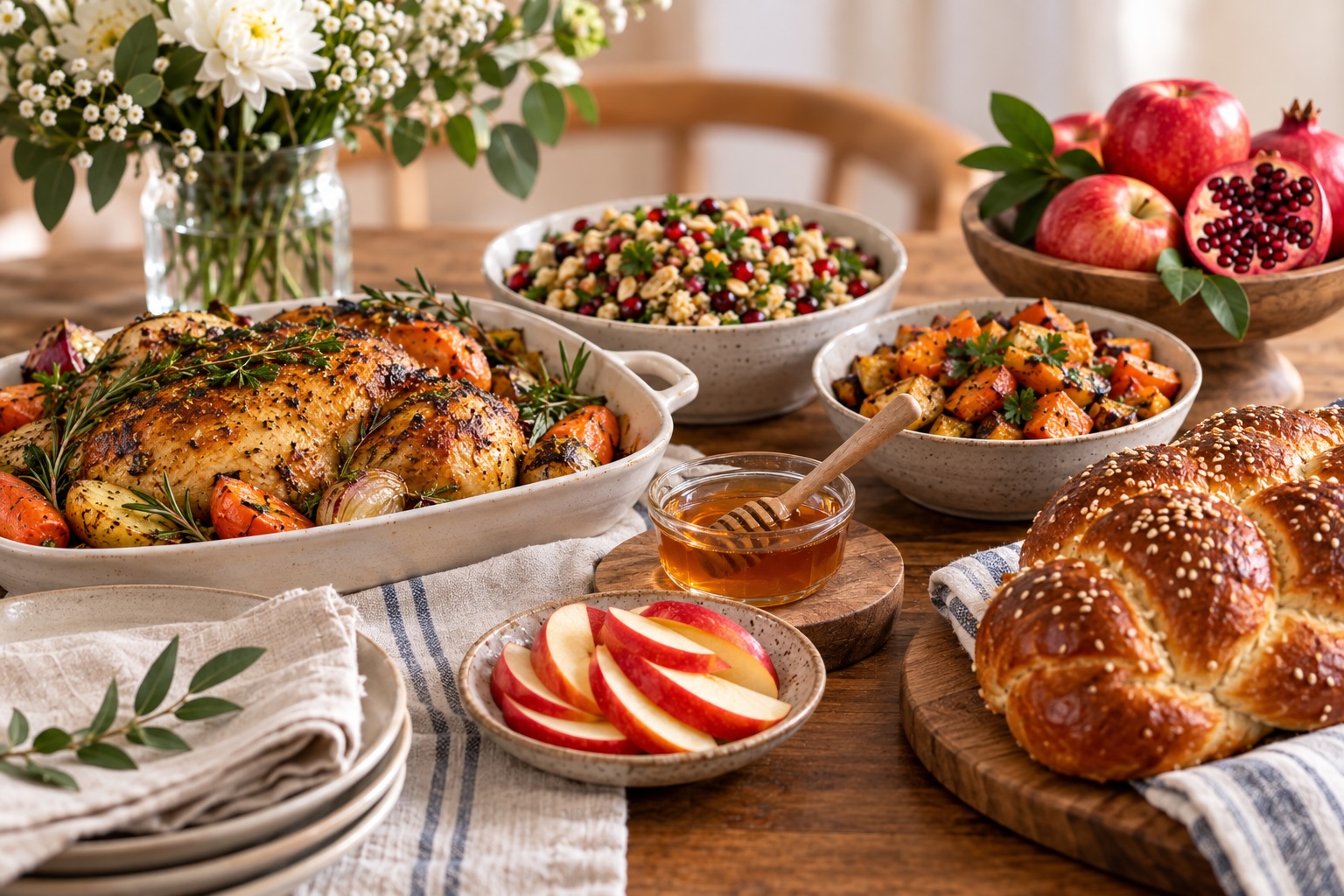
“As my son says, ‘The menu ain’t the meal’. Sure, the table must look inviting and welcoming. To this end, I always use fruit and veg on my table and in my décor – this way nothing goes to waste as I cook it all up afterwards! This year I’m opting for reds and pinks. I’ll use a background of stone with black and build on that, so pomegranates, chillies, tomatoes, apples, and peppers will fill my table,” she says.
Similarly, Lenny Meyerowitz, owner of The PieWorks, says the Rosh Hashanah meal can feel special even on a budget. Of course the cheapest way to celebrate is “to be invited out, it’ll cost you a box of chocolates”, he jokes.
“Kosher meat is expensive [but] it literally depends on which cut of meat you want. You can choose a side fillet instead of a flap. You can substitute an expensive cut for a more affordable one.” Rather than a more expensive roast or brisket, you can use minced meat and make a lasagne, meatballs, or spaghetti bolognaise.
Bogatie says while there are expensive items on the Rosh Hashanah table that are unavoidable, like honey, there are ways to make other things more affordable.
For example, some Pick n Pay stores sell challah dough or you can make it yourself. You also don’t have to buy a fortune of apples.
She recommends keeping a budget-friendly Rosh Hashanah menu simple, symbolic, and based on inexpensive ingredients. Honey-glazed carrots are an affordable way to represent hopes for prosperity, while butternut or gem squash can fulfil the tradition of eating gourds. Gem squash can be filled with savoury rice, dried fruit, raisins, or nuts, making an attractive dish while naturally controlling portion sizes.
For starches, rice is one of the cheapest options, while couscous and baby potatoes can be used if the budget allows. For the main course, Bogatie suggests honey-glazed or honey-and-soy chicken, which ties into the wish for a sweet new year, or a roast served with a simple homemade gravy.
She also suggests asking guests to contribute items such as cold drinks, grape juice, or wine, rather than taking on the entire cost yourself.
Desserts don’t need to be elaborate either. Jelly and ice cream or a simple dessert made with jelly, fruit juice, and a whipped non-dairy topping can keep costs down while still making the meal feel festive.
“You don’t need to have a million options,” says Bogatie.
Fouché recommends building the meal around one substantial “anchor” dish, such as a large fish or meat dish, and complementing it with salads and smaller, more affordable dishes.
“How about a huge dish of slow-cooked pulled beef on a bed of hummus, top with toasted chickpeas, a drizzle of olive oil and za’atar, a pile of pita, and there is your anchor,” she says.
“I love doing grilled hake portions with fresh herbs, and combining on one big board with baby potatoes, braised leeks, griddled zucchini, and fresh herbs. It looks impressive, is an easy way to present, and gives a feeling of largesse and generosity. Most importantly, be welcoming to your guests, as there is nothing more miserable than a host who complains about how hard he or she has worked for the meal.”