



Lifestyle/Community
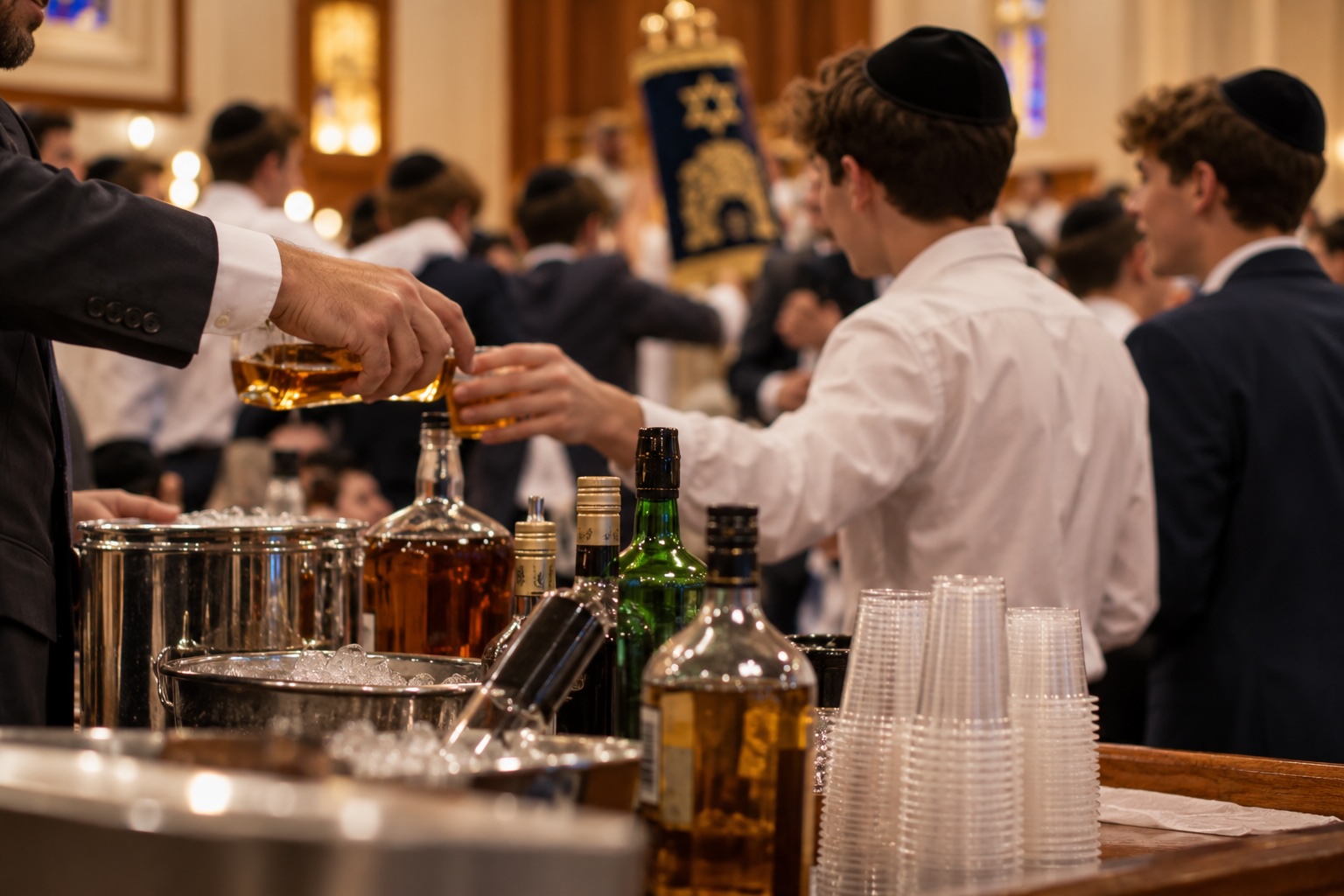
Dilemma of drunken teens at shuls

It’s a familiar sight at shul events: groups of teenagers chatting outside, catching up with friends and enjoying a degree of independence in a space their parents trust. Less visible is the alcohol that can change hands among them, and the teenagers who end the night far drunker than their parents realise.
Teen drinking came into particularly sharp focus on Simchat Torah, one of the most joyous and social celebrations on the Jewish calendar, when shuls are packed, festivities run late, and alcohol often flows freely.
Amid the dancing and celebration, however, teenagers can gain easy access to alcohol, sometimes drinking far beyond the point of experimentation and into dangerous levels of intoxication.
“It’s almost free rein when it comes to getting alcohol. They can go from shul to shul if they want to, and there’s just very little control. Even at the shuls that think they have controls in place, what Jewish kid can’t find a way around them?” said Wendy Hendler, co-founder of Koleinu SA, which deals with abuse in the community.
“My husband and I were at a wedding once when a boy of about 15 or 16 came up to us at the bar and asked if we could get him a whisky. We said, ‘No, you’re underage.’ He then told us he had a letter on his phone from his parents saying he was allowed to have one tot.”
Hendler described how, over Simchat Torah, there were teenagers who came to their shul, drank three-quarters of a bottle of whisky and then went to another shul nearby. Hendler knows of two incidents where this led to two young adults being hospitalised, but believes there might have been others.
Another community member witnessed a teenage boy so drunk that evening that he lost consciousness and had to be taken to hospital.
Ricky Sandler, a member of Dan’s Tribe, a Johannesburg-based recovery programme for people dealing with addiction, particularly within the Jewish community, explained that while he doesn’t go to shul, he can understand why drinking to excess at synagogue events is easier to do than in other spaces.
“It might start with a l’chaim among a group of adults, but nobody is necessarily watching the alcohol,” he said. “There isn’t someone whose job it is to make sure that teenagers don’t get hold of it. So, more than anything else, I think we have an accessibility problem.”
He said when he was getting married, he’d been drawn to a certain shul because of its young demographic. But after his struggles with addiction, he realised that shul had a problem with alcohol and taking it too far.
Teenagers may drink because they want to fit in.
“I discovered later in life that I had stopped drinking to have fun a long time before. I was drinking to fit in and to avoid feeling anxious in social situations,” Sandler said. “People naturally want to feel like they belong, particularly in environments where they may feel judged. Alcohol can become a way of easing that anxiety, fitting in, and connecting with other people.”
A few years ago, Rabbi Mordechai Rodal from Chabad of Norwood saw that some congregants were struggling with substance abuse and thus would avoid coming to shul because they didn’t want to be in an environment where people were drinking. So he sought to make a space where no one feels they have to drink.
“I have a rule that nobody is allowed to pressure anyone to drink. If somebody says no, that’s the end of it. And it’s worked really well. We haven’t had anybody drunk here for years,” Rodal said.
“I do want people to loosen up and get into the spirit of things. I actually walk around with a bottle of whisky, a bottle of tequila, and shot glasses, but otherwise everything is kept behind the bar. We have bartenders as well as two people from the shul who know everyone and their ages, and they have strict instructions not to serve anybody underage. Sometimes a father may get a drink and slip it to his son, and there’s nothing I can do about that.”
Rodal also explained that bottles will rarely be out on display. The shul will sometimes do Dom Pérignon in a slush machine, jelly shots, or even have a gin and tonic bar.
“It’s a way of enjoying a drink without drinking straight alcohol. We have a gin and tonic bar every year, so people tend to drink less. They can enjoy one or two drinks rather than drinking excessively, and it has worked well for us,” he said.
Hendler said, “We know that teenagers are going to drink and experiment, and we don’t believe there is any way to stop that entirely. For most teenagers, that experimentation won’t lead to a lifelong problem. The concern is that you never know which child may be vulnerable to addiction. What begins as teenage experimentation could, for some, spark a lifetime of alcoholism.
“You don’t know who may be vulnerable to addiction, which is why there needs to be controls,” she said. “My feeling is that we need a community-wide campaign, bringing together leading experts and backed by rabbis and shuls. And it’s not only about shuls. It’s simchas, Barmitzvahs, and other communal events. There are so many spaces in the Jewish community where teenagers have easy access to alcohol.”
For Rodal, the only way that alcohol abuse can change is when people acknowledge that, while it may be fun for some, drinking is a real problem for others.
“You may not be able to relate to someone who struggles to say no, but some people have that difficulty for various reasons,” he said. “Pressuring someone who may be struggling with addiction to drink is unconscionable. You have no idea what the consequences could be of pushing somebody to have just one more drink.”