OpEds

Crazy tango of talking peace with sworn enemies

Every time you think the hostage and ceasefire talks between Israel and Hamas are edging towards a breakthrough, the rug gets pulled out. The rhythm is cruel and familiar: two steps forward, three steps back. For Israeli families with loved ones in captivity, every delay is torture. For civilians in Gaza, every collapse means more bombs, more hunger, more death.
Just last week, Hamas accepted a 60-day ceasefire proposal brokered by Egypt and Qatar with American support. The deal included releasing about half the remaining hostages in exchange for Palestinian prisoners. On paper, it looked like progress. But Israel has yet to respond, and Prime Minister Benjamin Netanyahu has ordered his negotiators back to the table even while preparing for a major operation in Gaza. This unfortunately is the pattern: a deal dangled, hope rising, then a pause, hesitation, or reversal.
At the centre is the cruellest bargaining chip – human lives. Israel insists on bringing its hostages home. Hamas knows they’re its last leverage. So the cycle repeats, and just when an outline for a deal is nearly agreed, Hamas shifts the goalposts, demanding longer ceasefires, more prisoners, broader concessions. Israel pushes back. After 7 October 2023, Jerusalem cannot risk looking weak, not when Israelis are still being held captive and the country is still coming under rocket fire from Gaza. Any concession feels like a betrayal of those who died. The result is paralysis – talks that move, but only in circles.
“Netanyahu is juggling his political survival,” says Israeli political commentator Neil Lazarus. “He has in his coalition two partners who are effectively dictating policy on Gaza – Itamar Ben-Gvir and Bezalel Smotrich. Ben-Gvir comes from the Kahanist far right, and Smotrich is messianic and believes in the repopulation of Gaza by Jews. In order for Netanyahu to keep his coalition, he is balancing policy with these two so they remain in the coalition and guarantee he has a majority.
“He also has a court case that has been conveniently delayed because of security reasons. Then there’s the question of conscription of the ultra-Orthodox. Ironically the longer the war lasts, the bigger the problem of conscripting the haredim becomes. Israel does not have enough soldiers, it is short by about 10 000, and either Netanyahu can extend the reserve duty of those already overstretched, or he can conscript the ultra-Orthodox, which is already creating a major dilemma for potential coalition partners. The religious parties left the coalition over conscription.”
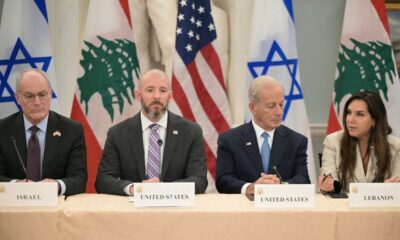
Then there’s the choreography of the mediators. Cairo, Doha, Washington – each with its own script. Egypt worries about its border. Qatar wants to remain indispensable. The Americans are juggling Israel’s demands with pressure from their own public. What this means is that no single channel controls the pace. An agreement struck in one place unravels in another. What’s promised in Doha gets diluted in Cairo, then doubted in Jerusalem. And so, mistrust deepens.
“There has been a contentious Qatari Egyptian competition as to who is the main mediator in the two-year Hamas Israel war,” observes Dr Dan Diker, president of the Jerusalem Centre for Security and Foreign Affairs.
“Despite ideological alignment with Hamas, Qatar appears a more attractive meditator for the United States due to Qatar’s massive financial muscle that reaches deeply into the US economy. Egypt is a poor country and a top beneficiary of US aid reducing its leverage with Hamas and the United States.
“Qatar is Hamas, and so the idea that Qatar would prevail on Hamas has proven to be a pipe dream. The only way that could have happened is if the US had laid down the law in the first weeks of the war and threatened to move its Al Udeid Air Base from Qatar to either Saudi Arabia or the Emirates. Similarly, Egypt could have prevailed on Hamas, but for Cairo, Gaza has become a business in the billions of dollars each year. The only way to defeat Hamas is to defeat Hamas. You can’t negotiate with evil. You can’t negotiate with Al-Qaeda, you can’t negotiate with ISIS [Islamic State] and it’s quite impossible to negotiate with Hamas even though we did get some hostages back in the beginning when Hamas felt it was victorious. Now that it feels it is being wiped out, it is holding onto the hostages as its last bid to stay in power. The West has to learn that when you’re dealing with a radical Islamic death cult, it’s next to impossible, no matter who the mediators are, to get it not only to come to the table, but to return your hostages.”
The families of the hostages are left hanging between despair and hope. Some demand that Israel do “whatever it takes” – swap prisoners, grant pauses, just bring their loved ones home. Others worry that giving in too much will invite future kidnappings. Both are right. Both are desperate.
Lieutenant Colonel (Reserve) Dr Amir Blumenfeld, the co-founder of BO’U (Come Together), an initiative aimed at rescuing the hostages and preserving Israeli society, and the former Israel Defense Forces (IDF) chief of trauma, is adamant that the government isn’t doing everything necessary to bring the hostages home.
“The proof is clear: it has been 692 days since 7 October, and 50 hostages are still languishing in Hamas captivity. During this time, there have been multiple opportunities to secure their release, but none have materialised. The vast majority of the families of hostages support an agreement to bring their loved ones home, and naturally a ceasefire as well. Seventy-five percent of the Israeli public consistently supports ending the war and prioritising the return of the hostages. The government doesn’t command a majority in any poll, and elections will be inevitable once the hostages are returned and the war ends.”
The government’s only path to survival is to prolong the fighting at the cost of the hostages’ lives, the erasure of those who died in captivity, and the continued heavy toll in IDF soldiers killed and wounded.”
This is why progress feels like it’s forever slipping away. Fragile outlines agreed, then unravelled. Families bracing themselves for release, only to be crushed again. Mediators holding up “breakthroughs” that vanish in the next round. Each gain is fragile. Each new demand sets the bar higher.
Still, we can’t dismiss the partial wins. A few hostages returned is everything to those families. A pause in bombing saves lives, even if only for days. These may not change the war, but they matter.
From here in South Africa, and especially in the Jewish community, the frustration feels raw. We want certainty. We want the hostages home. We want the killing to stop. But the truth is, this process was never going to be neat. It’s messy, political, and cruelly slow. So yes, it is two steps forward and three back. But in this brutal dance, even one step forward can mean life instead of death. And that’s why the talks, however maddening, cannot be abandoned.
- Paula Slier is an international journalist, media trainer, and public speaker. She founded Newshound Media International and Newshound Academy, and has reported from conflict zones for more than 30 years.