


Religion

In stillness is our soul

I remember it as though it were yesterday.
It was Monday 10 September 2001. My cousin, visiting from Israel, and I had spent the day doing some pre-Rosh Hashanah shopping in Manhattan. Before heading back to Brooklyn, we decided to enjoy dinner at Le Marais restaurant, which then had a location on Wall Street near the World Trade Center. Our final adventure for the day was a visit to Windows on the World, the famous restaurant on the 106th floor of the North Tower.
It was quite a view to behold. Manhattan glowing beneath us, thousands of lights stretching into the distance. We lingered, taking in the view and the extraordinary energy of a city that never sleeps.
The next morning, while davening in shul, there was a commotion of people discussing the news that a plane had hit the Twin Towers. My reaction was denial, having just been there a few hours earlier.
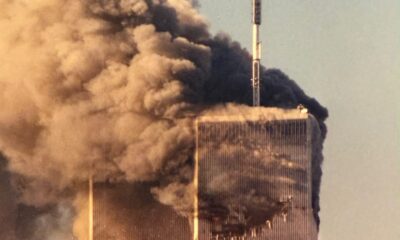
Then came the second plane. My friends and I stood on the shul’s rooftop, watching the smoke rise over Manhattan as the reality sank in. The towers I had spent plenty of times in and stood inside only hours before were now burning. The streets I had walked through the previous day were filled with chaos.
As a born-and-bred New Yorker, 9/11 is a day that will forever be etched in my memory.
And now, 25 years later, September 11 falls on erev Rosh Hashanah. At sunset, we will enter the new year, beginning on Shabbos. Remarkably, next year it will also be on Shabbos. Our year is bookended by Shabbos.
When Rosh Hashanah falls on Shabbos, we don’t blow the shofar on the first day. The sound that normally pierces the air and calls us to wake up, reflect, and return to Hashem and our true selves, is absent.
Unlike the other major festivals, Rosh Hashanah is observed for two days even in Israel. So when the first day falls on Shabbos and the shofar isn’t sounded, there is still a second day on which to hear its call.
But perhaps we shouldn’t be so quick to fill the silence.
Chassidus teaches that when Rosh Hashanah falls on Shabbos, we don’t need the shofar to awaken the connection it normally arouses within us. Shabbos itself gives us access to that connection. We don’t have to create the moment; we simply need to become quiet enough to enter it.
Perhaps that is a message we desperately need.
Our lives are filled with noise: notifications, headlines, demands, opinions, and endless things competing for our attention. Some people are already queueing for the iPhone 18, hoping that the newest technology will keep them more connected, but one wonders if they are truly present.
Beneath all that noise is the deepest part of our identity. Beneath the id is the yid, the neshamah (soul), searching for connection, truth, and purpose; searching for Hashem and for genuine connection with those we love.
When standing near Ground Zero in the days after 9/11, I recall the rescuers searching for survivors would periodically stop the heavy machinery. Everything became completely still. Only when the noise stopped could they listen for the faintest sign of life beneath the rubble.
Our generation’s 9/11 was 7 October. It was a wake-up call that forced us to confront questions we cannot afford to ignore. Who are we? What does being Jewish mean to us? What kind of Jewish life are we creating? What are we passing on to our children? And what kind of relationship do we want with Hashem and with one another?
Perhaps the silent shofar gives us a different way to respond.
We need to disconnect from some of the noise so that we can reconnect with our families, with our souls, with the moment we are actually living, and with the One who has been waiting all week for us to come home.
The shofar may be silent on the outside, but its message is still ringing within us.
Shabbos speaks a language that needs no amplification. It asks us to stop performing and start being present. To discover that Hashem isn’t somewhere far away. He is already here.
May this new year bring us less noise and more listening, less rushing and more seeing, less performing and more connecting.
May we be present with our parents while we still have the privilege of calling them, with our children while they still want to tell us every detail, and with our spouses, friends, community, and neighbours.
And most importantly, may we hear the sound of our own neshamah.
Perhaps that is the sound the shofar has been trying to help us hear all along: the sound of our soul calling us home.
On this holy Shabbos, may Hashem look at His children gathered together and take pleasure in seeing that we have come home.
G-d, look. We are here.
We have come home to You.
Shana tova.
- Rabbi Ari Kievman is the rabbi at Chabad Sandton Central.