OpEds
Not in your service: Haredi draft a divisive issue

No rabbi, nor even the Oxford Union, could have articulated the dissatisfaction regarding the extensive and profound debate over ultra-Orthodox (Haredi) service in the Israel Defense Forces (IDF). The discussions in the Knesset aimed at legislating this service, along with the ensuing arguments in households, Friday morning coffee shops, the media, and across social media platforms, have evolved into one of the most divisive issues in Israel.
Discussions revolve around the need for national security; the principle of equality; freedom of religion; and safeguarding a unique lifestyle. On the one side, Haredi Jews, who make up roughly 15% of the population, typically refrain from serving in the IDF due to their deeply rooted religious, cultural, and ideological convictions that emphasise rigorous Torah study as their foremost obligation and a means of spiritual protection for the nation.
Conversely Leumi, a two-year-long conflict following the 7 October invasion by Hamas has prompted calls for fair distribution of military service responsibilities, particularly in reserve duty. Secular Jews and Dati- (Modern Orthodox) Jews are growing increasingly frustrated by the emotional and physical strain of enduring extended periods on the battlefield and away from their homes.
Arguments for Haredi service
Social cohesion and personal development: mandatory service for the Haredi could strengthen social cohesion by helping to bridge the significant rift between different sectors of Israeli society. Military service could help Haredi men develop a sense of individual and social responsibility, and strengthen their connection to the state of Israel;
Economic benefits: military service can provide Haredi men with vocational training and an “entry ticket” into the broader Israeli job market, improving their employment prospects. This would also boost the national economy by increasing tax revenue and decreasing the need for state subsidies;
Rule of law: the Israeli Supreme Court has repeatedly ruled that the mass exemption of Haredi men is unconstitutional, illegal, and discriminatory, so enforcing conscription is a matter of upholding the rule of law;
Increased manpower for the IDF: the ongoing war and increasing security needs have created significant manpower shortages in the IDF, which could be alleviated by drafting Haredi men, and could reduce the heavy burden on the rest of the standing army and reservists;
Strengthening the “people’s-army” model and ensuring national security: universal service is central to the “people’s-army” ethos in Israel. Including the Haredi helps retain this model, as opposed to a fully professional, volunteer force; and
Equity and civic duty: proponents argue that in a democratic society, all citizens who benefit from the state’s protection should share the burden of defending it, especially during a time of war and heightened security needs.
Arguments against Haredi service
Primacy of Torah study: the Haredi view full-time Torah study – “Torato omanuto” (Torah is his profession) as a life calling for men that would be disrupted by military service;
Divine redemption: some Haredi believe that the state of Israel can be fully established only with the arrival of the Messiah. So, IDF service is inconsistent with religion;
Spiritual versus physical defence: the Haredi believe in a division of labour in which secular Israelis provide physical defence with weapons; while the Haredi provide spiritual protection through prayer and study;
Maintaining modesty and lifestyle: the Haredi lifestyle is strictly conservative, with rules regarding gender interaction and kashrut, Shabbat, and prayer times. Service could negatively impact this lifestyle, and violate religious freedom and commitments;
Secularisation and assimilation: there is fear that integration into the secular environment of the IDF would lead to secularisation or assimilation. Some state that they would rather go to jail than enlist;
How many would serve? Some contend that forcing Haredi men to enlist is numerically irrelevant. Many would receive exemptions for other reasons, or find ways to evade service. For example, married men and those with families, or those unsuited for military roles aren’t required to serve; and
Parental and rabbinic authority: the Haredi community operates under the supreme authority of its rabbis. The community fears a loss of control over its children’s environment and education if they are to enter the military system.
Obstructions to compromise
Historical continuity: since the establishment of the state of Israel in 1948, policy has consistently permitted a specific group of Yeshiva students to postpone their military service. As time has passed, this policy has broadened, leading to significant exemptions that have become a fundamental aspect of the Haredi relationship with the state. Such arrangements cannot be modified quickly to satisfy immediate or even prolonged military requirements;
Financial consequences: Haredi political groups have leveraged their power within coalition governments to uphold these exemptions and secure state funding for the Yeshiva. This has evolved into a vital economic foundation for Orthodox educational establishments;
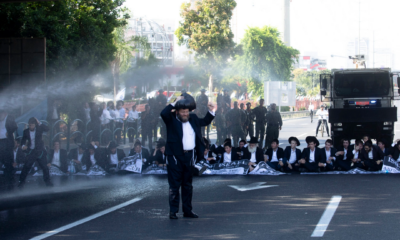
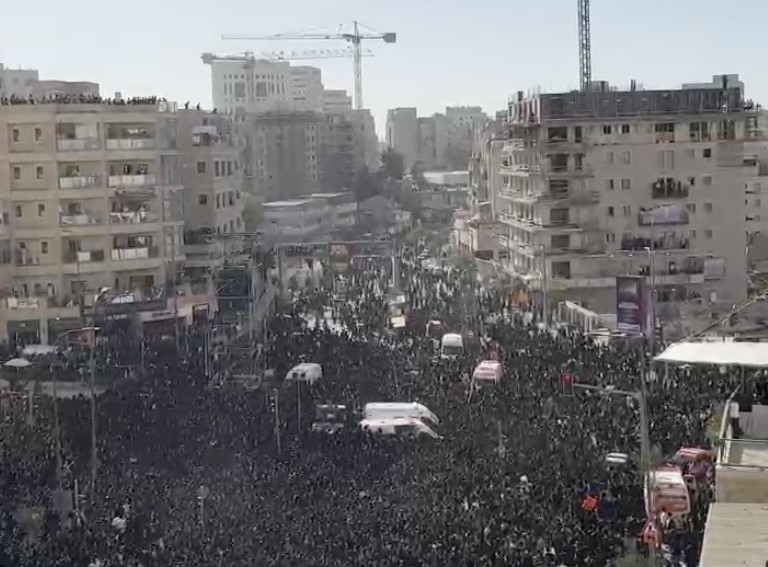
Legal decisions and laws: in June 2024, the Supreme Court issued a ruling that permitted the IDF to enlist Haredi men, yet the execution of this ruling is contentious. This persists as a significant political and social chasm in Israel, accompanied by massive street demonstrations; and
Political instability: Haredi political factions have traditionally wielded their power as “kingmakers” within coalition governments to obstruct conscription legislation. Pressing the matter could lead to the government’s downfall and trigger a possible political crisis.
The future is known: both supporters and opponents of Haredi service acknowledge the deadlock, along with the consequences. The Israeli political system has always demanded a coalition government. The options are clear. The Haredi parties, which possess 17% of Knesset seats, would consent to join a coalition only if the exemption system remained intact. Without their participation, any coalition would need to incorporate the Arab and far-left parties, which together represent about 12% of the total Knesset seats. Therefore, the foreseeable future appears to suggest continued military exemption for the Haredi community.
- Glen Segell is a professor at the University of Cambridge.