OpEds
SA and Israeli students get up close and personal

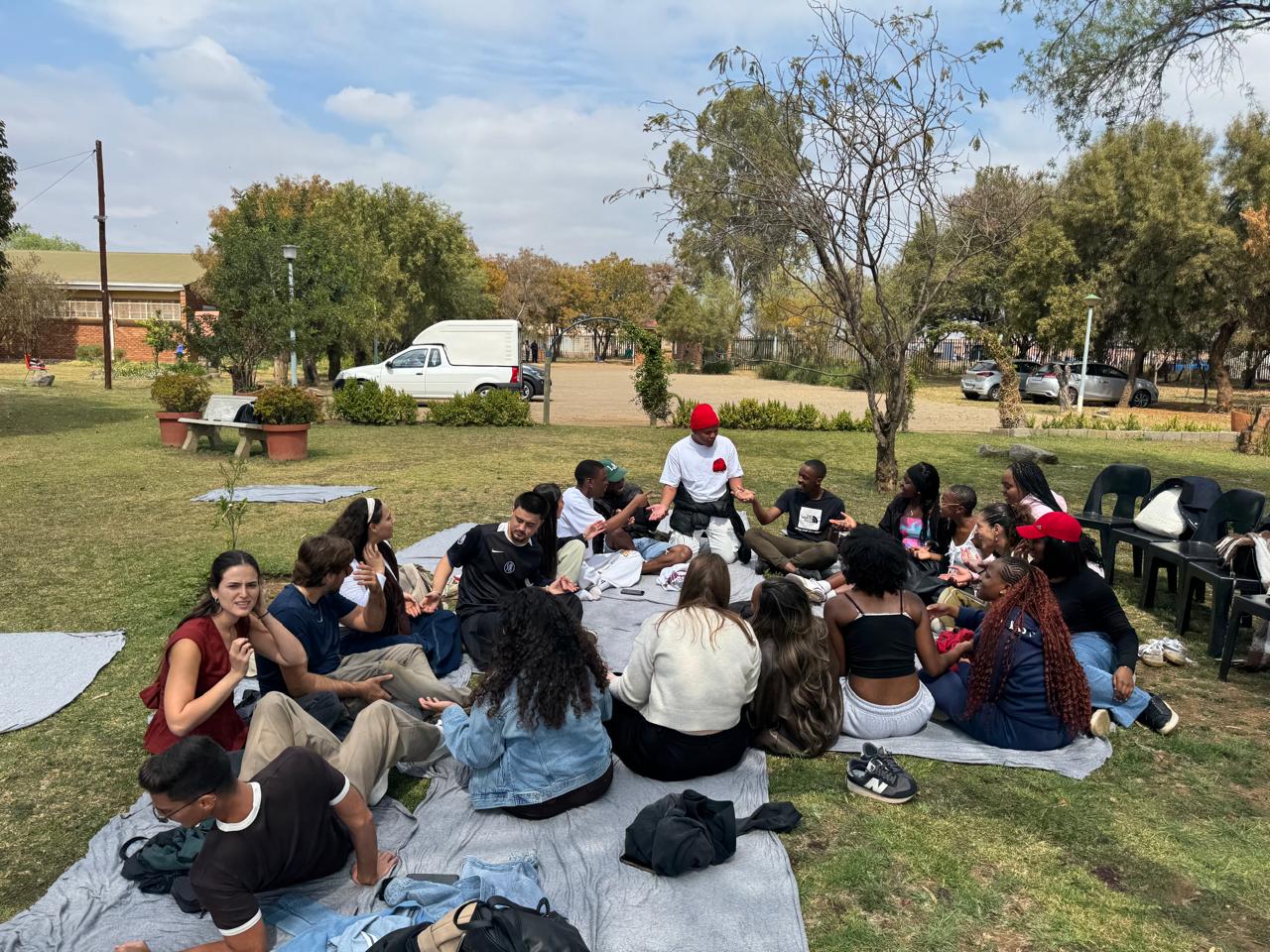
There was never any expectation that a group of 21 Israelis and 30 South Africans would agree with each other. In fact, that would have made for a fairly pointless week. The point was to put them in the same room.
For five days in August we took young people from two countries, whose relationship has become increasingly defined by politics, and gave them the opportunity to do something remarkably simple: meet. Not through governments, headlines, social media, or carefully prepared talking points, but as people.
Together with Klaas Mokgomole, I led the delegation on behalf of the South African Zionist Federation, in partnership with Israeli organisation Nefesh Yehudi, and Israel’s Ministry of Diaspora Affairs. We spent weeks planning the programme. We knew where we wanted to take participants and what conversations we hoped to start. What we couldn’t plan was what would happen once 51 very different young people actually got to know one another.
Israel and Zionism are discussed constantly in South Africa, particularly on university campuses. Too often, Israelis are spoken about as though they are one homogeneous group, with the same politics, experiences, and answers.
The 21 Israelis who came to Johannesburg showed something far more human and far more interesting.
They brought different backgrounds, experiences, and perspectives. They spoke openly about Israel, the war, Palestinians, and the future they want for their country, while engaging honestly with South Africans who brought perspectives of their own.
There was no single “Israeli view” in the room. There were 21 young Israelis, each with their own story to tell.
And the questioning went both ways.
The Israelis arrived with their own perceptions of South Africa and encountered a country far more complicated than any headline could explain.
In Soweto, they confronted the ramifications of apartheid first-hand while also discovering the footprints of Jews who played a role in the anti-apartheid struggle. In Braamfontein, they saw some of Johannesburg’s enormous socio-economic challenges alongside the entrepreneurs and organisations working to find solutions. At the Jewish National Fund gardens in Mamelodi, they saw the impact agriculture can have on a community.
And in Diepsloot, some of the most thought-provoking questions of the entire week came from high school pupils. One 16-year-old asked, “If you take religion out of the Middle East, would there still be war?” It stopped the room.
Here was a teenager cutting straight through decades of politics, history, and conflict with a question nobody could answer neatly. Not every difficult question needs to be met with an immediate, rehearsed response. Sometimes it deserves to sit in the room for a while.
At the University of the Witwatersrand, around 60 additional students joined us for a leadership summit. South African and Israeli politics were put on the table, alongside questions of identity, inequality, history, leadership, and responsibility.
Nobody was given a script. Nobody was asked to defend every decision made by their government. And nobody had to leave having changed their mind. That mattered.
We talk a lot about “dialogue”, but too often what we really mean is persuasion. We listen while waiting for our opportunity to respond. We enter conversations certain of what we think and determined to leave just as certain.
We wanted something different.
Understanding somebody doesn’t require agreeing with them. Sometimes it simply requires enough curiosity to find out who they are and how they came to see the world as they do.
As important as the formal conversations were, some of the most meaningful parts of the week happened in between them: on bus rides and around dinner tables, through music, inside jokes, endless laughter, and an extraordinary amount of dancing.
The shift happened remarkably quickly.
The participants stopped choosing seats according to which delegation they belonged to and started choosing seats next to their friends. Conversations continued long after sessions ended. Music would come on and, inevitably, so would the dancing.
One of my favourite moments was taking the group to Orlando Stadium to watch Orlando Pirates play. There was no discussion topic, no facilitator, and no lesson attached to it. We simply took 21 Israelis to a South African football match and watched them throw themselves into it. They sang, cheered, and embraced the atmosphere, while the South Africans loved sharing something so uniquely ours with them. For those few hours, there was nothing to debate. They were simply a group of friends in a stadium shouting for the same team.
At dinner one evening, I looked around the room and realised just how much had changed. The tables were mixed, the conversations easy, and the laughter constant. “The Israelis” and “the South Africans” no longer seemed particularly useful ways of describing them. They had names now.
For me, that is where the real value of a delegation like this lies. Once somebody has a name, a personality, a sense of humour, and a story, it becomes much harder to reduce them to a label.
Our goal was never to create 30 new spokespeople for Israel. We weren’t there to hand South African students talking points or send them home agreeing with everything they had heard.
We wanted them to know the people behind the story. So when one of those South African students next hears Israel or Israelis reduced to a slogan or stereotype, there is now someone attached to it. A face. A voice. A conversation. An inside joke. A friend.
The same is true in reverse.
South Africa is no longer simply a country the Israelis know through politics and headlines. It is filled with people they know. They have walked through Soweto and Braamfontein, planted alongside people in Mamelodi, been challenged by students in Diepsloot, and stood in Orlando Stadium cheering for the Buccaneers.
Neither group left agreeing on everything. That was never the measure of success.
By the time we said goodbye, there were long hugs, WhatsApp groups buzzing, and, yes, a few tears. More tellingly, there were already conversations about when they would see one another again.
For all the weeks we spent planning this delegation, that was the one thing we could never have put on the itinerary.
And that was the whole point.
- Angie Segal is head of media at the South African Zionist Federation.