Featured Item
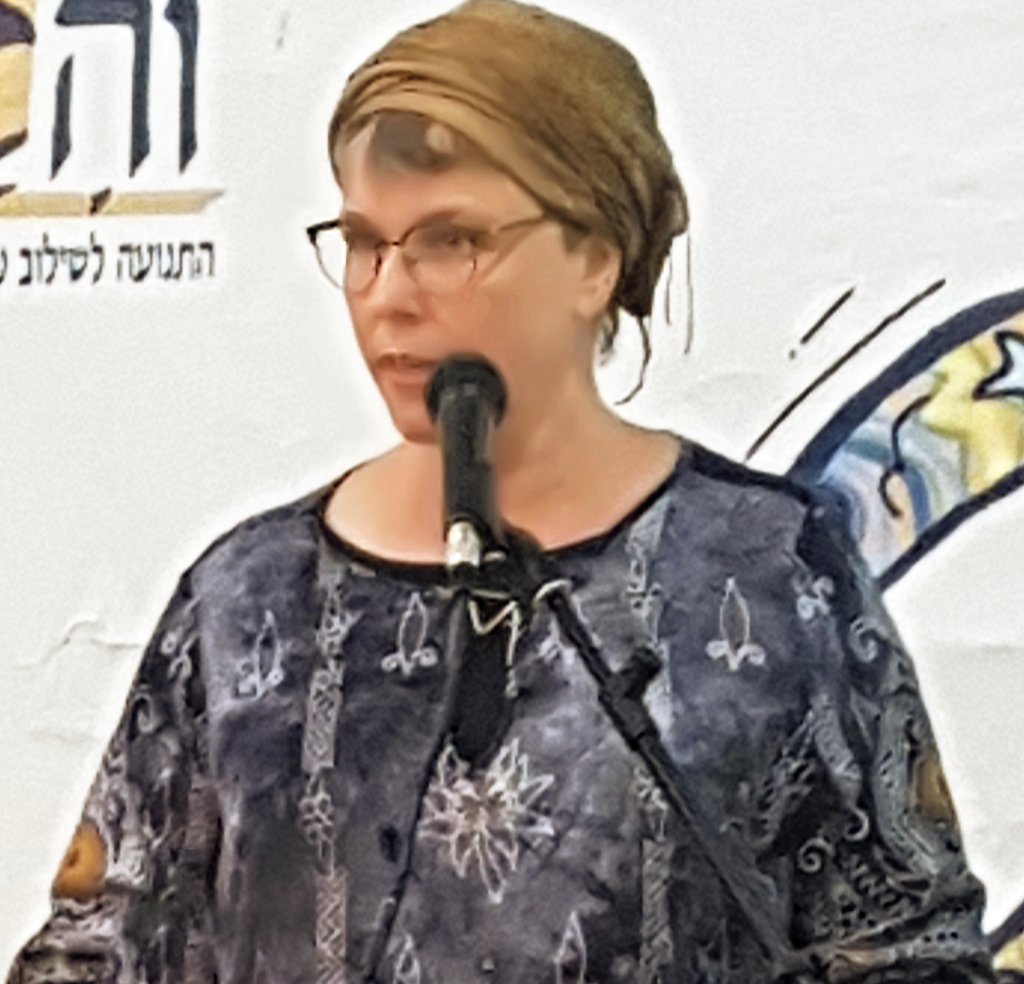
‘Speaking out helped me heal’, says abuse survivor

For years, Michal Nagen carried the weight of trauma alone, yet she made the choice to break that silence. Her guiding principle became clear: “No more lying, no more secrets.” This mantra drove her to speak out, not only publicly but to her family.
Nagen is an educational leader and the founder of HaTarmil, a start-up supporting teenagers as they transition into adult life. Her work weaves together women’s empowerment, innovation education, and a passion for Torah learning.
“Six years ago, the memories resurfaced. For those who don’t understand, when we experience severe trauma, the brain prioritises survival over feeling or understanding. Depending on our age, some memories are buried. They don’t disappear, but they remain unreachable, quietly causing damage. I’m blessed with seven children and a loving husband, and I lead a full, dynamic life as an educator, yet those hidden memories have shaped me in ways I’m still discovering.
“Some memories lingered in the back of my mind. I needed proof that I was normal, that I could do it – raise normal children, have a loving marriage, and be part of a wonderful family. For a while, I never felt relaxed, though I couldn’t fully explain why.
“But then the memories began to surface. Up until that moment, I thought I had a normal life. In many ways, I did. I believed I had a wonderful childhood, but still, I felt different, even to myself. For example, I used to have terrible nightmares. My husband would wake me because I would yell in my sleep. There was no clear reason for these dreams, they didn’t connect to anything I could explain.
“There were deeper things I couldn’t understand. On the surface, I was open to others, but inside, I carried a deep fear of connecting to people, a profound distrust, and intense anger I couldn’t place. These feelings were like a constant question for me, something I couldn’t quite figure out.”
When Nagen was a young girl, she was sexually assaulted by her teacher for more than five years. “I was threatened with my life most of the time. I was sure he was going to kill me. He would say, ‘This time, I saved you, but next time, I will kill you.’ The thing that I have to explain, when I was five years old, it was a foreign concept to me, and those terrible men or terrible people know how to take advantage of a crisis.” Nagen said she didn’t realise this wasn’t normal, as many students in her class had been experiencing the same thing.
As a result, she didn’t understand why she felt so different to the rest of her family and the world. A few years later, when a teacher discussed sexuality, she spoke up instinctively, saying, “Sexuality comes sometimes with violence.”
“Now, this is a red light. This is like saying, ‘I know something.’” Yet the warning went unheeded. “She had an opportunity to save my life, but she completely missed it. On missing it, she condemned me to years of silence.” These early experiences underscored the importance of supportive guidance, something she would later provide to others.
Her turning point came years later, when she witnessed another woman’s bravery. Shira Isakov, a woman brutally attacked by her husband the day she tried to leave him, survived horrific injuries. “She was in a terrible condition. From day one, she allowed the press to take pictures of her, and then she held an interview on the television.”
Watching that interview was a transformative moment. “You see her walking into the room still limping, very badly wounded, and sitting on the chair. The interviewer says, ‘Shira, are you okay?’ She says, ‘Yes.’ He says, ‘Can we start the interview?’ She says, ‘Yes.’ And then the interviewer says, ‘Aren’t you ashamed of how you look?’ The camera goes back to Shira, and she says, ‘Why would I be ashamed, I did nothing wrong?’” Nagen said Shira saved her life. For her, those words carried deep meaning. “Being sexually harassed at any age is an embarrassing situation. You feel humiliated, you feel shame, and you feel responsible. Guilty. Now I understood that it wasn’t my fault and shame to carry”
This is when her motto, “No secrets no lies”, was introduced, as she felt she couldn’t hide this traumatic experience anymore, “I told my husband and three kids over the age of 18 at the time. I didn’t tell the younger ones yet as I felt we needed space to work through this.”
Her eldest son had just got married, and Nagen believed it was important for her new daughter-in-law to know what was happening so she asked her son to tell his newlywed wife. “I would have never been able to work through this on my own. Knowing I had the strength and support of my family, made everything a lot easier.”
Her healing journey was guided by both spiritual and everyday role models. Drawing on Hasidic teachings, she emphasises post-traumatic growth. “This isn’t about the concept of trauma, but about the concept of growth after trauma. Post trauma is when the fear is still with you, although you’re not threatened. This is a post-traumatic world. This is the post-traumatic growth.” She cites the Baal Shem Tov, who rebuilt the Jewish community after pogroms. “He was trying to help people build themselves together. Be the faith, be the strength.”
She has transformed her pain into purpose. “If I kept my public figure and kept hiding secrets behind it, I would keep being torn apart. What I’m trying to do is the mission of my lifetime. Trying to put both of my sides together.” Her courage not only allows her to heal, but empowers others, opening a door for those trapped in silence. In her story, strength emerges not in spite of trauma, but through it, as a testament to resilience, growth, and the power of speaking out.