


Featured Item
Tailored support needed to turn neurodiversity into superpower

“People often say, ‘Everyone’s a little on the spectrum,’ but neurodivergent brains are truly different – not broken, not less – just wired differently. Neurodivergence includes things like autism, Attention Deficit Hyperactivity Disorder [ADHD], and dyslexia, real, diagnosable differences in how the brain processes the world.”
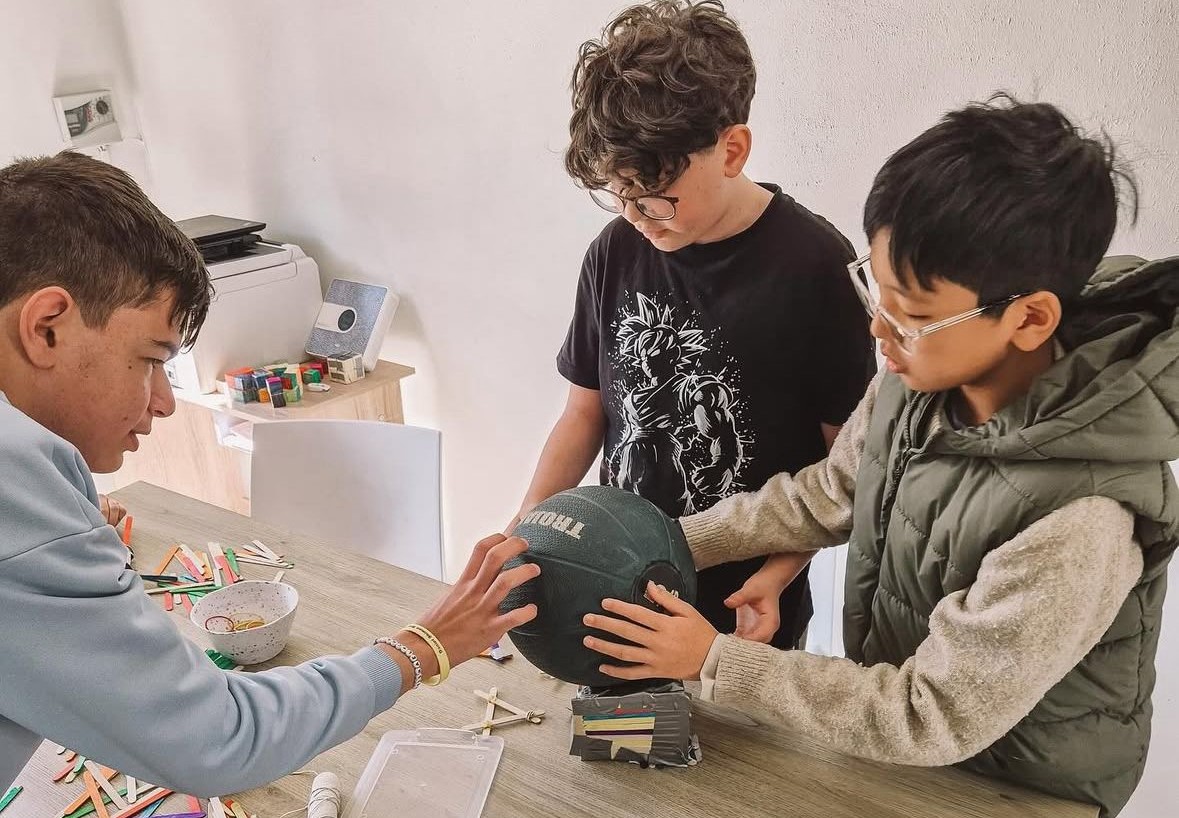
So says Stacey Urdang, the co-owner and lead educator at The Lighthouse Learning Hub in Sandton, a co-working space designed specifically for kids and teens, facilitated by occupational therapists and educators.
With the differences that characterise neurodivergence come incredible strengths, Urdang says, including creativity, out-of-the-box thinking, and intense passion. “When harnessed correctly, they can become a child’s superpower or gift to the world. The real struggle isn’t the child, it’s the rigid systems they’re forced into. Traditional schooling often doesn’t leave space for how neurodivergent kids learn best. At The Hub, we don’t try to ‘fix’ kids. We adapt the environment so they can thrive as they are.” The Hub assists parents in choosing the right online curriculum for their child’s individual needs.
True inclusion begins with understanding, Urdang says. “When we take the time to educate ourselves and others, we start breaking down the stigma and fear that often lead to exclusion. Support and understanding shifts the focus from just tolerating differences to truly embracing them, and that’s where real change begins.”
Simone Herring, a literacy and dyslexia therapist, says her most important role is to be a mom to her wonderful sons who needed non-traditional, divergent learning support. “I realised that there was something different about my son’s way of learning,” she says. “I was trying to teach numbers, for instance, and there was difficulty recalling these.”
After having him assessed when he was in Grade 0, she found that he had dyslexia. “Early intervention is essential,” she says. “If a mom has a feeling that the development isn’t as you would expect it to be, you need to take it further, whether a school tells you to or not. Trust your instincts. A huge red flag for dyslexia is memory – of colours, numbers, changing orders of numbers, rhyming words, and so on.”
She appeals to parents not to worry about any stigma associated with remedial school. “Once these children go into remedial schools, their self-esteem and self-worth soars.”
Joining mainstream high school, however, is often an adjustment. She stresses the importance of constantly advocating for your child no matter which school they attend. Ask what concessions are available, use internal and external experts, and find the way that your child learns best. Herring has also developed a flashcard learning tool that engages high school students, creating independence, higher-order thinking, and active learning. Text-heavy notes are chunked, bulleted, and made more accessible.
“The worst thing people can say to parents who have children with learning difficulties is, ‘Your child is lazy, or has no work ethic’,” she says. It may just appear that way since studying is so overwhelming for some of these children.
“In teaching children with literacy difficulties, you have to create new neural pathways to develop memory, because those existing neural pathways are not as developed as somebody who learns to read easily.”
Parents don’t need to be experts, Herring stresses. “It’s hard, it’s exhausting, it’s frustrating, and the successes take time. Scaffold your children emotionally and academically, and seek advice and support.”
Andrea Ben, the principal of Jewish remedial school King David Ariel, says neurodivergent children often encounter social and emotional challenges such as feelings of isolation and difficulties in forming friendships. “King David Ariel offers specialised programmes to help these children navigate their unique needs,” she says.
These include cognitive enrichment programmes, which enhance critical thinking and problem-solving abilities; as well as instrumental enrichment, which offers structured tasks that teach essential cognitive skills and foster independence. “Then, social-emotional learning groups create a safe environment to practice social interactions, manage emotions, and develop resilience,” Ben says.
The school fosters an inclusive environment, encouraging acceptance and understanding, empowering neurodivergent students and promoting resilience, she says.
“King David Ariel manages the transition for neurodivergent students into mainstream education through structured programmes and peer mentorship,” Ben says. “This gradual approach helps build confidence and social competence. We emphasise the importance of awareness, patience, and respect for diverse communication styles, fostering meaningful interactions among all students.”
Roseen Ress, an occupational therapist and department head of the Yavneh remedial stream at Yeshiva College, which runs from Grade 1 to 6, says Yavneh is part of the mainstream school, so pupils join their peers for many shared activities. Neurodivergent children can, however, sometimes be overwhelmed by a large and sometimes unpredictable mainstream setting. In such cases, the school works with families to determine an appropriate path.
“Children are provided with practical tools for self-regulation; the language to express their needs; and opportunities to practise social interactions, knowing that there is always an adult available for support,” Ress says. “Simultaneously, all pupils across the school benefit from guidance and social-emotional groups, which encourage empathy, inclusion, and respect for difference.
“At Yeshiva College, we believe neurodivergence is about difference, not deficit,” she says. Accommodating each child requires open and sensitive collaboration between teachers, therapists, and parents. From next year, Yeshiva High School will also offer tailored support through the Yeish Centre.
At King David High School Victory Park, neurodivergent pupils are part of mainstream classes, says the educational support team, which includes a speech and language pathologist, an occupational therapist, an educational psychologist, and a social worker.
Whether it be through streamed classes; small group or remedial sessions complementing daily classes; special resources; schoolwide enrichment lessons; and actively building skills and confidence, support is multifaceted.
“No two children are the same, so they cannot be supported in the same way,” says the team. “When you’ve met one neurodivergent child, you’ve met one neurodivergent child, each has their own unique strengths and needs. This is why support is individualised to match the child while still ensuring they meet the academic outcomes required by the Independent Examinations Board.”