The Jewish Report Editorial
Two kinds of abnormal

On Monday morning, waking up to news that Iran had fired missiles towards central Israel again sent shivers up my spine. Not again, was my first thought. The idea that the war had resumed was too much to absorb. After a 40-day full-scale war where there were missiles many times a day every day, Israel has had relative quiet since the ceasefire agreement on 8 April. And life was getting back to normality, if there is such a thing in Israel.
And then on Monday, it seemed war was resuming and school was being halted again. Miklatot (bomb shelters) were opened and that same sinking feeling that it was all starting again was felt across Israel. Memories of not being able to shower in peace because of worry that the sirens would go off. Reminders of having gone to an appointment and the siren sounding and having to seek out a public shelter at the last minute.
And which Israeli working mom could forget having to continue their jobs while looking after their littlies, who were frustrated because they couldn’t go to school or run around whenever they wanted.
With all of this going through the minds of Israelis, those of us in the diaspora once again had that feeling of foreboding. That constant worry when you know the missiles are on their way, and you’re in South Africa, but your family or loved ones are having to run for shelter in Israel. Out here, we have no idea exactly where missiles have actually struck. So, our minds and imaginations go ballistic. Will they be safe? Should I call or should I wait? I don’t want to pester them, but they haven’t messaged me yet to say they’re okay. And you cannot concentrate on anything until you hear from them. And so often they forget once they get back to work or sleep or whatever.
All this was invariably going through people’s minds on Monday.
And then, within 24 hours, a tentative ceasefire resumed and the country heaved a sigh of relief. The Jewish world could breathe again. And it did so, tentatively and slowly, worrying that this could be just a smokescreen and the missiles would resume. But so far, as of Wednesday afternoon 10 June, they haven’t.
What this reiterated for me and for many of us is just how connected we are to that crazy wonderful nation in the Middle East, the one that is smaller than the Kruger National Park.
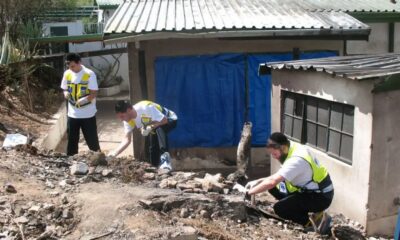
The impact of the terrorist attack the day before, Sunday 7 June, reverberated through our community as so many South Africans live in Kochav Yair, and the area around it, which is where the attack began. Hence our front-page story.
Interestingly, on Wednesday morning, Israeli family sent messages to us in South Africa asking if we were okay. They wanted to know if we had had a terrorist attack in Johannesburg. Most of us didn’t know what they were talking about.
However, considering their concern, I realised they were referring to the news that at least 12 people were killed and nine wounded in a shooting in Johannesburg. Police reported that gunmen had opened fire in an informal settlement in Cleveland, east of the city.
For those of us in South Africa, or at least in Johannesburg, terrorism was never even a consideration when we heard about this shooting. Don’t get me wrong, it was a heinous attack and clearly a massacre. Twelve human beings were mowed down and even those wounded might not make it.
If the same story had emanated from Israel, it would have been terrorism, no question, because Israel doesn’t have the kind of crime and gang violence we have here.
Police believe the attack might be part of an illegal-mining turf war and are on the hunt for the 10 or so perpetrators. In Israel, the likelihood is those perpetrators wouldn’t have made it home alive. Not that I believe in violence, I don’t, but those shooters wouldn’t be able to commit murder or massacres again. That’s not a bad thing.
In South Africa this year, there are an average of 58 murders a day. That is more than 21 000 people a year. And these figures are lower than they have been for many years.
We are not at war and still there doesn’t seem to be an outcry from our government or leaders about the murder rate. Hence the massacre in Cleveland makes news today but may well be forgotten by tomorrow. Sadly, most of the 58-a-day murders happen without even making news.
The leading causes of these killings are interpersonal violence, socioeconomic challenges, and then, organised crime.
The most frequent triggers for murders are domestic disputes, jealousy, road rage, and friction between relatives, friends, or acquaintances. Alcohol and substance abuse is the next biggest trigger, before mob justice, or gang violence.
Then, down the line, there is robbery with aggravated circumstances and other crime.
So, I totally get why our family in Israel find such a massacre terrifying and send messages that we should come to Israel because it is much safer there. For most in the world, that statement sounds absurd because, despite the ceasefire, Israel is in an almost permanent state of war.
It is also a difference of perspective.
However, much like I am sure they are grateful that we worry about them in Israel, I am pleased that they are also keeping an eye out for us.
Next week, we commemorate the 50th anniversary of the Soweto Uprising. On 16 June 1976, 176 people ‒ mostly schoolchildren – are believed to have been murdered. As the revolt spread across South Africa that week, there were at least 575 deaths.
In this week’s edition we bring you a personal story by Dr Melville Edelstein’s daughter Janet, who writes (on this page) about how his murder has altered her life. Dr Edelstein was the only Jewish person killed on that fateful day.
We also bring you essays by King David High School pupils who consider what the youth of 1976 were fighting for, and what their own battle is for in 2026.
We wish you a memorable Youth Day and, while we won’t be producing a print edition next week, we’ll catch up with you online.
Shabbat shalom!
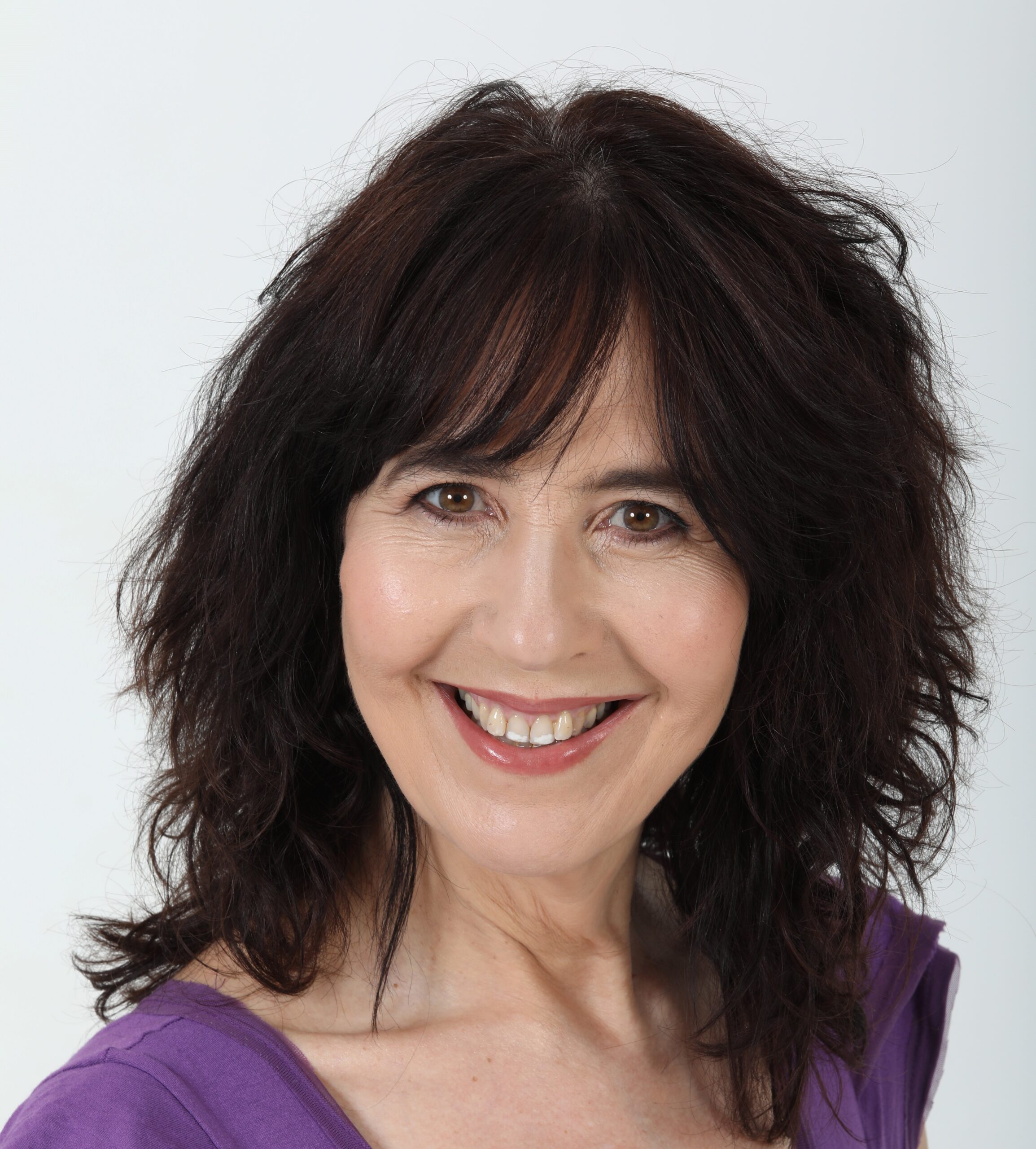
Peta Krost
Editor