


Israel
Specialists give the low-down on longevity

“Supplements make expensive urine.”
It wasn’t quite the advice guests expected from one of Israel’s leading longevity specialists. But Professor Tzipi Strauss, founder and director of the Sheba Longevity Center, had a straightforward message for those attending the annual African Friends of Sheba fundraising gala in Johannesburg: before spending money on products promising a longer life, pay attention to what you’re eating, how you’re sleeping, and how much you’re moving.
Held under the patronage of Lynette and Ivan Saltzman, co-founders of Dis-Chem, the evening focused on longevity, a field attracting growing scientific interest as researchers investigate whether we can delay, or even reverse, some of the biological processes associated with ageing.
Strauss, who joined online from Israel, explained the difference between lifespan and healthspan. Living to 100 is one thing. Remaining healthy, mentally alert, and independent is another. She believes children born today could easily live to 100. The challenge is ensuring those additional years are healthy ones.
At Sheba Medical Center, Israel’s largest hospital, doctors are moving beyond treating diseases once they develop towards identifying health risks earlier, when there may still be opportunities to prevent or delay them.
Strauss’s advice came down to five familiar areas: exercise, nutrition, quality sleep, hormonal balance, and managing stress. She emphasised maintaining muscle strength, which becomes increasingly important as people age.
She stressed something else that cannot be measured in a blood test: human relationships. Communities, social connections, and a sense of belonging have a profound influence on longevity. American research has linked loneliness and social isolation among older adults to increased mortality. Maintaining friendships and remaining part of a community may be as important to healthy ageing as many medical interventions.
For women, Strauss highlighted the importance of understanding hormonal changes and considering appropriate medical interventions.
She questioned the growing enthusiasm for supplements, warning against taking them without a clear medical need. She also argued that healthy ageing begins much earlier than most people imagine.
Before establishing the Longevity Center, Strauss spent more than 15 years heading Sheba’s Neonatology Department. That experience influenced her thinking about the connection between childhood and health decades later. Nutrition, emotional security, and the psychological environment parents provide for their children may have consequences well into adulthood. To get healthier 80-year-olds, attention should be paid to how children are raised.
Dr Tamara Pheiffer, a South African specialist in longevity and precision medicine, discussed the emerging science of genetic reprogramming. Although the DNA people inherit remains largely unchanged, the way genes behave can be influenced by biological and environmental factors. Researchers are investigating whether these mechanisms can be altered to slow, or potentially reverse, aspects of cellular ageing. Much of the science remains experimental, however, and laboratory results don’t necessarily translate into safe treatments for humans.
Pheiffer’s practical advice was less complicated. Inviting an audience member onto the stage, she demonstrated how even someone in their 40s can struggle with balance and getting up from a seated position. Maintaining strength, flexibility, and balance is something that needs to be worked on throughout adulthood, rather than waiting until mobility becomes a problem. She even encouraged people to sit, eat, and work on the floor, where physically appropriate, to maintain mobility.
It was an interesting contrast: scientists are investigating ways to reprogramme cells, yet some of their strongest everyday recommendations involve activities that cost nothing.
African Friends of Sheba chief executive Naomi Hadar brought a more personal perspective to the evening, reflecting on patients whose lives had touched hers. The story that stayed with her most was that of popular South African radio presenter Xolani Gwala, who received experimental cancer treatment at Sheba in 2019 after his stage-four colon cancer returned. The treatment had halted the cancer’s progression, although the tumours had not begun to shrink. Gwala once asked Hadar why she was helping him when he was neither Jewish nor Israeli. “Because I’m Jewish,” she replied.
After months in Israel, he had returned to South Africa to see his family, but contracted flu and his condition deteriorated. Hadar recalled how, while he was in a Johannesburg hospital, Gwala took her hand and pleaded, “Please take me back to Israel.” He never made it back. He died on 1 November 2019.
Hadar also spoke about Somaliland, which declared independence from Somalia in 1991 and was formally recognised by Israel in December 2025, the only country to have done so. On her most recent visit, she toured a children’s hospital in Hargeisa. “What struck me was the silence,” she recalled. The wards were eerily quiet, without the sounds of children one might expect in a hospital. Medical staff were caring for patients with limited resources.
Hadar described Somaliland as reminding her of Israel in its early years, a place full of opportunity. She also referred to the philosophy of Sheba Medical Center’s director general, Professor Yitshak Kreiss, who believes that saving a sick child’s life can help overcome deeply rooted political and religious prejudice among parents and within communities.
Closer to home, Hadar described an initiative involving the Minnie Bersohn Pre-Primary School in Sandton. Children made drawings and wrote messages for patients at Sheba’s Edmond and Lily Safra Children’s Hospital, while families donated toys and games for young patients to choose free of charge.
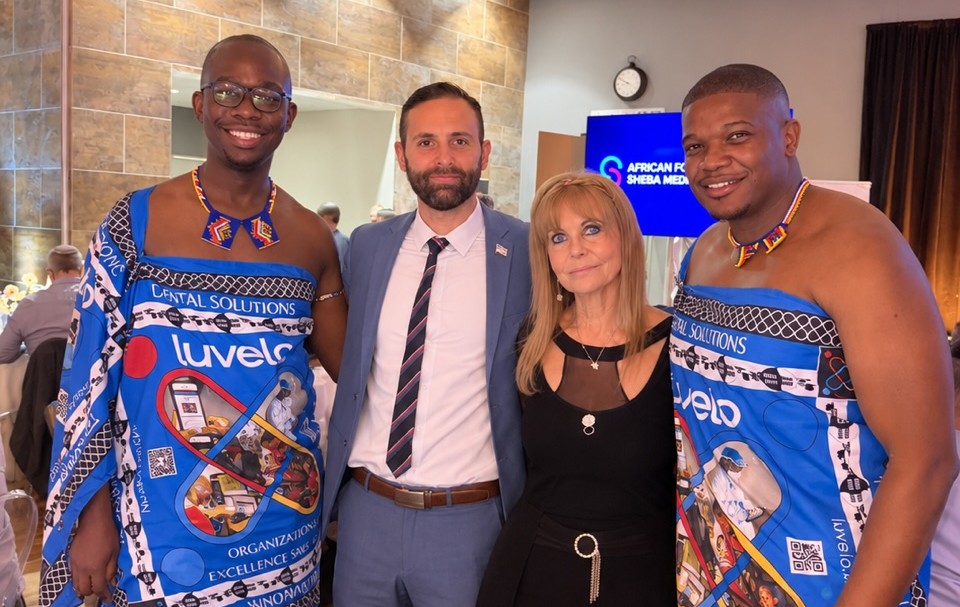
The gala also welcomed medical professionals from Eswatini ahead of a planned humanitarian mission by Sheba doctors.
Sheba was ranked seventh globally in Newsweek and Statista’s World’s Best Hospitals 2026 and sixth in the World’s Best Smart Hospitals 2027 ranking, recognising advances in medical technology, including artificial intelligence and robotics.
The question raised by the evening went beyond what sophisticated technology might achieve. Can we really turn back the clock on ageing? Scientists are beginning to understand more about the biological processes involved, but many questions remain unanswered. For now, the advice from both doctors was remarkably similar. We may not be able to control how many years we live, but there is a great deal we can do to influence how healthy those years might be. And much of it begins long before we think of ourselves as old.