Voices
A worldwide web

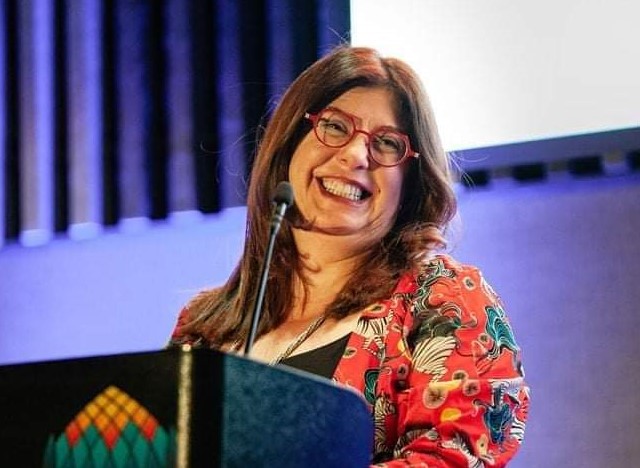
This week, members of the Gauteng and Cape Town leadership of the South African Jewish Board of Deputies (SAJBD) represented the South African Jewish community at the American Jewish Congress (AJC) Annual Global Forum in Washington, DC.
The AJC is one of the oldest and most important Jewish advocacy organisations in the world. Founded in 1918, it was built on a conviction that has lost none of its urgency in the century since: that the security and dignity of Jewish communities depend not only on our own efforts, but on robust engagement with the democratic institutions and civil society structures of the countries in which we live. It fights antisemitism in all its forms while building the coalitions and institutional relationships that allow it to speak with a voice that carries weight in the spaces that matter most.
This year’s conference brought together more than 2 000 Jewish leaders from across the globe to address the most pressing issues facing the Jewish people, Israel, the United States, and the wider international community. Delegates heard from an exceptional lineup of speakers, including former hostages Aviva and Keith Siegel, award-winning author Dara Horn, and Sarah Hurwitz, former speechwriter to Michelle Obama.
The South African delegation was invited to participate in an exclusive meeting with senior representatives from major social media platforms to discuss the challenges of antisemitism and online hate affecting our community. A key message that emerged from the conference was the urgent need to confront and challenge antizionist hate groups online. As one speaker powerfully said, “Lo and behold, if you let violent language become normalised, you get violence.”
For us as Jewish leadership, the AJC, and other gatherings of this nature, represent something important: the reminder that we are part of a global architecture of Jewish self-defence and civic engagement. It’s also a constant reminder that Jewish communities around the world aren’t isolated and acting alone, but rather part of a greater structure upon which we can all lean. Through these engagements we also gain valuable insights into developments across the global Jewish world and, equally importantly, build meaningful partnerships that strengthen our ability to fulfil our mandate to enable Jewish life in South Africa. We are deeply privileged to represent our community at international forums and conferences of this nature.
Closer to home, we are approaching the exam period at universities. The SAJBD works with universities to find accommodations that ensure observant Jewish students aren’t disadvantaged when exams fall on yomteivim or Shabbat. If you’re a student and have an exam scheduled on such a day, please contact the SAJBD and we will assist with finding a fair alternative arrangement. Email sajbd@sajbd.org.
And, while we’re on the subject of universities, congratulations to the University of the Witwatersrand (Wits) on its improved international ranking. The recently released 2026 Center for World University Rankings placed Wits as the best university in Africa and within the top 1% of universities globally. Wits secured 200th place out of 21 000 surveyed institutions. The University of Cape Town is also within the top 1.3%, with other South African universities, including Stellenbosch, University of KwaZulu-Natal, University of Johannesburg, and University of Pretoria, receiving excellent ratings. We are immensely proud of all these institutions. Our universities aren’t merely safe spaces for Jewish students, they’re world-class academic institutions, and that’s something worth celebrating. To all students heading into the exam season: study hard, stay calm, and do us proud.