Lifestyle/Community
Four Jewish artists making their mark on Johannesburg

What happens when an art festival asks visitors to leave the gallery behind and explore Johannesburg through the people who make its art? That’s the idea behind Contra Joburg, which returned on 29 and 30 August, for its fifth year. More than 170 artists and makers took part across 16 creative spaces in the inner city, Braamfontein, and Rosebank.
Instead of gathering everything in one exhibition hall, Contra takes visitors into working studios, galleries, heritage buildings, and other creative spaces.
Among the Jewish participants were artists Candice Kramer, Gail Behrmann, and Bev Butkow, as well as gallerist and curator Candice Berman. Their practices are very different, but their work shares a strong connection with Johannesburg and its communities.
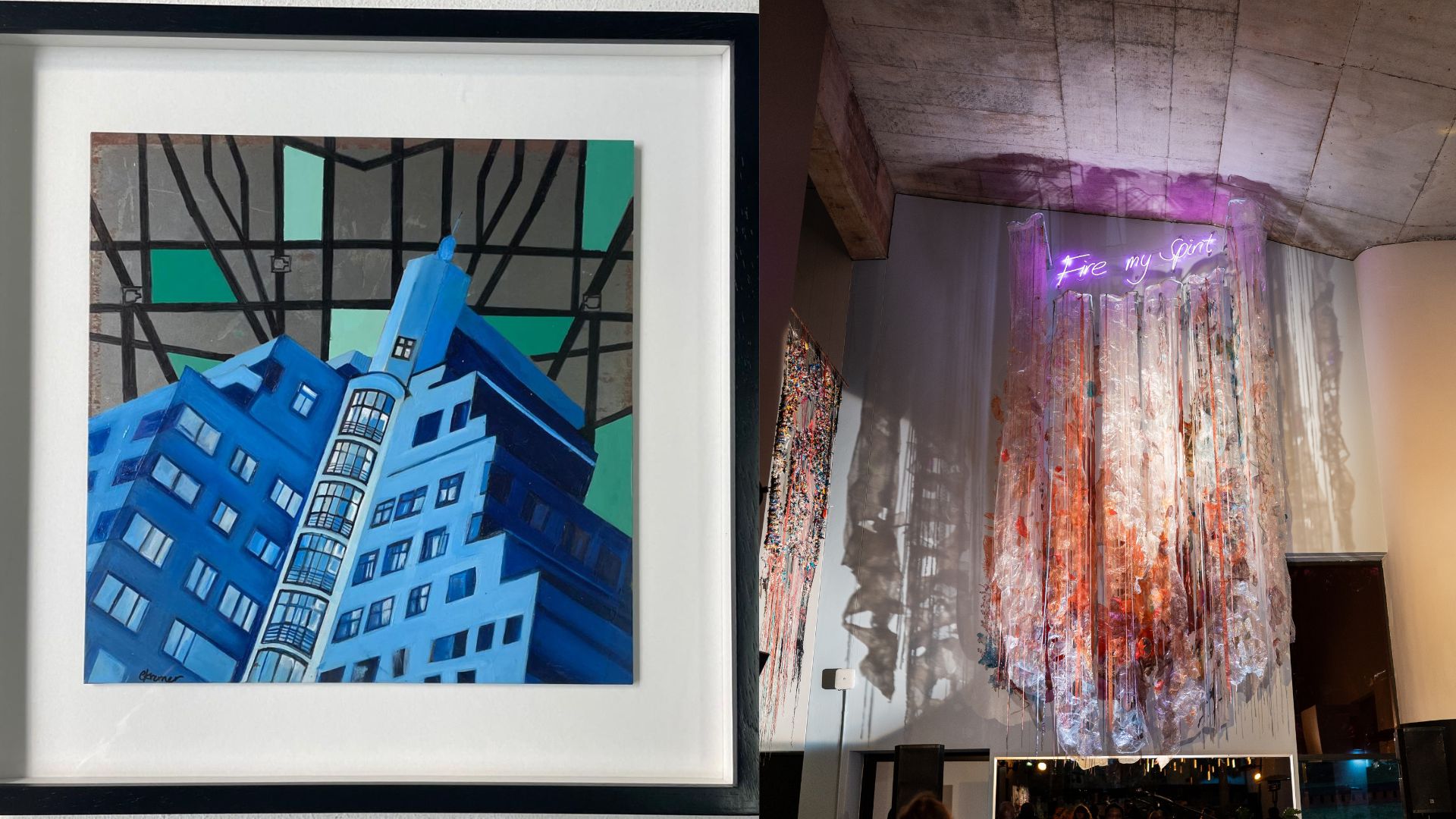
For Kramer, Johannesburg is both a place of personal history and a source of artistic material. The Johannesburg-born artist works from Bag Factory Artists’ Studios in Fordsburg. She explores memory, movement, and belonging through family photographs, archival maps, and images of pedestrians. She works on industrial materials such as steel, copper, and pewter, using rust and corrosion to create textured surfaces.
“My work is very much about Johannesburg and my connection to Johannesburg,” Kramer said. She is particularly interested in the contrast between her background and the community around her studio. “I am fascinated with my connection to Johannesburg as a white Jewish female living in northern suburbs Johannesburg and working at Bag Factory,” she said.
Her Jewish upbringing has influenced the way she relates to other people, even when it’s not directly visible in her artwork, she said. She doesn’t work on Shabbat, but her studio was open during Contra because other people work there.
She said Jewish values around “valuing and seeing the goodness in people” have helped her connect with artists from different backgrounds at Bag Factory. Kramer has participated in Contra since its inception. She said the festival has grown from an effort to connect Johannesburg’s creative spaces into a two-day event that allows visitors to experience areas they may not normally visit.
She particularly values the way visitors can enter artists’ studios and see work in progress. “It’s enlightening,” she said. “People have come back year after year to my studio to see what’s new and what I’m making this year.”
Behrmann also works at Bag Factory and has participated in Contra since it began. Her practice centres on abstract painting, with the South African landscape, poetry, music, and nature among her influences.
Behrmann paints while listening to music, particularly classical music. She plans her abstract paintings before beginning them and continues to draw from life because she believes drawing is “really learning to see”.
Classical Chinese Tang poetry is another important influence. Behrmann takes a line from a poem and considers it in relation to nature before planning a painting. The poems often explore war, longing, love, landscape, and nature.
Her approach leaves the meaning of the finished work open to viewers. “I want them to take away whatever they feel,” Behrmann said. “I don’t like to interpret to them. They should interpret themselves.”
Butkow’s journey into art followed a different route. She previously worked in corporate finance, but gradually moved towards art after taking painting lessons. She began exploring different materials and techniques, eventually developing a practice across painting, textiles, and installation. Weaving, knotting, binding, and repair are central to her work.
“I like working with mixed mediums and mixed techniques,” Butkow said. “It helps me think in different ways.” She is particularly drawn to weaving because of its physical and repetitive qualities. “Weaving is like breathing,” she said. “It’s like in and out, in and out, and over and under.”
Butkow’s work is closely tied to Johannesburg. Her childhood memories include her grandfather selling eggs at the fresh produce market, buying her matric dance dress at the Oriental Plaza, and going to the movies at the Carlton Centre.
Her studios have remained in central Johannesburg because she believes artists need to remain connected to the realities of the city. She described Johannesburg as a city of migrants and people trying to make their way. Its contradictions, changes, and resilience have become part of her artistic thinking.
Her Jewish upbringing is also reflected in her practice. Butkow said education, family, community, and relationships were among the strongest values she was raised with. She said she doesn’t always make her Jewish identity explicit in her art. However, she sees it as inseparable from who she is and therefore from what she creates.
Berman is a gallerist, curator, and art adviser who began her career as an artist. She established Candice Berman Gallery in Johannesburg in 2013 and now runs two gallery platforms.
Her Johannesburg gallery is based at 223 Jan Smuts Creative Hub in Rosebank. The space includes The Creatory, an artist residency that gives selected artists free working space for several months. Berman said she is drawn to artists with “a unique signature style” that cannot easily be duplicated. She is particularly interested in expressive work that reflects the psychology of its maker.
She sees Contra as part of Johannesburg’s growing art scene and believes the festival offers something different from a conventional gallery. “I think you get to get an insight into what happens behind the scenes or the maker’s process,” she said.
For Berman, that process matters because audiences can see how artists work rather than only encountering completed pieces. That approach is central to Contra. It provides a way for audiences to enter creative spaces and meet the people behind the work.
Kramer said community is one of the things she values most about the art world. “It can only be good for all of us and all of our careers,” she said of giving South African artists greater exposure.