


OpEds
Getting along in Norwood

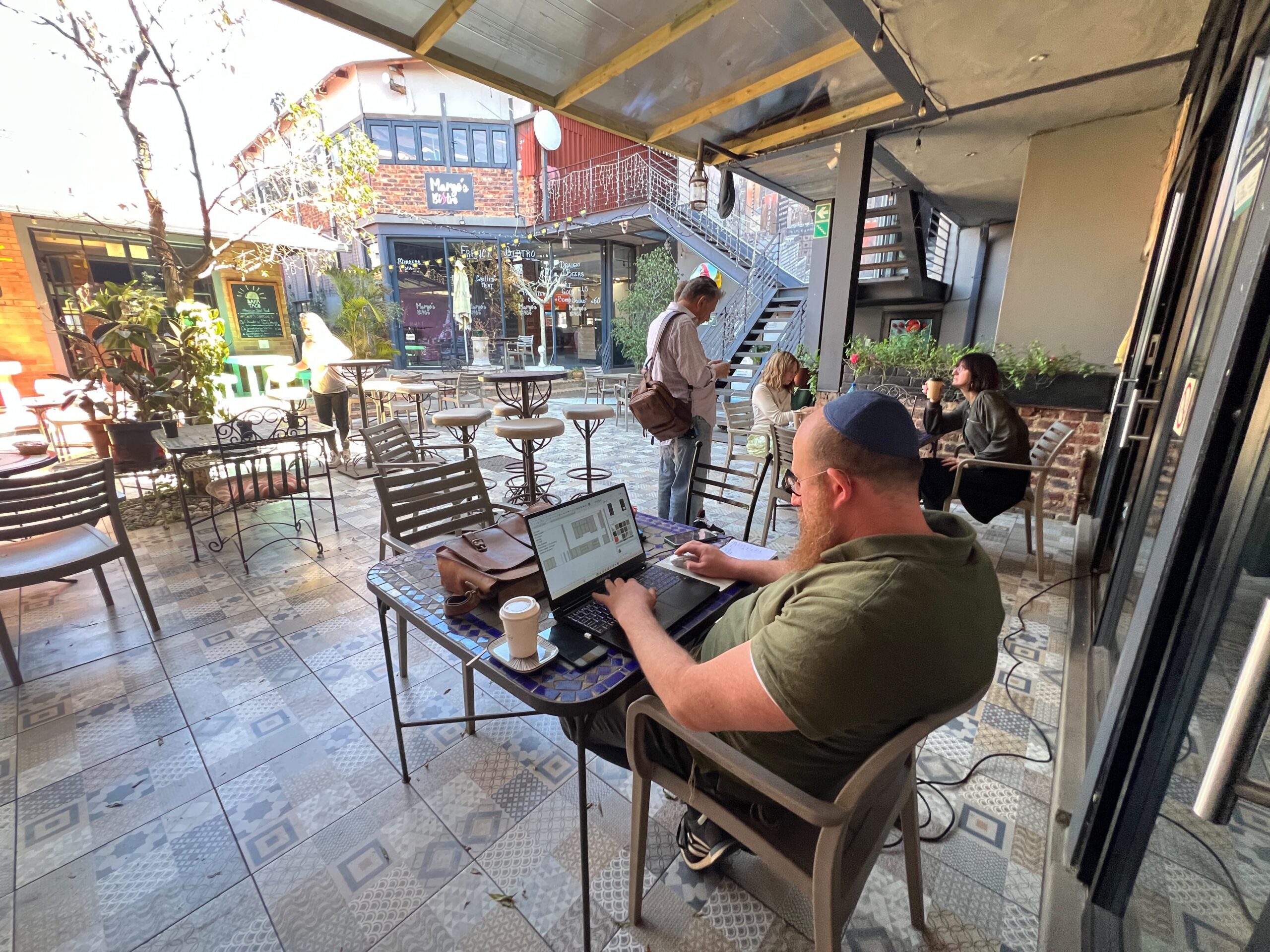
I live in Norwood, just off Grant Avenue, a Johannesburg street that has gone through many metamorphoses over the years. At one point, it was known for its kosher restaurants. At other times, it has risen, fallen, and reinvented itself. It has never been polished or predictable, but it has always been alive. My history with the street goes back even further. I had my first date there when I was 12, at The Grub Store, below a cinema where a Woolworths and a gambling venue now stand.
Grant Avenue is filled with supermarkets, clothing shops, barbers, tailors, restaurants, and people. It’s busy, slightly chaotic, and, depending on your perspective, perhaps even a little seedy. There are beggars, homeless people, and car guards. There’s traffic, noise, and constant movement. Yet it’s precisely this activity that makes the street feel safe to me. There are always people around, someone watching, working, shopping, greeting, or passing through.
Grant Avenue is home to a large Muslim community. Many shops are Muslim-owned, as are most of the barbers, with a mixture of Arab and Indian influences. A Palestinian flag is visible outside one shop window. At the bottom of the road, however, is a Spar with one of Johannesburg’s best kosher delicatessens.
This means that on a Friday morning, a Jewish person can buy a kitka and chopped liver from the kosher counter, then walk up the road to a Muslim barber for a haircut. They can be visibly and unmistakably Jewish while walking along one of Johannesburg’s most unmistakably Muslim streets.
At least in my own experience, nothing happens.
That may sound like a strange thing to celebrate, but in the current climate, it matters. I’m sure there have been isolated incidents, as there are anywhere. But at a time when many Jewish people around the world feel anxious about being visibly Jewish, Grant Avenue remains a place where there seems to be no need to conceal who you are. A Jewish person can walk past a shop displaying a Palestinian flag, or walk into that shop, speak to the person behind the counter, and be treated as a customer and a neighbour.
I walk along Grant Avenue a few times a day. I see Jews and Muslims sharing the same pavements, shopping in the same stores, and greeting the same car guards. I see ordinary interaction, no fear and no hatred. Whatever disagreements exist in the wider world, the people here continue to live beside one another.
There’s something quietly South African about this. We’re certainly not free from racism, prejudice, or antisemitism. Our history doesn’t allow us to pretend that these things don’t exist. Yet that same history has made open racism deeply unacceptable to many South Africans. There remains, in much of our everyday life, a powerful instinct towards “live and let live”.
We may be Jewish. We may be Muslim. We may carry different histories, loyalties, beliefs, and wounds. But we’re also South Africans, sharing a street, a city, and a daily life.
Grant Avenue isn’t grand. It isn’t especially beautiful. It’s untidy, imperfect, and constantly changing. It’s a small and possibly insignificant place in a troubled world. But every day, in its ordinary way, it shows me something important. Coexistence doesn’t always arrive through grand declarations, political agreements, or carefully managed interfaith events. Sometimes, it looks like buying a kitka and chopped liver from the kosher counter before getting your hair cut by a Muslim barber.
Sometimes, hope is simply a street where nobody asks you to hide who you are.
- Trevor Waller is the author of Twenty-Two Lessons for Now and co-founder of Two Ways. Grounded in Viktor Frankl’s logotherapy, his work helps individuals, entrepreneurs, and workplace teams think clearly, speak honestly, and act with response-ability.