Lifestyle/Community
How the image of Holocaust survivors changed

For decades after the Holocaust, many survivors rebuilt their lives without being heard. Their transformation into respected witnesses and symbols of resilience took generations.
That change was the focus of a webinar hosted by the Cape Town Holocaust & Genocide Centre last week. Dr Shay Pilnik, founding director of the Emil A and Jenny Fish Center for Holocaust and Genocide Studies at New York’s Yeshiva University, traced how survivors came to be viewed differently after 1945.
Pilnik, a grandson of three Holocaust survivors, said the story of survival didn’t end with liberation. It continued through the rebuilding of families, communities, religious institutions, and lives. He cited sociologist William Helmreich’s research and his book Against All Odds, Holocaust Survivors and the Successful Lives They Made in America, which examined how they became entrepreneurs and built businesses.
“Many of them were fearless,” Pilnik said. He recalled one survivor explaining that after surviving the NKVD (Soviet Secret Police), the Gestapo, and concentration camps, bankruptcy no longer seemed frightening.
The ability to rebuild existed alongside what psychologist Yael Danieli calls a “conspiracy of silence”. Pilnik said survivors often wanted to speak about what had happened, but found that others didn’t want to listen or believe them. Some survivors remained silent with their children. They feared traumatising them and questioned why they should burden them with stories that wider society had rejected.
Pilnik said this created two parallel experiences. Survivors were rebuilding their lives while also carrying the psychological effects of what they had endured. He examined how this was particularly visible in Israel, where in the early days society often placed great emphasis on armed resistance during the Holocaust.
Pilnik said the distinction was reflected in the Hebrew concepts of Shoah and gevurah (strength), referring to the Holocaust and heroism. He pointed to Nathan Rapoport’s Warsaw Ghetto Uprising monument as a symbol of the contrast.
According to Pilnik, this helped create a narrow understanding of resistance. Survivors could be judged for not having fought, despite the circumstances in which they had been imprisoned. He cited the early use in Israel of the slur “sabon”, meaning soap, to describe Holocaust survivors as weak or passive.
At the same time, Pilnik stressed that many survivors demonstrated agency after reaching Israel. Tens of thousands were recruited into the Israeli army during the War of Independence, and many fought and died. He described Yitzhak Zuckerman, a leader of the Warsaw Ghetto resistance, as an important example. After the war, Zuckerman helped establish the Ghetto Fighters’ House in Israel. For Zuckerman, rebuilding meant more than establishing a new life; it meant preserving evidence and educating future generations about what had happened.
Pilnik said the understanding of resistance too has changed. It is no longer limited to taking up arms. Creating calendars, observing Jewish holidays, maintaining religious practices, and producing art can also be understood as forms of resistance. These acts allowed people to retain identity and dignity under conditions designed to dehumanise them.
He discussed artist Esther Lurie, who survived the Holocaust and created the portrait The Girl with the Yellow Star. Pilnik said the work demonstrates both humiliation and defiance.
The shift in attitudes became particularly significant during the Eichmann trial in 1961. He highlighted Rachel Auerbach, a Holocaust survivor and member of the Oyneg Shabes documentation group, who helped document Jewish life in the Warsaw Ghetto. After the war, she worked at Yad Vashem and advocated for survivor testimony during the Eichmann trial.
Pilnik contrasted this with the Nuremberg trial, where evidence relied heavily on Nazi documents, statistics, and other records. Survivor testimony placed Jewish voices at the centre of the Eichmann proceedings.
He described the trial as a watershed. It helped Israeli society recognise that people who had lived through the Holocaust couldn’t simply be judged from the safety of later generations.
Pilnik also examined rebuilding within the religious world. He discussed Rabbi Aharon Kotler, a Holocaust survivor who helped develop a yeshiva in Lakewood, New Jersey. It grew from 14 students around Kotler to about 150 students by the time of his death, and later became a much larger institution with influence across the Jewish world. For Pilnik, this illustrated that rebuilding after the Holocaust was both physical and spiritual.
With the number of living survivors declining, Pilnik said that, in 2026, the responsibility for telling the history of the Holocaust can no longer rest mainly with them. He pointed to museums, archives, books, digital technology, and new forms of testimony as ways the stories can continue.
Artificial intelligence and holograms are already being explored in Holocaust education. Pilnik said he didn’t know exactly how future generations would communicate the subject. He was confident, however, that interest in Holocaust history would continue growing. Many younger people increasingly understand that the Holocaust is a past they must learn about even when they cannot meet survivors themselves.
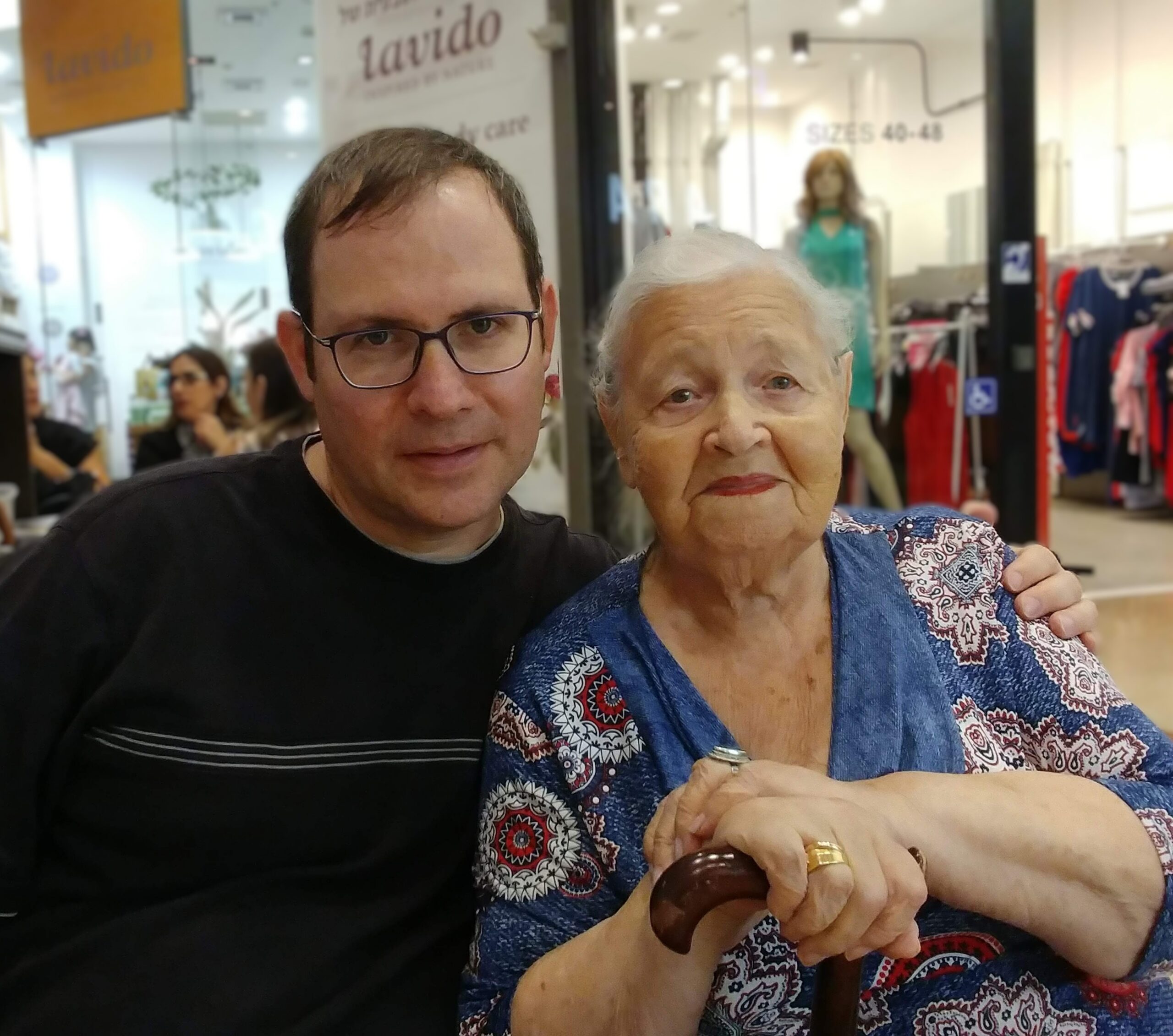
Asked about resilience, Pilnik returned to the importance of rebuilding and family. As the grandson of three survivors, he said he saw how memories of lost parents, siblings, and children remained with them.
He also described a special relationship between survivors and grandchildren. In his experience, grandchildren could sometimes provide an attentive ear when survivors had struggled to find one earlier in life. Pilnik connected this continuing impulse towards life with the Jewish expression l’chaim (to life). He said it could be understood as a commitment to continue despite catastrophe.
Survivors’ stories include suffering, but also family, education, creativity, religious life, work, and the rebuilding of communities. As Pilnik put it, the role of sharing these stories is changing. The survivors are disappearing, but the responsibility to remember them is not.