Lifestyle/Community
Neurodivergent kidpreneurs prove power of thinking outside the box

From the 13-year-old with a cellphone business to the teen who creates websites and provides Formula 1 commentary, there are many children who excel outside the traditional schooling system. Their ability to express themselves through alternative pursuits not only hones their self-belief, it challenges preconceptions about the paths to success.
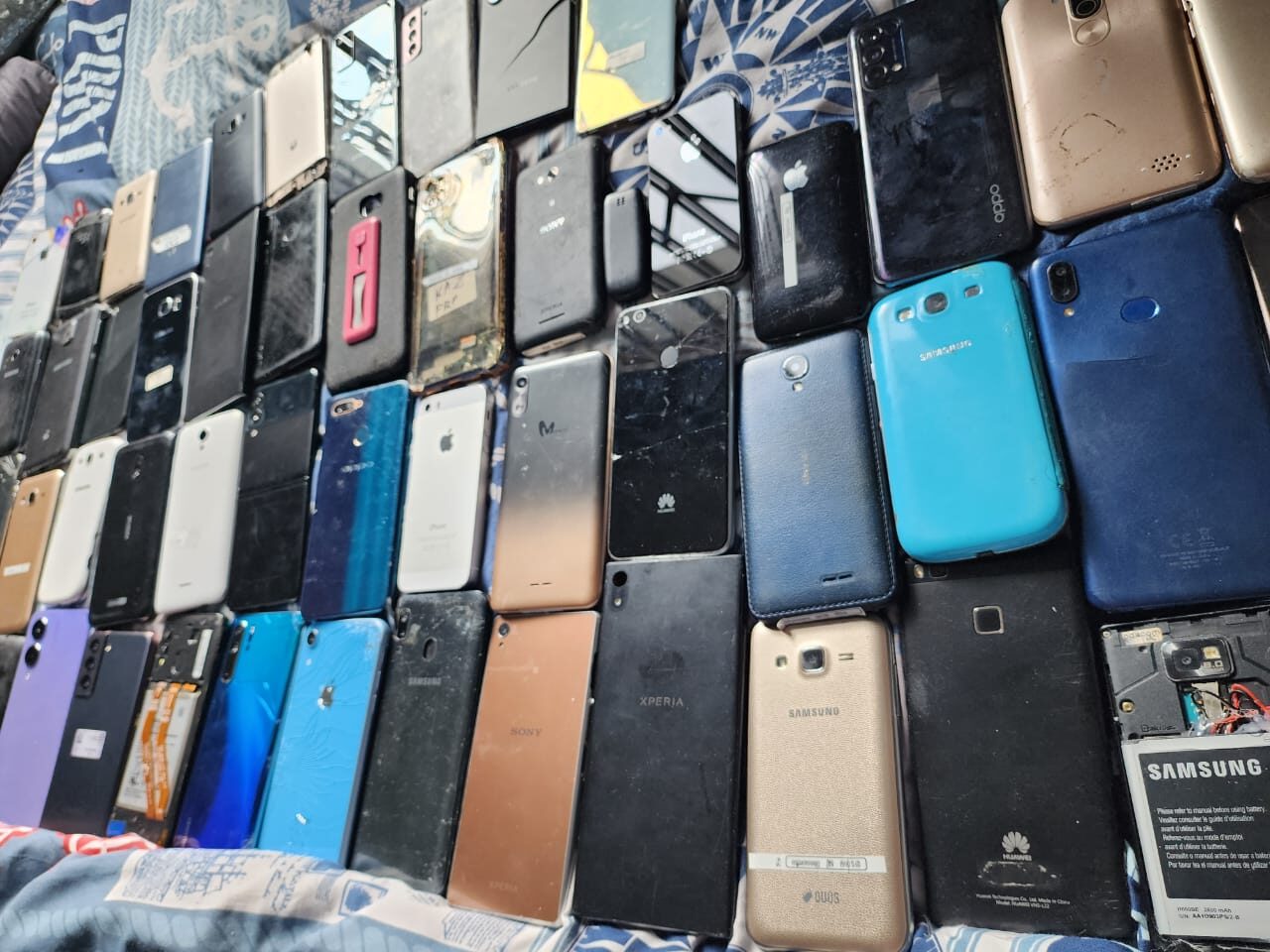
“Our son’s brain works differently, he’s proudly autistic,” says Melanie Ger, whose son, Aaron, has sold more than 100 phones in a year. “Instead of pushing him through what society believes should be appropriate, we’ve gone with what he is actually capable of doing, and the things that he loves.” In Aaron’s case, this is fixing and selling phones.
During the COVID-19 pandemic, at the age of six, Aaron received his first device, a second-hand iPad on which to do his Zoom lessons. “It was old, but I loved it, because it could take my mind away from whatever I was doing,” he says. “Then I started watching YouTube videos on how to fix phones and I really wanted to try and do it, so my parents let me borrow one of their old phones.”
Soon, a passion was born. As Aaron began to collect used phones from family and friends, he extended his repairing skills. “I used to trade phones,” he says. “I’d go to tech cellphone repair shops, and I’d trade one of these phones for two broken ones, which I’d then fix or use for parts.”
He made friends with the different shop owners, who spent hours helping him develop his skills, while his parents waited alongside him. “They’d give him 10 to 20 broken phones and he’d work on them like a surgeon, pulling out and using the parts that still worked,” says Ger. Aaron became so proficient at phone repairs that he ultimately started a now-profitable business at the age of 10, buying and selling phones on the online platform Yaga. Sales are done through an intermediary, so he doesn’t deal with customers face to face.
“Devices are his love language, through which he understands and makes sense of the world,” his mother says.
Aaron uses the money he makes to buy more old phones online, repairing and selling them too, while continuing with his education. Having left the school system at the age of 10, Aaron now attends The Lighthouse Learning Hub, a co-working space for children and teens facilitated by occupational therapists and educators. “With school being so linear with so much going on – juggling multiple lessons, teachers, and textbooks in a day – it was just too much for him,” his mother says.
At the Hub, Aaron tackles subjects at his own pace, one section or subject at a time. “It’s much better for his brain to focus on one thing specifically rather than juggle multiple things,” she explains. “Just because he doesn’t go to mainstream school doesn’t mean he’s not capable.” Ger says there are many children there like Aaron. “This is our next generation of entrepreneurs.”
Ben Kuper, now 17, has also found his purpose through his business pursuits. For Kuper, school was always a challenge. Slightly on the spectrum, from a young age he battled with anxiety and Attention-Deficit/Hyperactivity Disorder and moved between schools. The COVID-19 pandemic added further complexity and resulted in school refusal, says his mother, Caryn Kuper. While he ultimately tried the GED, an American high school equivalency credential, it wasn’t a good fit and affected his confidence.
“After much deliberation, we decided to give it a break and see how things went,” Caryn says. “In the last year, he’s done amazingly, he’s put together a whole programme of Artificial Intelligence (AI) learning, and it’s taught him how to put together websites, which has led to him creating a website business. He’s also flourished through his passion for Formula 1 commentating.”
Kuper’s love of Formula 1 was sparked during the pandemic when he watched the Netflix series Drive to Survive. “Two years later, I thought, I’m a big talker, so why not try commentary?” he says. He began commentating races and posting clips online. He found an online racing league started doing online commentary. Now he has regular commentary slots and co-owns his own online racing league. He also recently started Sites by Ben, where he uses the skills he’s learned through AI to build websites.
“I’ve always wanted to have my own business, something that’s common in my generation,” he says. “I want to be successful ‒ who doesn’t?” Kuper says that knowing that there are ways to do well without school has boosted his confidence. “Do what makes you happy,” he says. “Don’t do something just because other people are telling you to do it. Prove them wrong.”
While his mother says it took some time to accept that Ben might not complete matric – with that option still not off the table – his path has taught her a lot. “Ben is showing me that if you have enough passion, you can do whatever you want and make a success of it. You’re not being forced to do something you don’t want to. I think some kids are just not wired academically, and the world has just been naïve in tackling that, but it’s opening to that now.”
Educational psychologist and teacher Heidi Bome, who runs the Collab Therapy Centre, which facilitates homeschooling and alternative programmes, agrees that traditional schooling is not for everyone. “Not everybody needs to finish school to become something. Since COVID-19, especially, there’s a lot more awareness that there are other educational options. We’re starting to see these kids being identified a lot earlier, and there’s more understanding about what being on the spectrum means.”
Bome explains why such children, who have a higher IQ (cognitive reasoning) than EQ (emotional intelligence), may have an affinity to careers associated with technology. “It’s what they perceive as non-demanding and non-threatening, because it’s predictable. They control their environment and don’t have to deal with sensory overload or multiple people.”
In mainstream school settings, such children are often misunderstood, she says, but they have enormous potential. Finding a less regimental setting often frees them up to explore their creativity and abilities. They then stop seeing themselves as different, but rather as someone with a different propensity. “When they go into an environment where they are accepted or start experiencing success, they flourish. Nothing breeds success like success.”