Israel
The ‘forgotten’ far north of Israel

“When I look up at the sky, I have to figure out if what I am seeing is a bird or a drone,” says Adrienne Chonowitz, who made aliya from South Africa in the 1980s and has lived for decades on Kibbutz Ma’ayan Baruch, close to the Lebanon border.
“We are living in a continual nightmare,” she says. “While the rest of Israel went back to relatively normal life after the war with Iran earlier this year, that never happened for us living on the very northern border. We have lived in a state of almost perpetual war ever since 28 February 2026, the day Israel and the United States pre-emptively attacked Iran.”
Ironically, that date was a year to the day that Chonowitz moved back home after being evacuated in the wake of the 7 October massacre. She had exactly one year of relative quiet before Hezbollah entered the 2026 Iran war soon after it began. Israel continues to do battle with the terrorist organisation, which means that Israelis living on the northern border are on constant alert, with the threat of rockets and drones remaining ever-present. While the last few weeks have been relatively peaceful, soldiers were killed during a ceasefire and residents feel their ordeal is far from over.
What is even more difficult is that many of them feel “forgotten” by other Israelis, their government, Jews in the diaspora, and the world at large – all of whom seem unaware of what they endure on a daily basis. “It’s difficult for other Israelis to identify with our experience,” says Chonowitz. “For them, the war ended on 8 April, after a conditional ceasefire went into effect. But for us in the very north, life didn’t go back to normal.”
Chonowitz, a retiree who lives with her husband, Hilton, says that even for Israelis in the general northern region “the war is over”. But for those on the border overlooking Lebanon, “ceasefire is just a word, most of the time”.
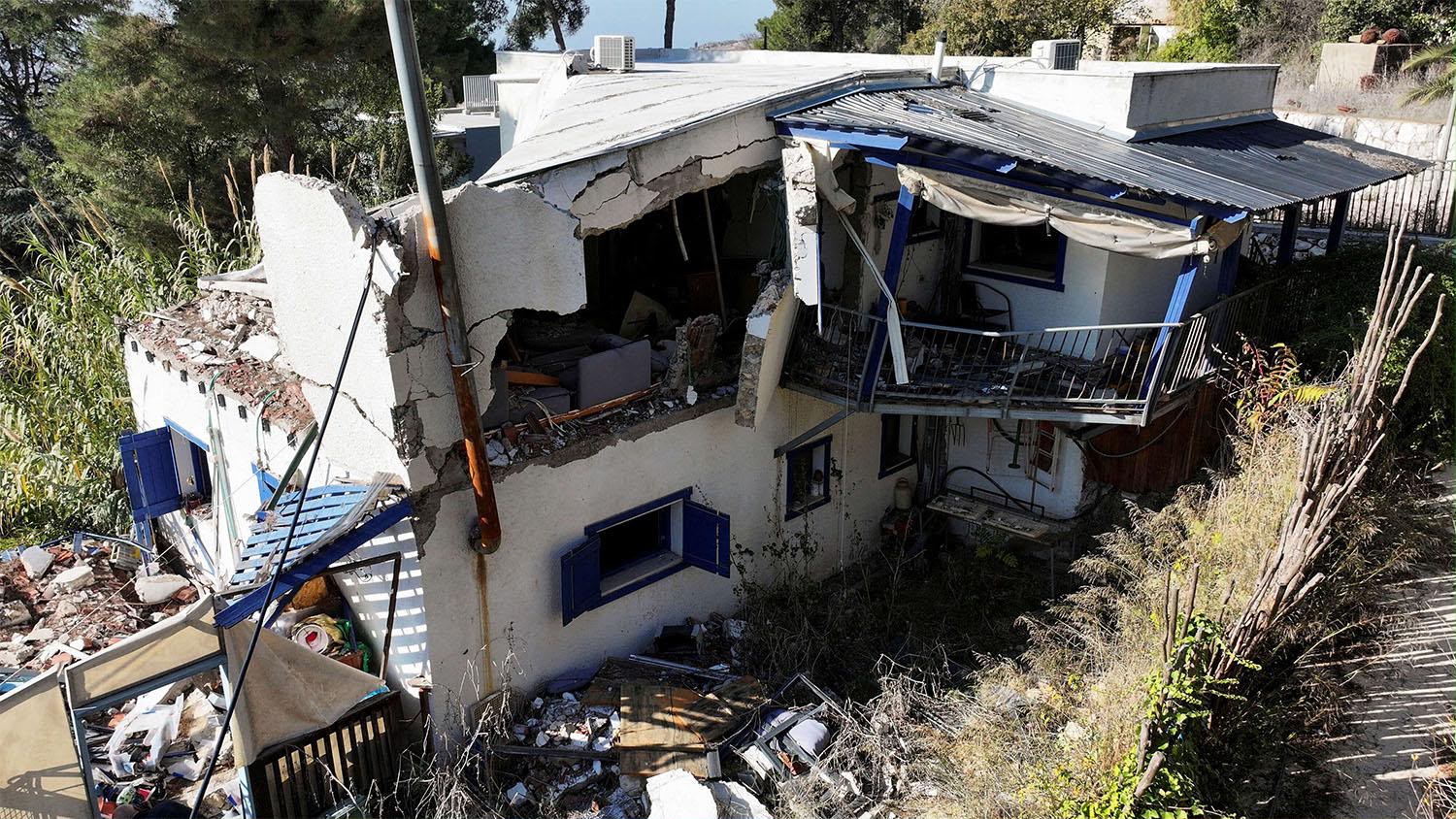
She says the government reassured residents they would be returning to the “peaceful north”, but that hasn’t been the case. Her grandchildren, who also live on the kibbutz, often face school closures, and their lives continue to be disrupted. Her son’s house was badly damaged by Hezbollah rockets while they were evacuated. Thankfully, his home has been restored, but having to rebuild has been emotional.
Chonowitz’s daily life is also constantly disrupted. For example, she had to suddenly cancel a doctor’s appointment in Kiryat Shmona, made months ago, because of incoming rocket fire. “I even have to debate if I should risk going grocery shopping, because it’s not pleasant to travel under rocket fire and know that you may have to seek shelter while you are there,” she says.
Chonowitz feels fortunate that her home now has a mamad (safe room) to go to during the daily sirens, but many northern residents don’t have safe rooms. The residents of her kibbutz go to nearby Kiryat Shmona for their daily errands, but 90% of shops remain closed. “The residents of the north generally feel frustrated and abandoned,” she says.
Paul Mirbach, who made aliya from South Africa decades ago, lives on northern Kibbutz Tuval, but says it is “the towns further north that are feeling the brunt” of the conflict with Hezbollah.
“There have been missiles or drones launched at Karmiel recently, but nowhere near the intensity of Nahariya, Kiryat Shmona, Metulla, and the kibbutzim and moshavim on the border,” he says.
His mother lives in an old-age home in Karmiel. There are about 40 residents, all in wheelchairs. “At any given time, there’s a team of about six caregivers and nurses,” says Mirbach. “When a siren goes, there’s no time for the caregivers to wheel all 40 residents into the bomb shelter.”
Instead, they’re left where they are, “unable to do anything, helpless and exposed, praying that they don’t get hit”, says Mirbach. “Imagine their anxiety. Imagine the stress of their families whenever they hear that Karmiel is being targeted. These are the forgotten ones whose lives don’t count, who are never the focus. The non-stories, because they are old. This is an aspect of life here that never gets told.”
Professor Mooli Lahad, an Israeli psychologist and psycho-trauma specialist, wrote an article on the Times of Israel blogs on 3 June titled “Northern Israelis are paying the price for their resilience”. He says “the longer residents [in the north] showed their ability to cope with life under fire, the more politicians felt free to abandon them”.
He wrote that the government’s recent approval of an extra NIS 13 billion (R72 billion) to strengthen the north is welcome, “but its effect will be felt only in several years, and it cannot make up for the past. The pain is happening now, and the residents of northern Israel need the support of their fellow citizens.” People in the north are experiencing “a total loss of control, and a loss of the ability to predict tomorrow”.
“Stop demanding that these residents continue to be heroes,” wrote Lahad. “Give them the right to be human, hurting, exhausted, and angry. This, too, is resilience: the ability to say, ‘Enough. No more.’”
One organisation that hasn’t forgotten those on the border is Telfed, which supports South African olim, even long after they have made aliya. Telfed chief executive Dorron Kline says there are approximately 200 South African families living in Israel’s north, with some on the border.
Telfed has supported these families throughout the wars and evacuations that began in October 2023, and continues to do so. “Telfed doesn’t try to take the place of government. Rather, we try to assist where the government will not,” Kline says.
For example, Kibbutz Manara, which has South African expats and is very close to the border, wanted to encourage young people to return home. It asked Telfed to assist, and the organisation built a new outdoor braai area for the youth to enjoy. The area is also very cold, and the kibbutz’s rapid response team didn’t have warm coats, so Telfed purchased some for them. These are just some examples of the work Telfed does to assist those living under fire.
“Those who returned to the north after being evacuated went home and were greeted by more attacks,” says Kline. “There is a huge amount of uncertainty for them, not knowing how things will pan out. They are weary and worried, but the fact that they stay, continue to raise their children there, and live in such a state of flux is to be admired. It is a strong statement of belief in our future here, and we must continue to support them in any way we can.”