



Youth
The information age gap

No matter how many times a mother or father explains that they were once a teenager, their child is still likely to believe that their parents won’t understand what they’re going through.
This, according to a clinical psychologist, is perfectly natural and part of growing up.
And the teens aren’t wrong.
“We underestimate how different their world is,” says clinical psychologist David Abrahamsohn. “This generation is growing up with social media, constant comparison, friendships that live mostly on a screen, intense academic pressure, and now artificial intelligence.
“Most parents didn’t have any of that at the same age. So even when a parent means well, the child can still feel that they just don’t get it. What I often tell parents is that acknowledging that things are different now, but that they still genuinely want to understand and listen, is likely to lead to a conversation far more than pretending it isn’t there.”
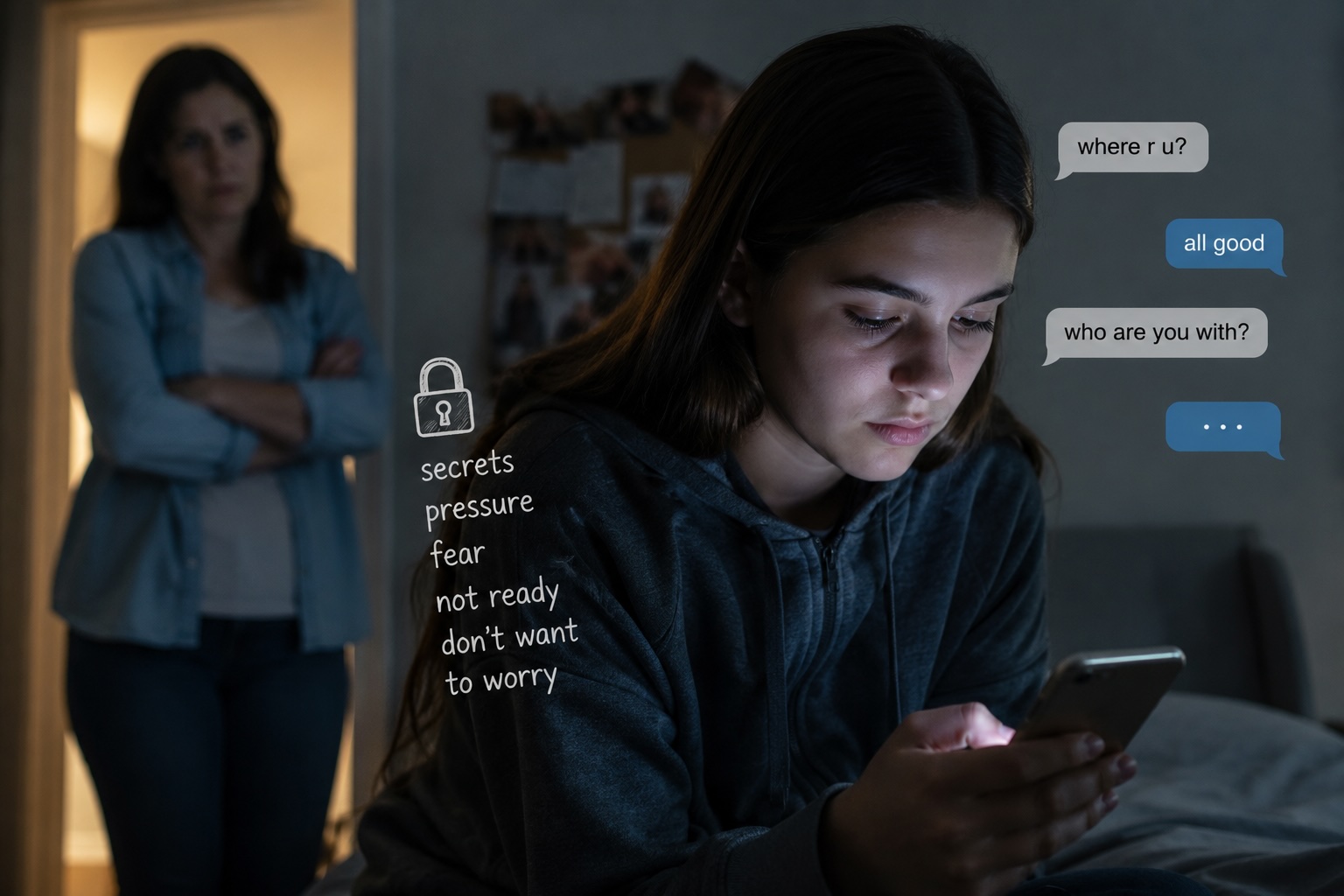
Clinical psychologist Ruth Ancer says though many parents feel that their children have vanished behind a closed door or glowing screen, a strange paradox exists in our hyper-connected digital world. Children are constantly connected to the universe via their devices, yet they often feel deeply isolated from their own families.
Ancer says this feeling of disconnection usually stems from a mix of natural development, relentless digital noise, and conversations that don’t really connect.
“During adolescence, a core developmental task is forming a distinct identity separate from the family. Teens naturally pull back and lean on their peers for validation,” she says. “It’s important that we, as parents, remember that this emotional distancing is a normal, healthy part of growing up; it isn’t a pathology. Parents often take it personally ‒ it’s hard not to ‒ but it’s not actually a personal rejection; it’s an appropriate part of adolescence.”
Danella Cassel, a 19-year-old who matriculated from King David Victory Park in 2025, says she definitely doesn’t tell her parents everything, mainly because she doesn’t want to disappoint them. For her and many other teenagers, some rules are meant to be broken as a way of growing up.
“Let’s say, for example, a teenager breaks a rule that’s been set. Now they’re in trouble. I think they’re actually scared to call their parents. They would rather call a friend or someone else out of fear, having broken the rules that were set in place, and they don’t actually want to tell their parents.”
The biggest misconception Abrahamsohn has come across is that children and teenagers don’t want to connect with their parents. In his experience, it’s the opposite. But children want to be understood rather than judged.
“It’s important to remember that adolescence is the stage where a young person is building their own identity and pushing for independence, while still needing the emotional security of home. Those two needs pull in opposite directions, and that tension is completely normal. The problem is that when conversations start to feel like interrogations, or lectures, or a rush to fix the problem, a lot of teenagers simply go quiet or withdraw. Not because they’ve stopped caring; because they no longer feel comfortable emotionally.”
“If they anticipate that telling the truth will result in an explosive emotional reaction, lecturing, or shaming, their brain treats honesty as a threat. Withholding information becomes a way of avoiding this,” says Ancer.
“One thing that really restricts them from telling their parents is the thought of being in trouble and ruining those expectations that their parents have and the need to not disappoint their parents,” says Cassel.
Dr Hanan Bushkin, psychologist and founder of the Anxiety & Trauma Clinic and the Anchor Based Approach, says, “They may fear anger, punishment, disappointment, judgement, or losing their parents’ trust. In close-knit families and communities, the fear of disappointing the family or being judged by others can make this even stronger.”
What looks like dishonesty is very often self-protection, says Abrahamsohn. “The pattern I see most often in my work is that the harsher the response to the small things, the more reliably children learn to hide the big things. The goal of parenting was never to raise children who don’t make mistakes. It’s to raise children who still come to you when they do,” he says.
Ancer says parents need to remember that rebellion isn’t a sign that teenagers have stopped caring about their parents’ opinions; rather, it’s an aggressive defence mechanism. “They may act out to mask their deep-seated vulnerability, choosing to actively push parents away before they can face what they feel will be ‘inevitably’ letting them down.”
Teenagers may also worry that if they share a problem, the parents will swoop in to fix it, rather than let them figure it out on their own, she says.
“They keep secrets to guard their developing sense of independence. Remember their cries of ‘Please don’t get involved, you can’t tell the school that this happened’. When parents notice a disconnect, the instinct is often to snoop or implement intense digital tracking. However, research proves that increased parental control and intrusive monitoring actually decrease a teen’s willingness to share and increase secrecy.”
When a teenager inevitably comes to a parent with a problem, the most important thing to do is respond calmly.
“This doesn’t mean approving everything the child has done. Parents can still set boundaries and consequences, but those should come after the child has felt heard and understood,” says Bushkin.
“The single most useful thing is to listen more than you speak. Children don’t always need a solution. Very often they just need to feel heard, and to know the person listening is on their side,” says Abrahamsohn. “Children don’t need perfect parents. They need parents who are emotionally available, curious, and ‘safe’ to talk to. When a child genuinely believes ‘I can tell my parents anything, even if they won’t like what I’ve done’, that’s one of the strongest protective factors there is for their mental health. And one that no piece of technology can offer in a parent’s place.”