





Religion
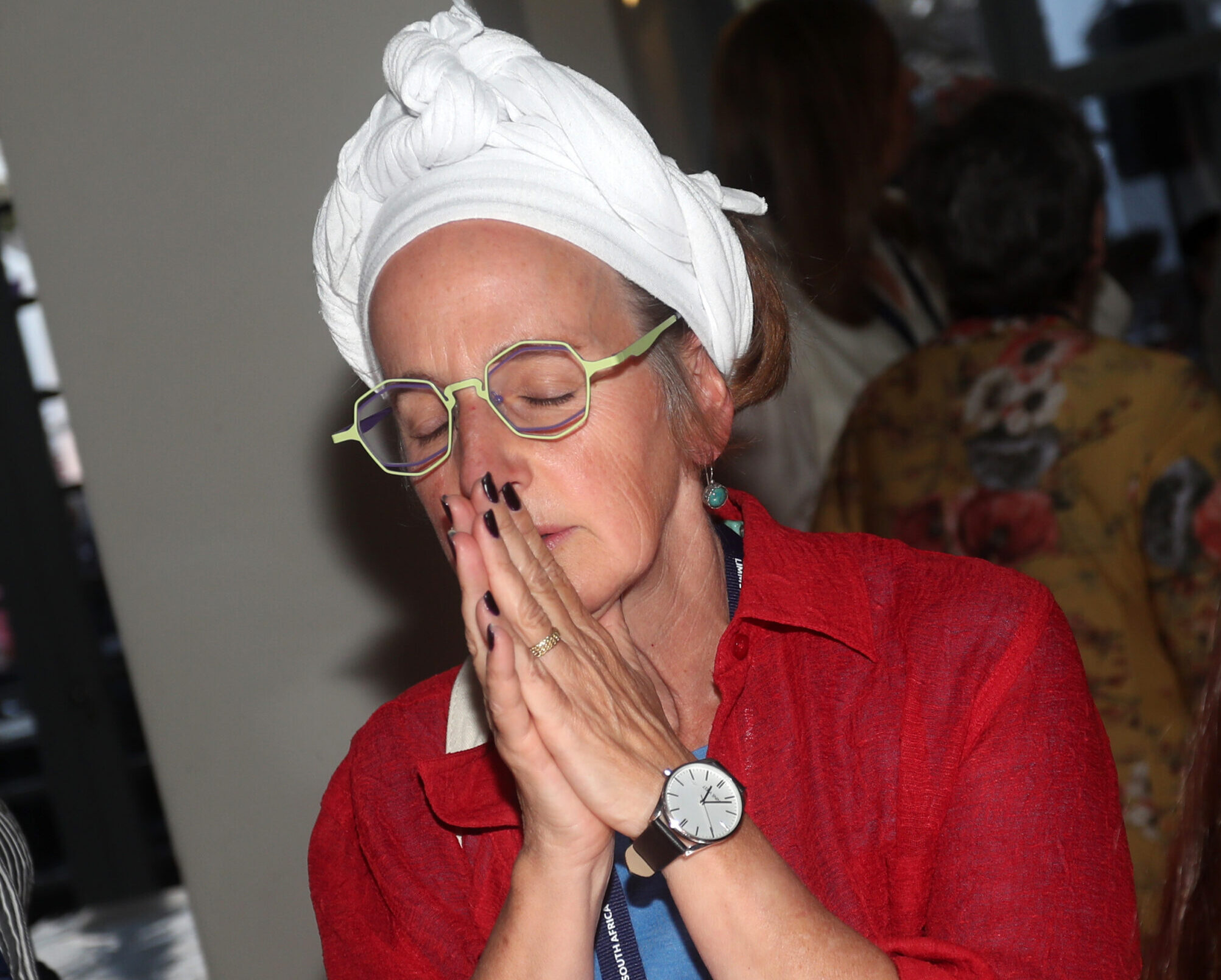
Orthodox woman rabbi supports change, but slowly

“We want to take the rabbis’ authority seriously because the rabbis spend their lives immersed in and devoted to this law, trying, putting what they perceive as G-d’s will above everything else.”
These are the words of Meesh Hammer-Kossoy, a female Orthodox rabbi and Rosh Beit Midrash at the Pardes Institute of Jewish Studies in Jerusalem, a co-ed and non-denominational Jewish learning community. She was speaking at Limmud Johannesburg about rabbinic authority and the interplay between tradition and keeping up with changing times.
“And just like you ask your doctor hard questions, but ultimately you also refer to the doctor and his training that you don’t have, so too the great rabbis, who have training that we don’t have,” she said.
As part of the first cohort of Orthodox women rabbis ordained in 2015, Hammer-Kossoy has seen how Jewish law can evolve. More than 100 years ago, for example, women weren’t permitted to study Torah; today, there are Orthodox female rabbis.
“We’re always changing things. Once upon a time, it wasn’t clear what the rule would be about electricity on Shabbat. The Jewish community agreed on certain rules and that you can’t close a circuit on Shabbat,” she said. “And then you started finding out that you actually can’t walk down the street without closing some sort of a circuit because the lights go on and off everywhere you go. And then the halacha revisits those things and comes to terms [with them]. So there’s no question that the halacha, the rabbis, have been changing; the law has been changing.”
However, she still believes the rabbis have the final say halachically.
“Stick with what the rabbis say. You have to follow what they say. [Although] there is actually a disagreement between the Babylonian and Jerusalem Talmuds over whether, if the rabbis tell you that left is right and right is left, you still have to listen to them. Some authorities believe that even if they tell you something that is clearly not true, you may still have to listen to them. But it’s interesting to note that the Jerusalem Talmud says you don’t have to listen to them blindly. You have to keep your common sense about you,” she said.
But there are certain situations in which she believes a rabbi should see a person for who they are, and not what the Torah says they should be perceived as. For example, if a person tells a rabbi they are homosexual, the rabbi should treat them with dignity, not as someone who’s committed a capital offence.
She also doesn’t accept that women’s traditional role in Orthodox Judaism needs to remain limited.
When she began studying to become a Jewish scholar in 1991, she did so because she loved Torah, not because she planned to become a rabbi. At the time, she knew she couldn’t.
“But looking back now, I ask myself, why was that so obvious to me? I think that’s what will change. I have faith in the Jewish people as a whole, what you might call the wisdom of the crowd. There is a dialogue between our holy tradition, those who interpret it, and lived reality. I believe that dialogue will lead to a slow evolution of the tradition in the way that G-d wants it to be,” she said.
“I don’t want things to change suddenly. If we gave things up too quickly, what would the point of being Jewish be? Judaism can’t simply become whatever people wake up and decide it should be. We are in dialogue with a deep tradition and must be humble before its vision, while having faith that it will evolve.”





Flippit
September 16, 2026 at 9:37 am
Changing Times! Nothings changed in Hashems Times. Creator of the universe! And we as lowly speck of dust in our time have the audacity to challenge laws laid down to suite our times. Surel this is a sick joke.