Lifestyle/Community
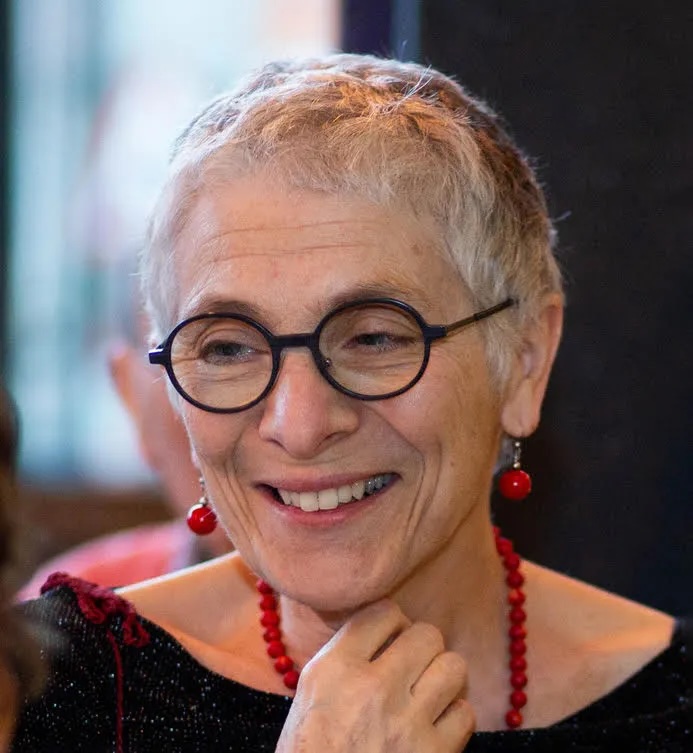
Melanie Phillips urges a new strategy against hate

Melanie Phillips says Jews must stop “playing defence” and become proactive in fighting antisemitism. When Phillips, a British journalist, author, and commentator, travelled through Jewish communities in Britain, Australia, and the United States after 7 October, she encountered fear, confusion, and exhaustion.
People told her about verbal abuse, broken friendships, threats outside synagogues, and growing hostility online and in public spaces. Many asked the same question: How should Jews respond? That question became the foundation of her new book, Fighting the Hate: A Handbook for Jews Under Siege.
“What struck me was that people didn’t know what to say,” she told the SA Jewish Report. “They were being accused of things that were completely false, and they didn’t have the knowledge or confidence to answer back.”
So she wrote the book as a practical guide rather than a political analysis. “I wanted to give people tools,” she said. “Not abstract ideas, but ways of dealing with this in everyday life.”
Phillips said many Jews who weren’t politically active had suddenly found themselves confronting hostility at work, at university, online, and even socially. “They needed some kind of verbal armoury.”
One of the central themes of her book is that emotional reactions often worsen difficult conversations. Phillips encourages Jews to prepare calm, factual responses in advance rather than reacting with anger or distress. “You have to park your rage,” she said. “Rage may be understandable, but it’s not effective.”
She believes people should decide carefully whether to engage in arguments about Israel or antisemitism. “There are situations where your safety matters more than winning a debate,” she said. “If somebody shouts abuse at you in the street, the correct response may simply be to walk away.”
However, there are other situations where thoughtful engagement could make a difference. Phillips argues that trying to “win” arguments is often less important than introducing doubt into false narratives. “If you can create even a small crack in somebody’s certainty, that’s already an achievement,” she said. She gave the example of asking why Hamas invested heavily in weapons and tunnels but not civilian bomb shelters in Gaza. “It forces people to confront facts they may not have considered,” she said.
Phillips also warns against relying too heavily on accusations of antisemitism during debates as it often makes people defensive or dismissive. “If you immediately accuse somebody of antisemitism, they stop listening. You need to focus on facts and truth.”
Much of the book criticises what Phillips sees as a defensive mindset within diaspora Jewish leadership. She argues that many Jewish organisations have spent decades trying to minimise confrontation and reassure wider society rather than aggressively challenging false claims. “Jews have historically survived by keeping their heads down. But that strategy doesn’t work anymore.”
Phillips believes many diaspora Jews still feel their acceptance in society is conditional. “That creates fear. People become frightened of speaking too loudly or challenging lies too directly.” According to Phillips, this caution has allowed anti-Israel narratives to dominate public discourse in many Western countries.
She said Jewish leaders needed to become more proactive in confronting misinformation. “You cannot fight lies by constantly apologising or retreating,” she said.
Phillips also criticised the tendency among some Jewish organisations to avoid discussing antisemitism in parts of the Muslim world. She argued that fear of being accused of racism or Islamophobia had weakened honest discussion. “If you cannot name the source of hatred, you cannot fight it properly.”
Another major theme in the book is the importance of alliances between Jews and Christians. Phillips believes Jewish organisations should work more closely with Christian groups, especially those supporting Israel and religious freedom.
She pointed to attacks on Christian communities in countries such as Nigeria as an example of suffering that receives little international attention. “There are Christians being murdered and persecuted on a massive scale,” she said. “Jews and Christians have common interests in defending freedom and human dignity.”
Phillips believes these alliances should be based on shared values rather than symbolic interfaith events. “This has to go beyond polite dialogue. It has to involve standing together against oppression.”
Phillips has paid a personal cost for her public positions. For decades, she has faced criticism from political opponents, former friends, and sections of the media. She said she had been labelled “far-right”, “racist”, “Islamophobic”, and an “extremist” because of her views. “There were publishers who refused to publish me unless I changed what I wrote,” she said.
However, she also receives significant support from people who feel unable to speak openly themselves. “There are many people who know something has gone badly wrong but are too frightened to say so publicly,” she said. She believes this silent support extends beyond the Jewish community.
Phillips argued that many ordinary people reject what she described as the “inversion of morality” following 7 October. “There are millions of people who can still distinguish between truth and lies,” she said.
Despite the hostility she describes, Phillips said she sees reasons for hope, particularly among younger Jews. She said many Jews under 40 were increasingly willing to identify openly as Zionists despite social pressure. “Young Jews today are often much braver than previous generations. They are no longer willing to hide.”
Phillips believes greater visibility from openly pro-Israel Jews could eventually shift public conversations. “If more people speak out, others feel less isolated,” she said. “That changes the atmosphere.”
She acknowledged that many Jews still fear professional or social consequences for expressing support for Israel. Nevertheless, she believes silence is becoming increasingly dangerous. “If lies are repeated often enough without challenge, they become accepted as truth,” she said.
Ultimately, Phillips said her book was written to help Jews during a period of rising hostility and uncertainty. “I wanted people to understand they are not helpless,” she said. “There are ways to respond with dignity, confidence, and truth.”