Lifestyle/Community
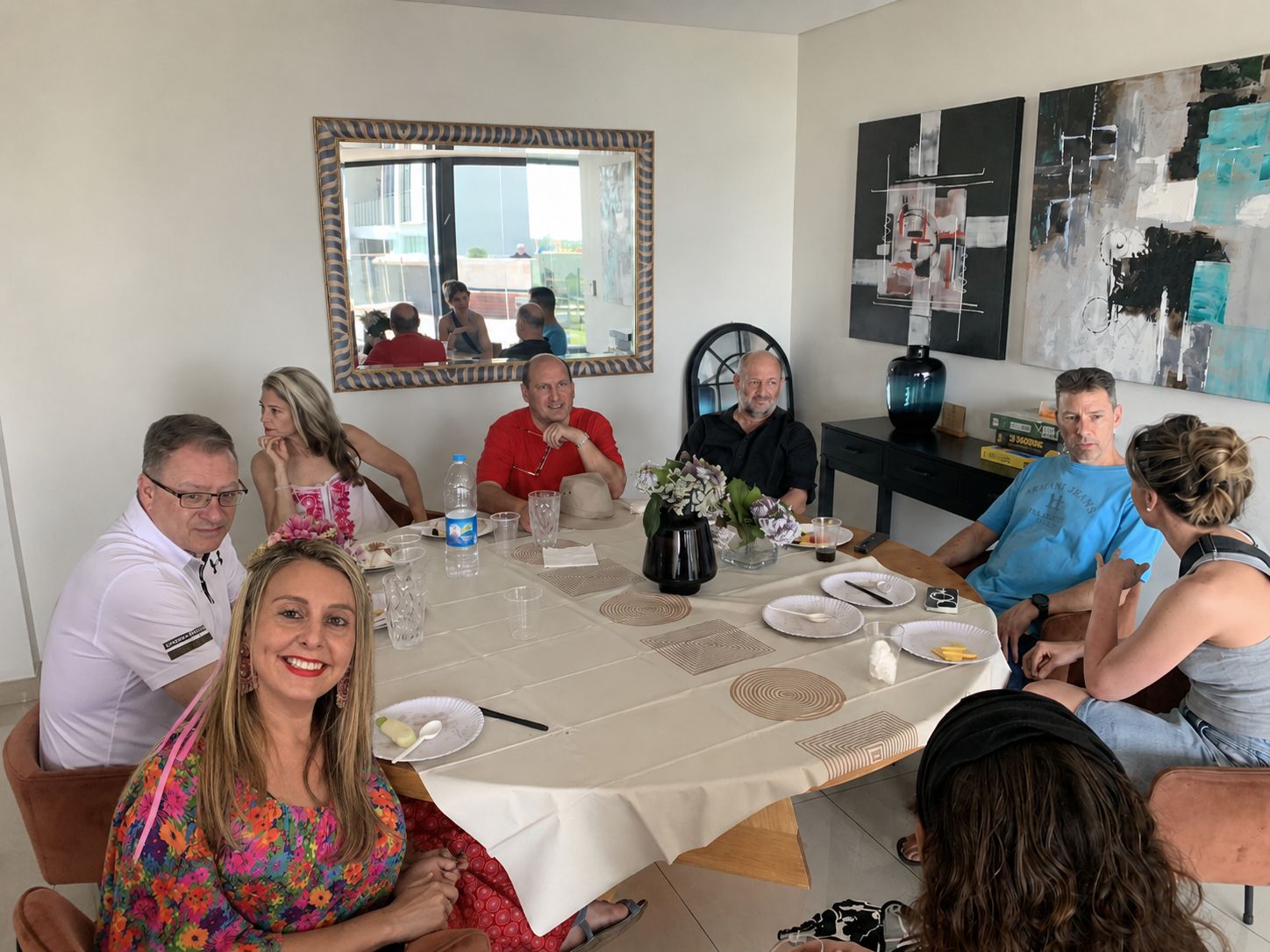
Jewish singles ditch apps for group events

Endless swiping, ghosting, and awkward small talk have left many Jewish singles exhausted. They are increasingly turning away from dating apps and searching for something more human. They want spaces where they can meet naturally, build friendships, and feel part of a community instead of another online marketplace.
That shift has sparked growing interest in creative singles initiatives, community-based events, matchmaking networks, and values-driven social spaces.
For many singles, the issue isn’t simply finding dates. It’s loneliness.
Paul Bacher, founder of Wholesome Spaces in Johannesburg, says the initiative was born from recognising how isolated many Jewish singles felt. “After going through divorce, I became much more aware of how lonely the journey can be for so many Jewish singles.”
Bacher says many older singles no longer fit into traditional young adult frameworks, yet still long for friendship, belonging, and meaningful connection. “There are dating apps, there are shadchanim [matchmakers], there are introductions, and all of those have their place,” he says. “But what I felt was missing was something softer, more human, and more natural.”
Wholesome Spaces hosts between three and five events a week, ranging from hikes and theatre outings to Shabbat meals, padel games, meditation evenings, dinners, and weekends away. Bacher says the events are designed to remove pressure. “We don’t want people walking in and feeling like they are being assessed. We want them to walk in and feel, ‘This is a nice evening. These are good people. I can breathe here.’”
The organisation has hosted more than 500 events in Johannesburg over four years. It has also begun pilot programmes in Israel.
Bacher believes dating apps often reduce people to products. “On an app, you’re often reduced to a few photos, a few lines, your age, your location, and a swipe,” he says.
“There is also the paradox of too much choice. When there are endless profiles, people can struggle to commit to exploring one real person properly.
“A person you may not have chosen from a photograph can become very attractive once you see how they speak, how they listen, how they treat others, how they laugh, and how they carry themselves,” Bacher says.
The desire for more meaningful connection comes as many young Jewish adults struggle with shrinking social circles. An earlier SA Jewish Report article highlighted how many Jewish people in their 20s feel increasingly isolated once they leave school structures, youth movements, and university behind.
Rabbi Nissan Goldman says this gap was one of the reasons behind the creation of Young Jewish Cape Town (YJC). “Our Chabad on Campus students, graduates, and alumni were too old for our programmes and wanted something for their age group, which was clearly lacking,” he says.
YJC caters largely for people aged 24 to 39. The initiative combines professional networking, social gatherings, and opportunities for people to meet organically. Goldman says one of the goals was to help retain young Jews in Cape Town. “One of the most important reasons people leave is for love and for work.”
YJC has hosted networking evenings, Chanukah parties, Purim events, and collaborations with the Chief Rabbi’s Matchmakers Network. One of its first major events featured international Jewish matchmaker Aleeza Ben Shalom and drew 400 attendees, most of them under 40.
Goldman says several friendships and at least one shidduch [match] emerged from the early events. At a YJC networking event called Jews in Tech, participants connected professionally and socially. “Until this day, the participants are constantly sharing job opportunities with each other,” he says.
The move towards more intentional Jewish matchmaking has also become increasingly mainstream. In 2024, Chief Rabbi Dr Warren Goldstein launched the Matchmakers Network, encouraging community members to make at least five introductions a year.
The initiative aimed to revive the older Jewish tradition of community matchmaking in a modern format. The Matchmakers Network has encouraged ordinary people, not only professional matchmakers, to think actively about helping singles meet.
Internationally, Jewish communities are also grappling with changing dating patterns. A recent survey by Jewish Women International in the United States found that many Jewish women experienced anxiety around dating following rising antisemitism after 7 October. Some respondents said they felt safer dating within the Jewish community because of shared values and understanding.
At the same time, technology-driven matchmaking continues evolving. Met@Chabad, an international initiative linked to Chabad, combines rabbinically verified profiles with artificial intelligence-based matching. Goldman describes it as “values-based dating”.
The platform hosts speed-dating events and uses algorithms to connect Jewish singles worldwide according to shared priorities and values.
Yet despite new technology, many organisers believe the strongest connections still happen offline.
Bacher says activities help remove the stiffness of traditional singles functions. “A hike must be a beautiful hike,” he says. “A dinner must be a lovely dinner. A music evening must be enjoyable.” The event itself needs value, regardless of whether anyone meets a romantic partner. “The night stands on its own,” he says.
Goldman takes an equally direct approach. “I will personally go over to a guy and a girl and introduce them to each other, tell each one something about the other, and walk away,” he says. “Now that they don’t have to approach the other, half the work is done.”
Bacher says one of the biggest lessons he’s learned is that many people want connection but fear vulnerability. “People want connection, but many people are also scared of connection.” He says attending a first event often requires courage. “There is something very brave about showing up.”
While several weddings and relationships have emerged through Wholesome Spaces, Bacher says the quieter successes often matter just as much. “Someone who had not gone out socially for months comes to one event and then slowly becomes part of a circle,” he says.
“Someone who felt invisible starts to feel that they have a place.” He believes many singles feel defined by their relationship status within communal life. “My hope is that we stop seeing singles as a ‘problem to be solved’ and start seeing them as whole, valuable, beautiful members of the community who deserve warmth, dignity, friendship, and belonging right now,” he says.
Goldman shares similar sentiments. “A single person is just as much a person with just as much of a worthy life, married or not.” At the same time, he says, Jewish marriage and family remain central communal values. “I wish those who actively choose to stay single learn to appreciate the divine intent of the magic of marriage and building a family,” he says.
Bacher believes the Jewish community is uniquely positioned to respond to growing loneliness because of its strong communal traditions. “The loneliness epidemic is real,” he says. “But I believe the Jewish community has a unique ability to respond to it, because community is in our DNA.”
For exhausted singles, that sense of community may be exactly what they are searching for. As more Jewish South Africans seek authentic interaction over carefully curated profiles, organisers believe the future of dating may look less like an app and more like a Shabbat table, a hike, or a shared conversation.