


Lifestyle/Community
‘Come with a plan,’ olim tell prospective SA emigrants

Making aliya, deciding to leave behind one country and start anew in Israel, is one of the most significant choices a Jew can make.
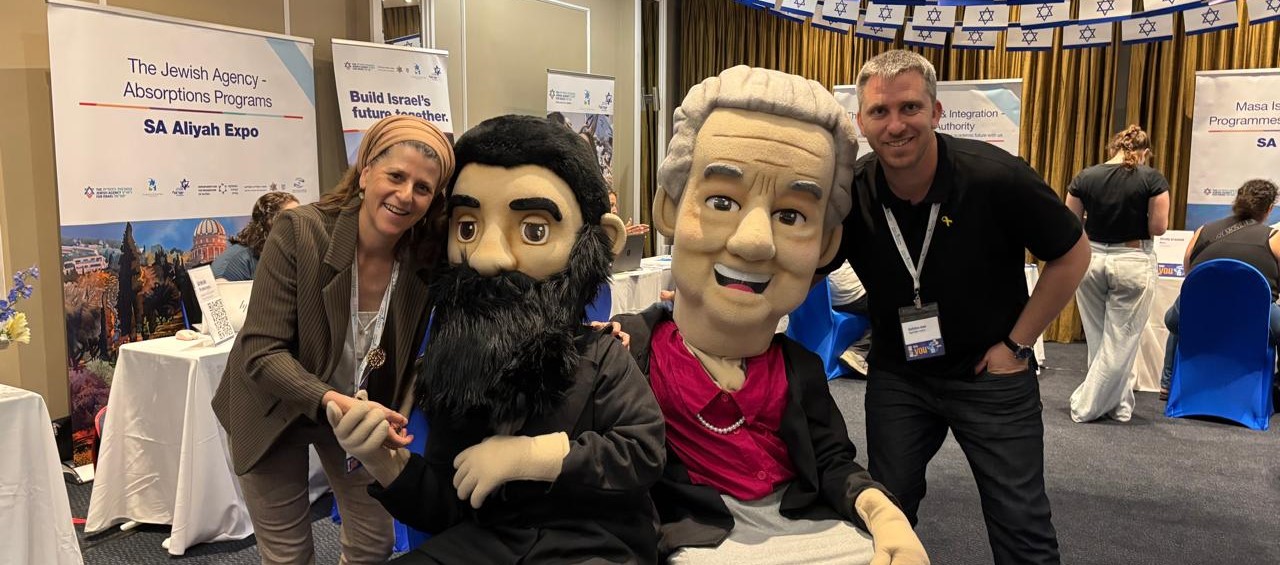
At this year’s Aliyah Expo in Johannesburg on 14 and 15 September, 350 people gathered to explore what that leap looks like in terms of jobs, schools, housing, and community.
Beyond information booths and panel discussions, the heart of the expo lay in the personal journeys which were shared. From young professionals weighing career opportunities to families considering schools, and retirees looking for community, each presenter brought a unique perspective to what aliya means in practice, often using personal experience.
Their stories captured both the challenges and the hopes that come with turning the dream of life in Israel into reality, a dream which 438 South Africans have made since the beginning of the war on 7 October 2023, and 179 South Africans in the past year.
Noam Sieff, who officially made aliya in 2020, was speaking at the expo where he and the Israel Centre launched Garinim, an aliya group for 23 to 30-year-olds. Sieff said he wanted to be part of the expo because “some people make aliya and think they’ve made it, but I don’t view it like that. Obviously, it’s a massive step, but making aliya is just the start of living in Israel. Once you’ve made aliya, it doesn’t mean oh you’ve done it, you can do whatever you want to do. This is like the start of your new life,” he said.
Sieff made aliya after completing his Midreshet Torah Va’Avodah (MTA) gap-year programme with Bnei Akiva in 2017. Although he stayed in Israel after his gap year ended, he never officially made aliya until 2020, in the middle of the COVID-19 pandemic. Sieff had opened an aliya file with the Israel Centre, and went to Israel partway through the process. Because of the pandemic, he had to finish it there.
In the past five years of making aliya, Sieff has begun living the typical Tel Aviv lifestyle, where he combines studying with trips to the beach, playing volleyball, and learning to surf.
Garinim is aimed at people who have finished their university studies and want to make aliya. With this programme, youngsters make aliya as a group and are supported throughout the process, both before leaving for Israel, and after arriving.
“The groups are supported before making aliya with all the bureaucracy and planning, and during the process, for the first six months with subsidised living space; activities; Hebrew lessons or whatever they want. I wanted it to be personalised, also helping find a job if they are looking for a job; helping them get into a Master’s degree; helping them find an apartment; and helping them with the rental contract.”
Natanya Katz said that anyone who wants to make aliya must have a plan in place. “Don’t just make aliya and think that everyone is waiting for you,” she said. “For the first few weeks and months, maybe there’s good support. But you need to come with a plan. In life, there are always challenges, and if you’re happy with your decision, then you’ll be able to overcome those challenges.”
Katz made aliya with her family when she was 10 years old, when she felt like the world was crumbling around her as she was leaving her entire world behind. “I was upset with them. I felt like they were taking me away more than bringing me towards something. We left family, and I didn’t understand where I was going. But I was too young, and didn’t understand what was really happening. Now I couldn’t be more grateful,” she said.
Katz was at the expo to promote Carmei Gat, a rapidly developing neighbourhood in the northern part of Kiryat Gat with a large Anglo community. Katz and her husband moved to Carmei Gat shortly after getting married, and they chose this community because they thought it was the ideal place to grow their family.
“We knew we were looking for a community and friends, and somewhere we could build our family,” she said. “We discovered Carmei Gat, an amazing, new, big and growing neighbourhood. It’s a big Anglo community, but it focuses on making those Anglos Israeli.
“Our shuls are in Hebrew; everything is in Hebrew. I think we connect there really well. I feel like my past has totally shaped who I am. If I had been Israeli, I wouldn’t have been where I was; and if I had stayed in South Africa, I would never have come here.”
Dr Gila Nussbaum showcased the fact that even after qualifying as a doctor and starting a family, making aliya is still possible, and you can succeed.
Nussbaum made aliya with her husband and two small children in 2017 after she completed medical school. She was at this year’s expo to show that making aliya and converting a medical licence isn’t as daunting as it may seem.
Nussbaum converted her licence, and then had to decide what to do as she had to specialise to work in the healthcare field in Israel. She found her feet at a company called Terem, Israel’s leading network of urgent-care centres. She was then offered a job in a residency programme to specialise in emergency medicine. After her four-year residency, she worked her way to become a senior emergency physician at Assuta Ashdod University Hospital, one of the three main hospitals that the wounded were taken to on 7 October. She has since trained many in saving lives.
“I worked in healthcare in South Africa for several years before making aliya, and I was able to convert my licence relatively easily,” she said. “Many doctors don’t realise how long it takes to build a medical career. By the time you finish medical school and start practising, you’ve already invested years of effort into building yourself up, and then to suddenly have to move countries and almost start all of that over from scratch can be daunting. I want to show people that it is possible to reinvent yourself, change your career path a little bit, and have a successful medical career.”