Religion
Festivals that press pause for good effect

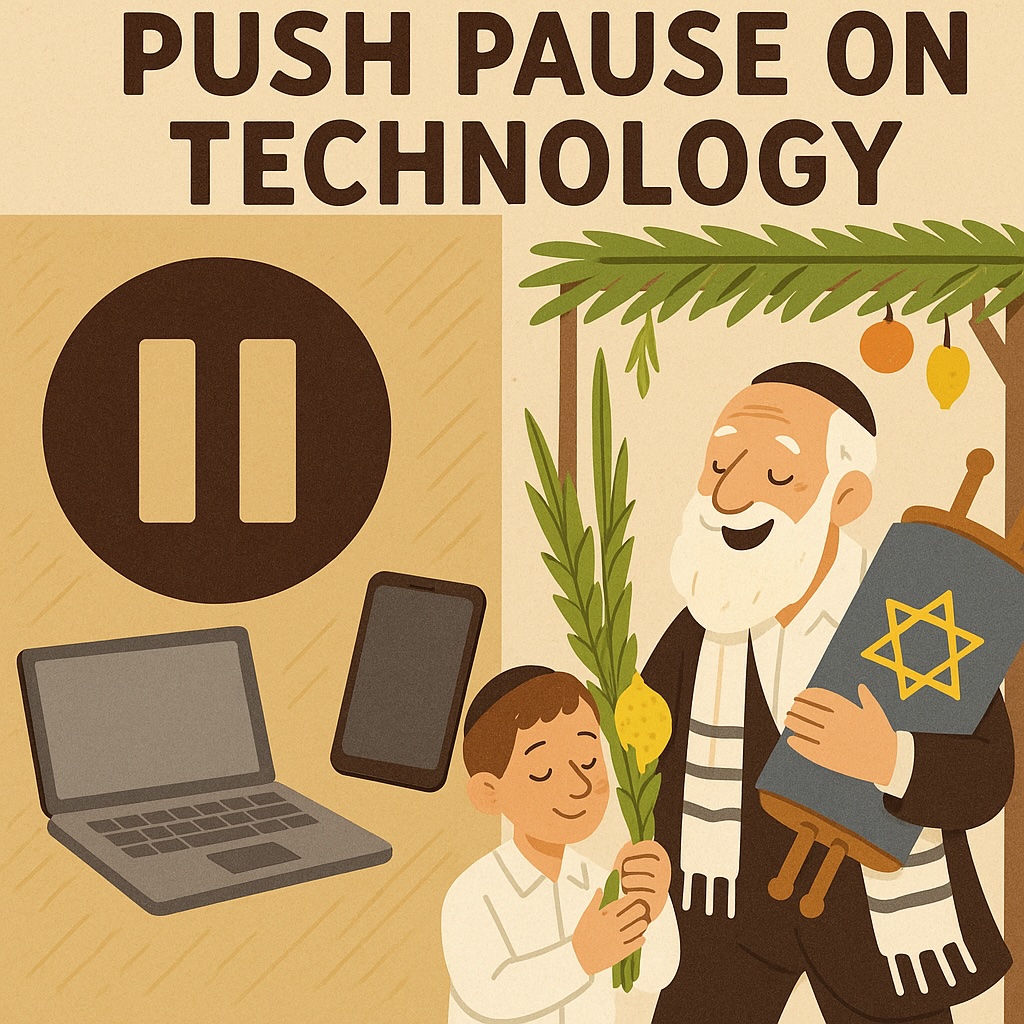
We live in an age where technology does almost everything for us. From smart homes to artificial intelligence, our lives are easier than ever. But with every shortcut comes a danger: we risk becoming lazy, outsourcing not only our physical effort, but even our thinking. Tasks that once trained our minds and built our character are being handed over to machines.
Judaism, however, has always gone in the opposite direction. The Talmud (Eruvin 54b) reminds us that Torah study sharpens the mind precisely through effort and repetition. There are no shortcuts in Torah, and there are certainly no shortcuts in mitzvot.
This message comes alive in the festivals we are about to celebrate.
Sukkot: stepping out of our comfort zone
For one week, we leave our sturdy houses and sit in a simple sukkah. The Midrash teaches that this reminds us of the clouds of glory that protected our ancestors in the desert. The sukkah strips away luxury and comfort, teaching us that true security does not come from walls and roofs but from Hashem himself. In a world where technology gives us endless comforts, the sukkah brings us back to basics.
Shemini Atzeret: a day just for us
After the universal message of Sukkot, where sacrifices are brought for all the nations, Shemini Atzeret is a private day between us and Hashem. Rashi, quoting the Midrash, explains that Hashem says, “Stay with Me one more day, for your separation is difficult.” It’s not about rituals or grand displays, but about closeness. In our world of screens and distractions, Shemini Atzeret reminds us to turn off the noise and connect directly with our creator.
Simchat Torah: starting all over again
Then comes Simchat Torah, when we rejoice in finishing the Torah and immediately begin again. The joy isn’t in completing but in restarting, just as we did at Mount Sinai. Technology can summarise the parsha for us in seconds, but true joy comes only when we roll up our sleeves, learn with our own minds, and dance with the Torah with our own feet.
No-one can do your mitzvot for you
This season also reminds us of a deeper truth: mitzvot cannot be delegated. Honouring parents is a prime example. You cannot hire someone to visit your parents in your place when you are able to do it yourself. The mitzvah is yours. The same applies to kaddish. While in some cases someone may say it if a mourner cannot, the real merit comes from the mourner himself standing and sanctifying Hashem’s name.
Mitzvot aren’t performances to be outsourced, they are meant to transform the one who does them. Rav Soloveitchik wrote that mitzvot are exercises for the soul. If we hand them over to others or to machines, we miss the very point.
In a world of shortcuts, may we resist the temptation to outsource our souls. True mitzvot – and true joy – can be lived only by us, with our own hands, hearts, and minds.
- Rabbi Dr Pinchas Zekry has served as the Senior Rabbi of Durban for 40 years and has been instrumental in establishing the Umhlanga–Izinga Jewish Centre, a vibrant hub of Jewish life in KwaZulu-Natal.