



Lifestyle/Community
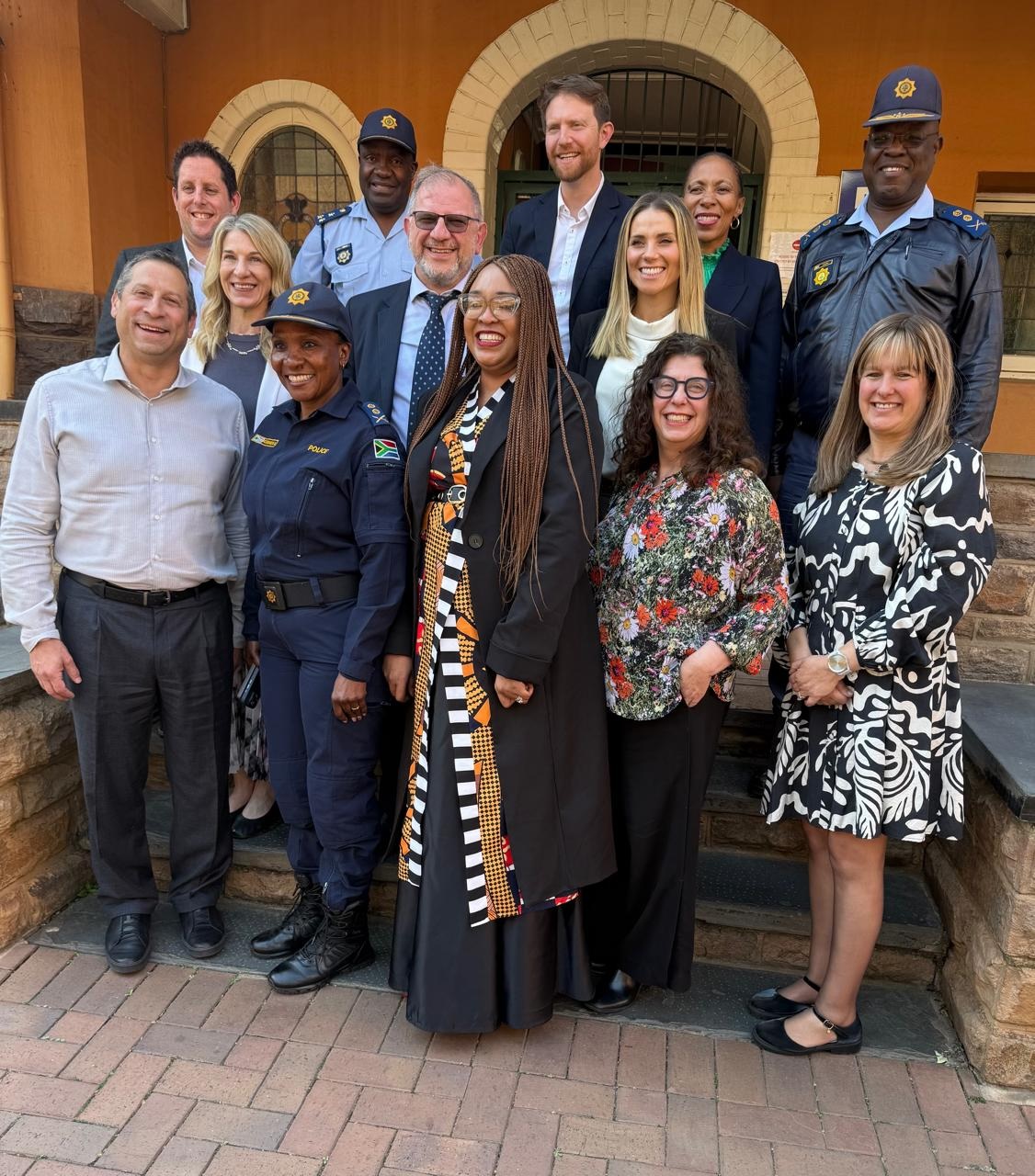
SAJBD encouraged by meeting with top police

Leaders of the South African Jewish Board of Deputies (SAJBD) are reassured that the police are taking antisemitic incidents seriously and want the local Jewish community to feel safe.
They met with South African Police Service (SAPS) top brass in Pretoria on 27 August to discuss security and specific incidents.
But the Board was disheartened to hear that there are no new leads in the investigation into the improvised explosive device (IED) thrown at the Jewish communal headquarters in Cape Town in December last year.
Zev Krengel, national president of the SAJBD, says the Board has maintained a long-standing relationship with the SAPS and the broader security cluster, meeting regularly with police leadership for about 25 years.
“We have very good relations with the security cluster, including SAPS, State Security, and Crime Intelligence, but we always like to formalise this by meeting them every year if possible, he said. The reason we requested this one now was that there has been a lot of movement within SAPS, with changes in leadership and several acting heads.”
The SAPS delegation was headed by Lieutenant General Hilda Senthumule, the Divisional Commissioner for Detective and Forensic Services and acting Deputy National Commissioner for Crime Detection.
She was joined by acting Gauteng Provincial Commissioner Major General Fred Kekana; Major General Nonhlanhla Kubheka, the Johannesburg District Commissioner; Brigadier Sydney Ngele from Visible Policing; Gauteng head of Organised Crime Brigadier Pulane Gopane; and others.
The main item on the agenda was the investigation into the Cape Town IED case, as well as an incident in 2025 when a man carrying an axe approached the Durban Holocaust & Genocide Centre. He was intercepted by security before entering the premises, but allegedly threatened to return with a firearm before fleeing to a nearby park, where he was apprehended by community security and police.
Unfortunately, there have been no breakthroughs so far in either case, says Krengel.
“I think there’s a general sense of frustration with the case with the IED. From what I understand, the Hawks investigation has reached something of a dead end because they haven’t been able to find any new leads. But we still have to keep the pressure on and ensure that the case isn’t closed. Everyone agrees that it was a hate crime and that it needs to remain a priority,” he says.
“The Durban case, however, was downgraded because the individual involved was considered mentally disturbed. Our view is that even if someone is mentally disturbed, it doesn’t mean they aren’t a danger to the Jewish community. We’re therefore trying to have that case classified again as a hate crime, which would require the Hawks to investigate it,” he says.
Senthumule confirmed to the meeting that “the Jewish community, like every other community in South Africa, is entitled to equal protection under the Constitution. Safety is not a privilege; it remains the duty of the state, and SAPS is mandated to fulfil that obligation to all South African citizens.”
Krengel says this relationship is important because “whether it’s a Zionist Federation conference, Yom Ha’atzmaut, a memorial service, or an event where we need public-order policing, particularly in Cape Town when marches take place, it is vital”.
It’s also part of a much broader discussion, he says, with Jewish communities around the world increasingly the target of hate crimes. “We’ve been very fortunate in South Africa that we can live openly and comfortably as Jews and Zionists, but that relies, in part, on the police and security cluster taking every antisemitic incident seriously. That’s why we continuously reiterate the potential dangers,” he says.
Senthumule said it was stressed at the meeting that the right to protest does not extend to “criminal intimidation, incitement, or attacks on people or communal spaces, and that visible policing must be backed by effective investigations, evidence preservation, and case management that leads to meaningful outcomes”.
The SAPS has always shown a strong commitment to protecting South African Jewry, says Krengel. “No matter what our relationship with the government may be, they have always maintained that their responsibility is to protect the Constitution and the people who live within it. They understand the seriousness of these issues and have never dismissed our concerns.”
The current assessment is that there is no immediate or tangible threat to the Jewish community.
What also encourages Krengel is that a younger police leadership showed a real commitment to working with the Jewish community. They gave them their contact details, and there was a genuine willingness to engage. They also agreed that the regions would hold follow-up meetings, with KwaZulu-Natal, the Western Cape, and Gauteng, engaging directly with their respective provincial leadership.