


Youth
Tessa Barlin’s journey from the Kalahari to the Saftas

When Tessa Barlin saw the title of her documentary on the South African Film and Television Awards (Safta) nominees’ list, her first feeling was not triumph, but disbelief. “I had to give myself a proper pep talk,” she says. “Being nominated is already a big deal. You have to show up.”
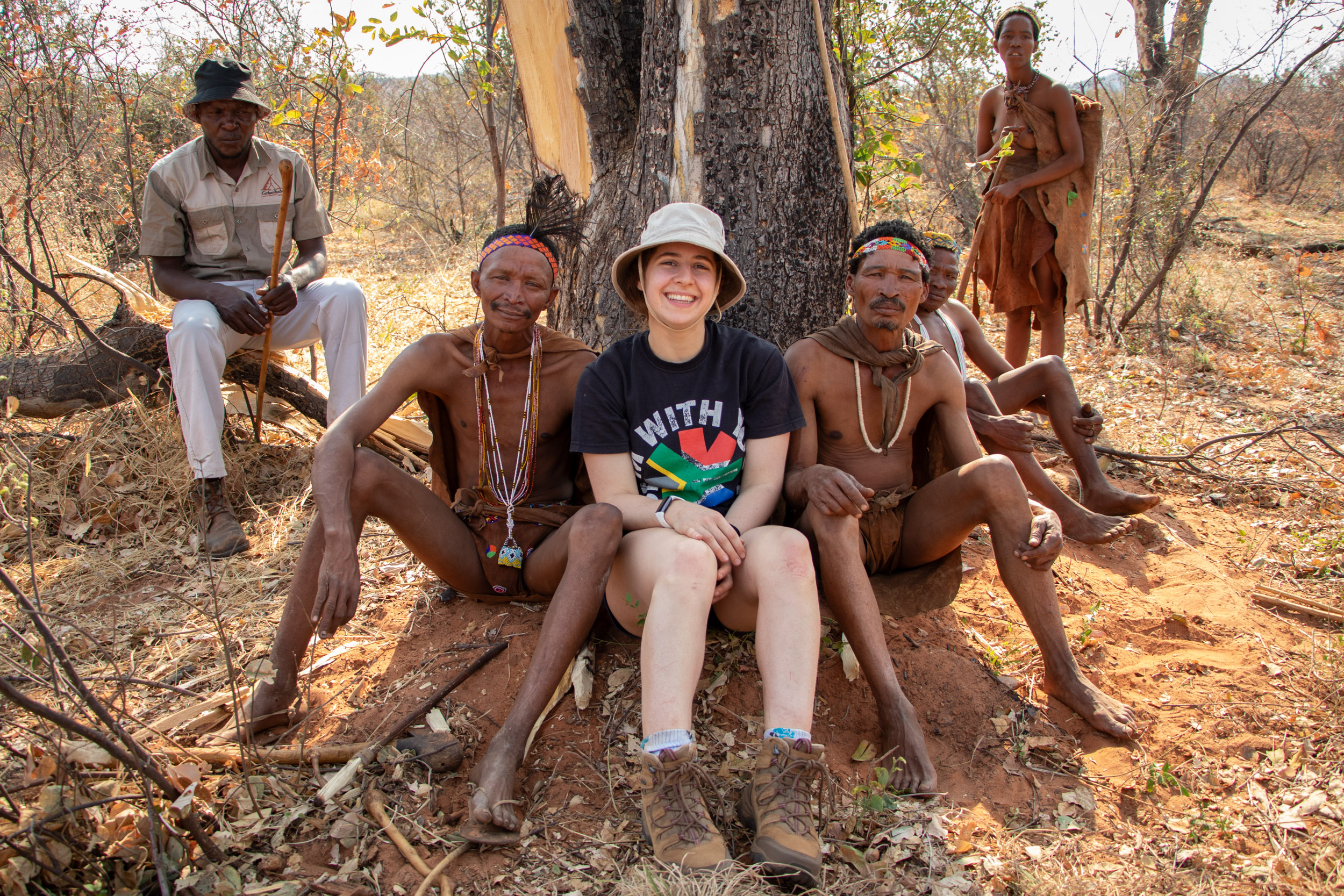
Barlin has been nominated in the documentary short category for Fading Footprints, a film that traces the lives and knowledge systems of a San community in Botswana.
The Safta awards ceremony takes place on 13 and 14 March.
The nomination places her among five filmmakers competing in one of the country’s most prestigious industry events, which recognises excellence across film and television. For Barlin, the moment is both professional recognition and an opportunity to expand the reach of a story she believes carries urgent global relevance. “I do believe in the film and I do believe in the message,” she says. “Entering the Saftas was about giving it a platform for furthering the conversation.”
The documentary was filmed in 2021 by a small crew of five and released in 2024. Barlin directed the project, working alongside cinematographer Moses Tau; fixer and location manager Dan Myburg; photographer Bridget Uttar Kornetzky; and a local cook, Olivia Mojakwe, who supported the team in the field.
The production began with a very different concept. Barlin originally intended to explore humanity’s relationship with the stars and the shared idea that people are made of stardust. That changed once filming began.
“While we were there, we realised we were with a group of people who are the last custodians of indigenous hunting and gathering knowledge,” she says. “If we don’t start talking about it now, that knowledge and that lineage will be lost. That would be the biggest loss to humanity.”
Fading Footprints documents not only daily life but a sophisticated understanding of the natural environment that has developed over generations. Barlin believes this knowledge is essential at a time of accelerating climate crisis. “We need to be centring indigenous voices in the fight against climate change,” she says.
The project has always extended beyond the screen. A fundraising screening at Cape Town’s Labia Theatre enabled Barlin to return to the San community with the completed film for a local showing. “That was the whole purpose,” she says. “To take it back to them.”
The response there shaped her sense of responsibility towards the people who appear in the documentary. If it wins, she hopes to send something tangible back to the community. “I’ve thought about whether there is prize money and what I would do with it,” she says. “Even if there isn’t, I would like to give them something they’ve been wanting, like a film projector.”
Barlin’s connection to the story is also personal and rooted in her Jewish identity. She describes a strong sense of recognition in the San experience of landlessness and displacement. “The biggest link is the notion of landlessness,” she says. “My ancestors didn’t have land either. I felt connected in that sense.” That connection also led her to reflect on the tension between settlement and nomadism.
“Just because Jews have now settled in Israel, South Africa, or America doesn’t mean that’s the right way for everyone,” she says. “We should still be advocating for the San and the Khoi to be able to practise their traditional way of life and not force them to settle in one place.”
She has recently extended her research into the early history of agriculture in the Middle East, and how ancient farming developed from the environmental knowledge of hunter gatherers. “The only reason people were able to start planting food is because they had such an intimate knowledge of the vegetation that was already there,” she says. “That comes from a very interconnected relationship with the land.”
For Barlin, that historical link deepens the sense of continuity between ancient Jewish experience and the contemporary San world.
Although she previously worked on the Safta-winning documentary The Water Dancers, she wasn’t present when that award was received. This time, she plans to attend the Saftas. The nomination itself has already shifted her perspective on her career. “I’m trying to think of it like a silver medal,” she says. “Being nominated is something many people never get to say.”
For a documentary short, a nomination can significantly extend its life, opening doors to new audiences, funders, and collaborators. Barlin hopes the visibility will bring attention not only to her work, but to the community at its centre. “It’s about the conversation continuing,” she says.
Her approach to filmmaking has been shaped by in-depth conversations with audiences after screenings, where questions about representation, ownership, and environmental responsibility come to the fore. “That’s where the real growth has happened for me as a filmmaker,” she says.
As the ceremony approaches, she is balancing anticipation with perspective. “There’s a 20% chance of winning,” she says. “But the nomination itself means the film has been seen.”
Whatever the outcome, the journey from a remote landscape in Botswana to one of South Africa’s most visible cultural stages marks a significant moment for a filmmaker whose work is grounded in listening to the voices of people often overlooked.