



Youth
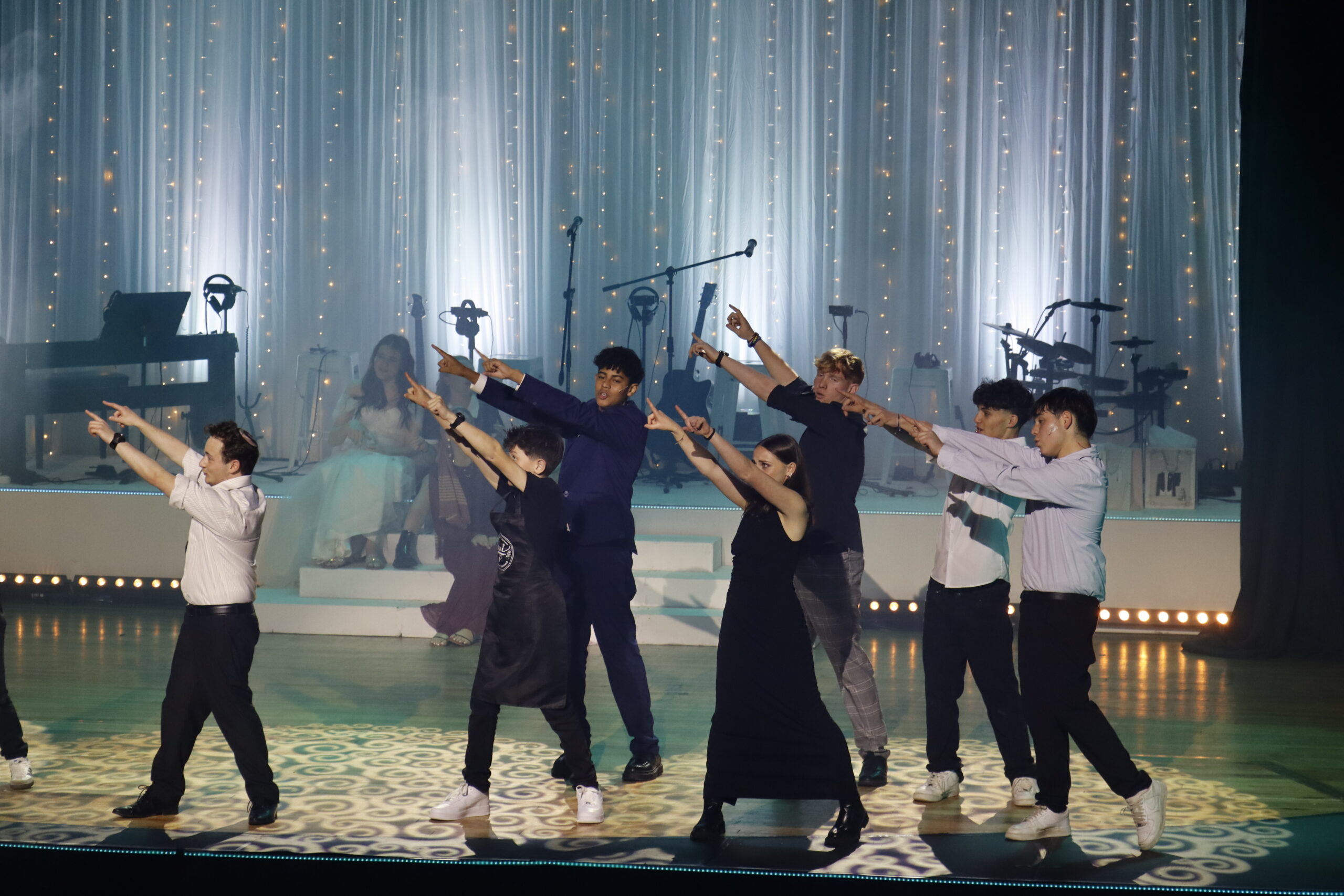
King David puts the Glory Days on stage

Some say that school days are the best days of your life, while others believe them to be the complete opposite. Nothing demonstrated this more than the King David High School production Glory Days, on stage this week.
The original jukebox musical – conceptualised by Claudia Caldeira, head of Arts and Culture at King David; Meryl Malkin, head of Social Work; musical director Debra Mizrachi; choreographer Hannah Gralnik; and Jodi Starkowitz, head of Marketing – was created to represent King David, especially as a now unified school.
The play was written by David Fleminger, an author, scriptwriter, and director based in Johannesburg who has worked in the media industry for more than 30 years.
Work on the production started in November last year, and when the team behind the show couldn’t find an existing musical that they wanted to do, they decided to write their own.
“This year, we set out to create something truly meaningful, something that would authentically represent both schools and the unity between them. After exploring existing options, it became clear that nothing quite captured the story we wanted to tell. So, we decided to create a bespoke production, one that reflects our vision exactly and brings our shared identity to life on stage,” said Malkin.
Glory Days was directed by Mizrachi, Renos Spanoudes as acting director, Aiden Sack as technical director, Gralnik as choreographer, Dylan Wiese as make-up and costume director, Shannen Shneier as set design and prop director, Simon Smith as band director, Malkin as producer, and Caldeira as the head of Arts and Culture at the school.
“The directors have skilfully blended the strongest traditions from both schools’ theatrical backgrounds, creating a richer and more dynamic experience,” said Starkowitz.
The pupils and their talents have been brought together to represent the stereotypes of people from the school: the rich kid, the rugby boy who peaked in high school, the rebel girl who finds religion after school, the kugel, the one who felt like they never fitted in, the overachiever, the person who will do anything to get liked by the popular kids, and the singer who thinks he’s going to make it big.
The story follows a group of 11 former high school friends who reunite for the wedding of Gideon and Michelle, bringing with them years of shared history, unresolved tensions and personal growth. The play shows the wedding, as well as flashing back to the characters’ school days. This is all set to the soundtrack of some truly catchy pop songs that perfectly capture what the characters are feeling.
It then takes us back to the scene of the wedding, where they catch up with each other’s lives since school: businesses, marriages, children, and everything in between.
Old issues rise to the surface: explosive relationship drama, the rekindling of old flames, and the discovery of new relationships.
One of the major relationships is between Josh and Tali, who had a brief relationship in high school, but it ended because Josh wanted to focus on his music. Now, rather than being a superstar, he’s the wedding singer. Tali is described as the “Rebel to Rebbetzin”. In high school she smoked in the bathrooms, but in adulthood, she found religion and became a rabbi’s wife.
“At the heart of the story are 11 main characters, each with a distinct backstory that shapes how they reconnect, reflect, and rediscover one another,” explained Caldeira.
It is a true show of unity, bringing back good and sometimes bad memories for the audience as the characters act out relatable school scenes, like running late for class, trying to fit in with the popular crowd, seeking the attention of your crush, and high school relationship dramas, romantic and platonic.
“Through this production, the cast has formed meaningful connections, using the opportunity to bond both on and off the stage. The 11 main characters, in particular, have grown into a unified ensemble, and their cohesion has naturally extended to the rest of the cast, creating a strong sense of unity throughout the entire production,” said Malkin.