


Religion
What’s with Jews and food?

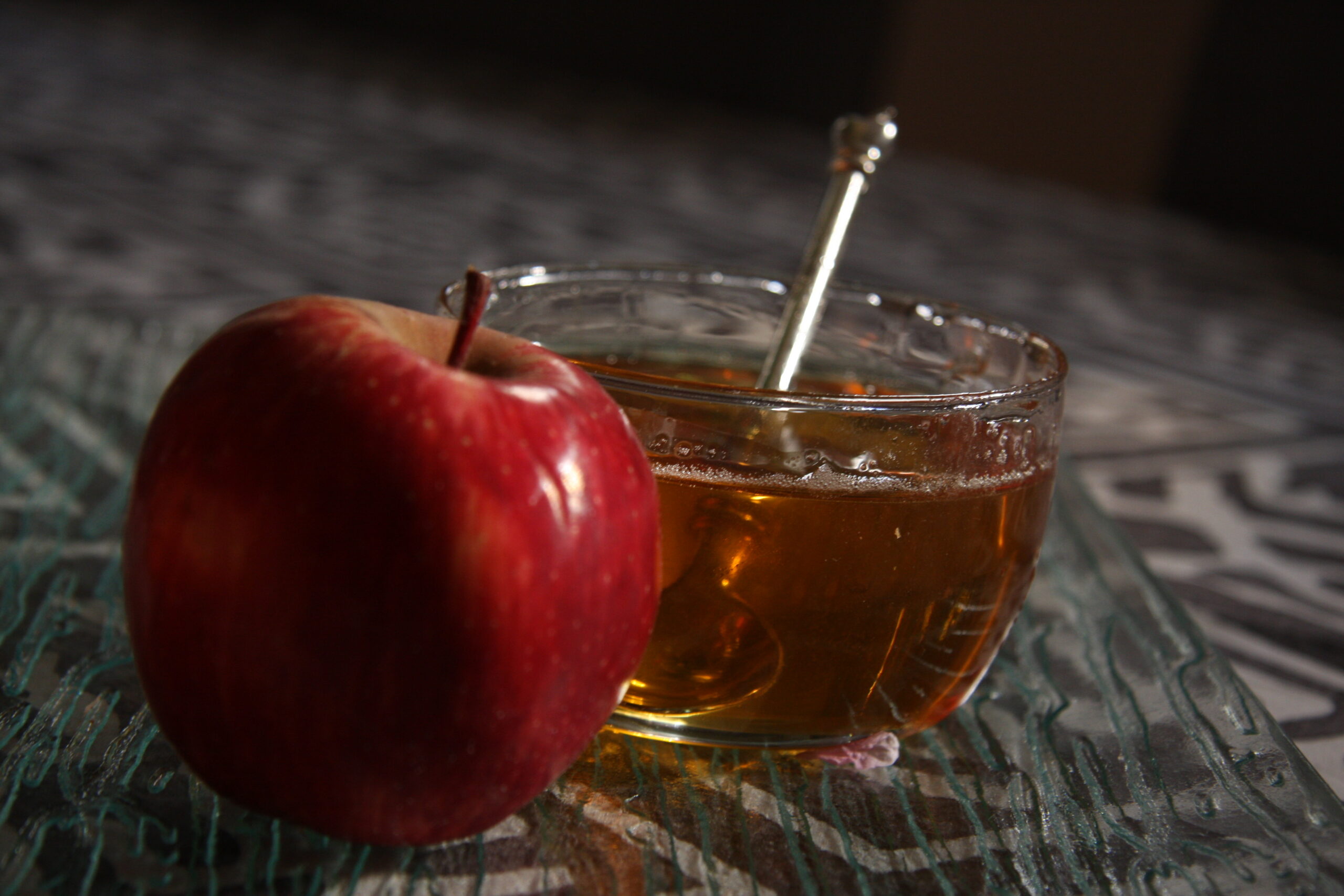
The sweet aroma of challah, round and full. The sticky honey dripping off the apple. The carrots. Black-eyed peas. Leek patties. Tzimmes. The red juice of the pomegranate. The wide eyes of the fish head, or the chocolate-covered marshmallow one.
Few holidays on the Jewish calendar are as full of powerful food imagery as Rosh Hashanah. On the first night of the Jewish new year, we gather with friends and family and wish each other blessings, giving our deepest hopes through something we can see, touch, and taste.
An apple dipped in honey, with a prayer for a sweet new year. A fish head, expressing our wish to be like the head and not the tail. Different communities bring their own customs to the table. Some have an entire spread of special foods, each accompanied by a prayer for the year ahead.
But why the focus on food? Surely our prayers to G-d should be anchored in good deeds, Torah study, and a renewed commitment to mitzvos?
And the question reaches beyond Rosh Hashanah. Why does Judaism mark so many spiritual moments with food and drink? In our quest to connect to the Divine, shouldn’t we be loosening our hold on the physical and mundane? Striving higher, towards the lofty and spiritual?
Judaism’s focus on food isn’t accidental or driven purely by culinary pursuits. It teaches us something profound about our role in this world. And there is no better time to remember that lesson than on Rosh Hashanah, when we renew our commitment to G-d and our purpose in His creation.
What are we doing here? Are we physical creatures striving for spiritual growth? Are we spiritual beings finding our way through a physical world?
The truth is, we are both. We have a guf, a body, and a neshama, a soul. The body needs nourishment. The soul longs for connection. Both are part of who we are. Our job is neither to escape the physical nor to become consumed by it.
Our job is to bring heaven down to earth. To elevate the ordinary to the extraordinary. To bridge the gap between spirituality and physicality.
There are heavenly worlds filled with angels and seraphim. Souls unencumbered by the demands of a physical body.
And there is this earth. Soil and rain. Bread and honey. A world we can touch and taste, filled with needs and desires, demands and possibilities.
And then there is us. The human being. A body and a soul. Feet planted firmly on the earth. A Divine soul within. Our job is to bring heaven down to earth. We are the bridge between these two worlds. And our tools to connect them are Torah and mitzvos.
That sounds lofty, but it happens in surprisingly ordinary ways. A coin earned through our labour becomes tzedakah (charity). Wax and a wick become a Shabbos candle, bringing light and holiness into a home. A meal becomes an opportunity to welcome someone who would otherwise eat alone.
The money, the food, the words become part of our service of G-d. Through Torah and mitzvos, we bring holiness into the things we already spend our days doing.
It’s easier to feel spiritual during a spiritual experience. When the shul falls silent before the shofar. When a familiar melody stirs something deep inside us.
But G-d asks us to bring the spiritual into our ordinary moments too.
An ordinary Wednesday. There are lunches to pack. Emails to answer. Someone needs a lift. Someone has left their shoes in the middle of the kitchen. Can we invite G-d into those moments too? Can we find an opportunity for patience, generosity, or a mitzvah right there, in the middle of the day we are already having?
Perhaps that is a question to bring to the Rosh Hashanah table.
So enjoy the sweet challah, the apple and honey, the pomegranates. Breathe in the familiar aromas. Look at the faces gathered around you.
These foods are a delight for the palate. And through the blessings we make and the prayers we say, they become nourishment for something deeper too.
We acknowledge the One who made them. We ask for His blessings. We share His abundance with one another. We allow the sweetness we taste to awaken a prayer for the year ahead, and a commitment to bring sweetness into the lives around us.
These ordinary foods. These fruits of the earth. Grown in soil, ripened in sunshine, brought to our tables. Woven into our service of G-d, they become conduits for Divine blessings.
And here we are, body and soul, beginning another year of the work we were created to do.
Bringing heaven down to earth. One blessing. One mitzvah. One ordinary moment made holy.
- Temmi Hadar is the rebbetzin at Pine Street Shul.