



OpEds
How the phone took over our shopping

Almost six in 10 South African online shoppers now buy on a smartphone. The phone has become our main shopping device, cramming small shops and vast online marketplaces into the device we carry everywhere.
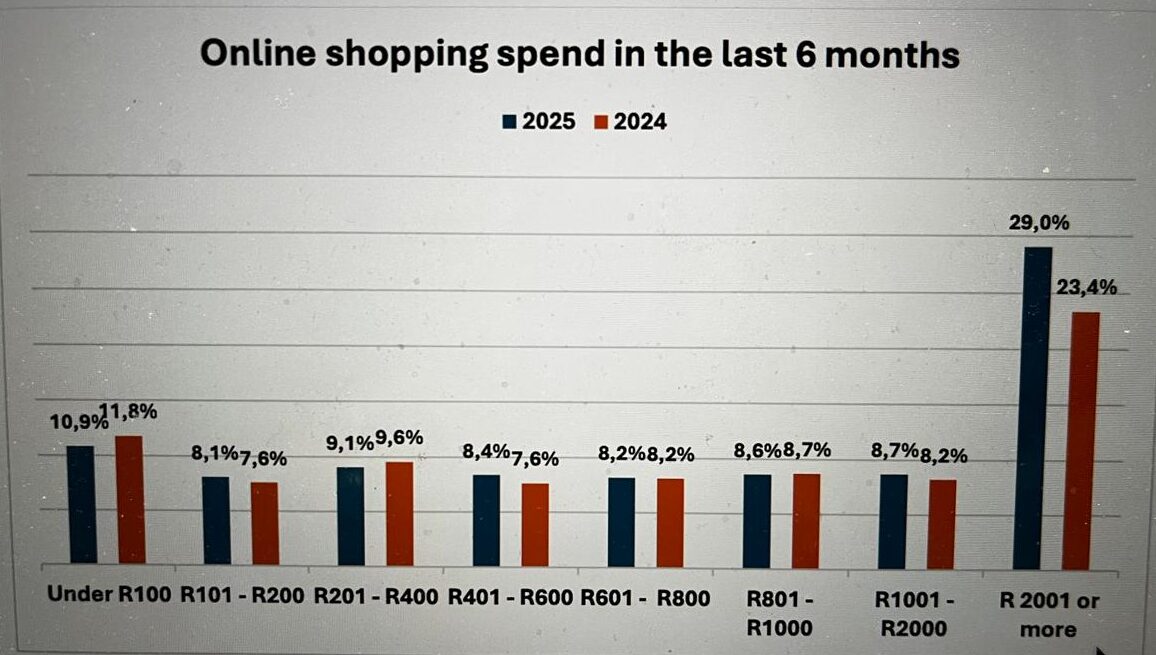
That change has helped online retail reach R1 in every R10 spent with South African retailers. Online spending reached about R130 billion last year and is expected to climb to R159 billion in 2026, according to the “Online Retail in South Africa 2026” study.
The study was conducted by World Wide Worx in partnership with Mastercard, Peach Payments, and Ask Africa. Its broad view of shopping habits comes from Ask Africa’s Target Group Index, based on 23 910 consumer interviews.
The research found that 57.9% of online shoppers use smartphones. Laptops are a distant second at 26%, while desktop computers and tablets are each used by around one in 10.
That doesn’t mean the app is the new store. Shopping on a phone doesn’t require a retailer app. The Ask Africa research found that web browsers beat apps in 42 of the 48 shopping categories measured. Browsers can be used on computers or phones and, given the dominance of smartphones, browser shopping clearly remains a central part of the mobile experience.
In clothing, 28.4% of online shoppers buy through a browser and 17.9% through an app. For groceries, the split is 15.6% to 11.2%. Retailers therefore need mobile websites that work as smoothly as their apps. Occasional customers shouldn’t have to install an app before they can buy a shirt or order groceries.
Clothing is the leading online retail category, bought by 36% of online shoppers, well ahead of groceries at 21.2%. It helps explain why Shein has become South Africa’s second most widely used online retailer, reaching 21.5% of shoppers. Takealot remains well ahead at 35.3%, while Checkers Sixty60 follows at 15%.
Shein offers a seemingly endless clothing catalogue and prices that encourage shoppers to add one more item. Takealot combines a wide product range with local delivery and collection points.
Checkers Sixty60 has changed South African shopping culture. It turned the weekly supermarket run into an order that can be placed in minutes and delivered in less than an hour. It also taught customers to expect live driver tracking and precise delivery updates. Any retailer still promising delivery in seven working days and sending vague notices that an order has been dispatched now looks hopelessly out of date.
Convenience remains a stronger attraction than price. Almost a quarter (22.8%) of online shoppers strongly agree that convenience is more important, while 15.7% say they go online for lower prices. Delivery charges can overturn that calculation on a small order, but saving time has become part of the value of a purchase.
The phone has also turned product research into part of the shopping trip. Almost 30% strongly agree that the internet helps them research products before buying, and 24.7% consult several sources before making a significant purchase.
Customer reviews now have more influence than anything a brand says about itself. Reviews are the biggest influence on an online purchase for 28.4% of shoppers, followed closely by price promotions at 26.9%. Only 5.4% say brand advertising would give them the greatest reassurance when buying an unfamiliar product.
Clear returns and refund policies are four times more influential than brand advertising for an unfamiliar purchase. Retailers can spend heavily getting a product onto a shopper’s screen and still lose the sale when the reviews are poor or the returns process is vague.
A separate World Wide Worx survey of 1 400 existing online shoppers examined how they choose platforms, pay for purchases, and view newer forms of shopping.
It found that almost 30% now buy from local platforms at least once a week, up from 21% a year ago. South African platforms remain the primary shopping channel for 43.6%, compared with 10.6% who mainly shop through international platforms.
International platforms are nevertheless being used more often. The proportion buying from them at least monthly rose from about 20% to 26.6%. Among 18- to 24-year-olds, 21% say that better deals are the main attraction.
Ironically, more South Africans are buying internationally even as trust in these platforms collapses. Only 4.3% now trust them more than local platforms, down from 10% a year ago. Local platforms are trusted more by 46.6%, while 38% trust both equally.
In other words, low prices are attracting buyers, but the experience is failing to turn that traffic into trust.
The phone may make it easy to reach the checkout, but payment failure can end the purchase. Three in 10 respondents had experienced a decline during the previous year despite having enough funds or credit. Among them, 39.3% abandoned the purchase and 17.3% went to another retailer.
No payment method dominates. Instant electronic funds transfer leads at 16.4%, followed by debit cards at 15.3%. Shoppers care mainly about speed and security, and will use the method that gives them both.
One in three online shoppers has bought something through a WhatsApp link, rising to almost four in 10 among those under 35.
That means an app used for family groups and voice notes has become a substantial retail channel. It gives small businesses a way to sell online without the cost of an ecommerce site, provided they can persuade buyers to trust the person behind the message.
Artificial intelligence (AI) faces a tougher sale. Only 26.4% are comfortable allowing an AI service to complete purchases within rules and spending limits they set, while 50.9% are uncomfortable. Shoppers may accept help finding the right product, but most still want their own finger on the buy button.
The largest opportunity lies among the millions who already have a phone and an internet connection but have yet to buy online. Internet access reaches 79.1% of South African adults, while only 34.2% shop online.
Among those already buying online, 69.6% expect to increase their spending over the next year. Much of that growth will play out on the smartphone, where every retailer is only a few taps away from every competitor.
- Arthur Goldstuck is chief executive of World Wide Worx and principal analyst of the “Online Retail in South Africa 2026” study.