Lifestyle/Community
Rabbi Greg’s journey from Netzer to North London

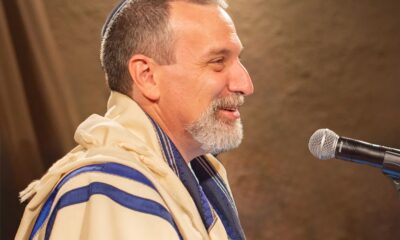
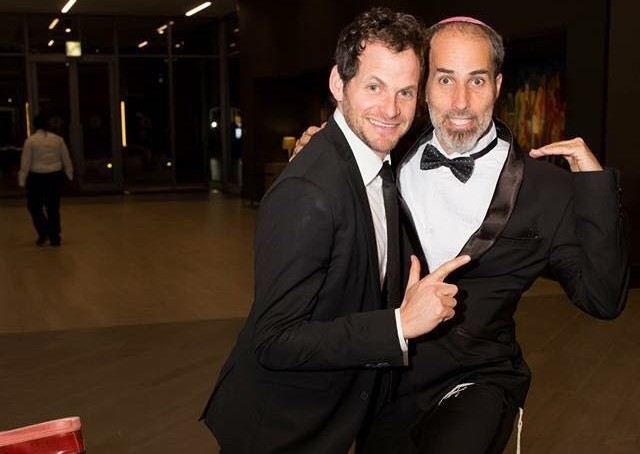
For two decades, Rabbi Greg Alexander has been one of the most recognisable faces of Progressive Judaism in Cape Town. He has stood beside congregants during births, Barmitzvahs, Batmitzvahs, weddings, illnesses, and funerals. He has helped shape Temple Israel into one of the largest Progressive Jewish congregations in South Africa and has become known simply as “Rabbi Greg” to most of the community.
Now, he is preparing to leave for London, where he will become senior rabbi of Alyth, one of the United Kingdom’s largest Reform congregations. The move ends a significant chapter in both his life and the history of Temple Israel.
The journey began long before he entered the rabbinate. Alexander was born and raised in Johannesburg in a family deeply connected to South Africa’s Progressive Jewish movement. His grandparents helped establish the first Progressive synagogue in Hillbrow alongside Rabbi Moshe Chaim Weiler.
His parents were active members of the Imanu-Shalom congregation, and his mother became the first woman elected to chair a synagogue in South Africa. “Community service was built into my DNA,” Alexander says. He had his Barmitzvah at Temple Shalom under Rabbi Adi Assabi and grew up in a congregation that combined Jewish life with a strong commitment to social justice.
As a teenager, he became heavily involved in Netzer, the Progressive Jewish youth movement. He describes it as one of the most important influences on his development. “Netzer was a place where I felt I could be my authentic self,” he says. “It challenged me to think religiously, philosophically, politically, and spiritually about who I was and what I believed.”
After matriculating from King Edward VII School, he went to study at the University of Cape Town (UCT). “I can honestly say that I had three majors, English literature and Psychology at UCT, and Netzer at the Zionist Fed offices in the old Leeusig Building, at the corner of Dorp Street and Leeuwen Street, in town. All the youth movements had their offices there and on any afternoon, you could hear robust discussions about Israel or Jewish identity going on in the basement with the leaders of Bnei, Betar, Habonim, and Netzer. It gave me a real sense of the breadth of views and of talent that this special community enjoys,” Alexander told the SA Jewish Report.
Ironically, he didn’t initially want to become a rabbi. He envisioned a future in advertising and worked as a copywriter. He says he enjoyed the discipline and creativity, but gradually realised that his deepest passion lay elsewhere. “I yearned to teach Torah, lead services, build Jewish community, and do that full-time,” he says.
His rabbinical studies eventually took him to Leo Baeck College in London, but even then, he expected to become an educator rather than a congregational rabbi. “The word Rav means teacher and that is what drew me to the profession.”
Working in communities changed his perspective. He found himself drawn to the relationships formed during major life moments and the privilege of accompanying people through some of their most significant experiences.
His path to Temple Israel came through an unexpected conversation. He was living in Israel with his then fiancée, Rabbi Andrea Kuti, and they came to South Africa to explore possible opportunities. Johannesburg seemed the likely destination. Then Alexander decided to introduce his fiancée to Cape Town.
Temple Israel’s president at the time, Greg Flash, a friend from the Netzer days, invited the couple to meet the congregation’s leadership. “We loved Cape Town right away and the shidduch was made there and then,” Alexander says.
Temple Israel, founded in 1944, is South Africa’s largest Progressive Jewish congregation. When Alexander arrived in 2006, it was seeking renewed energy, he says. Over the following years, he led significant changes in both its culture and programming.
He points to the introduction of choirs, bands, residential retreats, international guest rabbis, and new educational initiatives. He also helped create what he describes as a more relationship-based leadership model. “Instead of ‘Rabbi Alexander’, we are now ‘Rabbi Greg’ and ‘Rabbi Andi’,” he says. “Approachable, human, and ready to meet people where they are.”
Temple Israel has since grown into a congregation of about 1 000 families across Cape Town. Among the milestones that stand out are initiatives that pushed boundaries within South African Jewish life. These included Temple Israel’s first Pride Shabbat and the first Ramadan iftar, or evening meal, hosted by the congregation.
Alexander officiated at South Africa’s first same-sex Jewish wedding, a landmark moment that reflected his commitment to inclusion and equality within Jewish communal life.
The congregation’s 70th anniversary celebration remains one of his most treasured memories. Hundreds of congregants gathered at the Grand Africa Café & Beach near the V&A Waterfront to celebrate. “I often look at that photograph as a celebration of the joy and diversity that I love about this shul,” he says.
Alongside his rabbinic work, Alexander has maintained a strong interest in education, public dialogue, and social justice.
Those themes have become increasingly important in recent years, and more so since 7 October. Rather than withdrawing from wider society, Alexander believes Jewish communities should continue building relationships. “I think the way forward is to continue to have one-on-one discussions with those we disagree with,” he says.
His next challenge will come in London, where antisemitic attacks have increased sharply. But the city is also familiar territory. Alexander lived there for a decade and still has close family and friends there.
He describes Alyth as a congregation whose values align closely with his own. The synagogue, based in Golders Green, serves thousands of members and is among the most prominent Reform communities in Britain. “Alyth’s commitment to courageous, compassionate Judaism, and engaging community life speaks powerfully to me,” he said when his appointment was announced.
Although excited about the opportunity, leaving Cape Town is not easy. “All change is hard, and also not changing is hard,” he says. He speaks warmly about the city’s natural beauty, Sunday-morning Ultimate Frisbee games on Clifton Beach, and a Jewish community that he says consistently exceeds expectations. “After 20 years you build important relationships that feel like family.”
Reflecting on his years in the rabbinate, he says the most profound lessons came not from formal study but from ordinary human encounters. “The daily learning that happens at the bedside of someone dying, when you’re discussing what partnership means with a wedding couple, and when you listen to a Batmitzvah give her D’var Torah on the bimah,” he says, “each moment is transformative.”
After 20 years of teaching, leading, and building community at the foot of Africa, Rabbi Greg Alexander is preparing for a new chapter. Yet the values that shaped his journey from Johannesburg to Cape Town remain unchanged: education, compassion, inclusion, and a belief that Judaism can help build a better world.