





News

Israel’s Zambia visit leaves SA sidelined

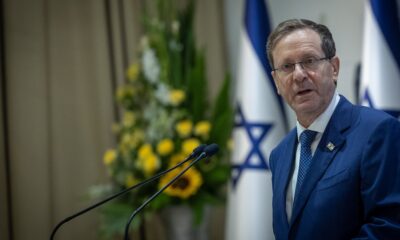
While South Africa frames itself as the southern African country that should play a role in bringing peace to the Middle East, it was in Zambia this week that Israeli President Isaac Herzog stated, “We want peace. We seek peace. There is nothing we want more than peace with our Palestinian neighbours.”
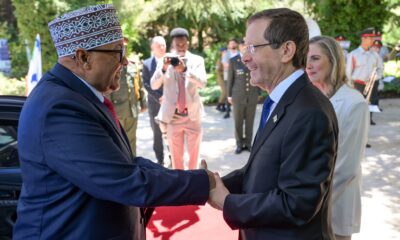
Herzog was on an official state visit to Zambia, where he and Zambian President Hakainde Hichilema discussed expanding collaboration between their two countries in agriculture, energy, health, water, education, research, tourism, and mining. They also discussed the “importance of fostering lasting peace and stability in the Middle East”, according to Hichilema, who expressed approval of the ceasefire and Zambia’s hope for resolution to the conflict.
The moment showed how South Africa has chosen to be left out in the cold, both in shaping the future of the Middle East and in improving the lives of its citizens.
Herzog also visited the Democratic Republic of the Congo (DRC) and met its president, Félix Tshisekedi, as well as other senior officials. While in Zambia, Herzog said, “We must meet the challenges of the hour, and do all we can to alleviate both man-made and natural humanitarian crises across Africa. This is our common moral duty.”
“South Africa’s absence from this itinerary is striking,” says Rolene Marks, spokesperson for the South African Zionist Federation. While African states are strengthening ties with global partners, “Pretoria has chosen an ideological posture that isolates rather than advances national interests. Israel is being welcomed across the continent, while South Africa is increasingly sidelined by its own choices.”
That sidelining was “unmistakable” at the Gaza Peace Summit held in Sharm el-Sheikh in October, “a major regional gathering on African soil”, notes Marks. “South Africa was excluded, a diplomatic cold shoulder that underscored how far Pretoria’s influence has slipped. At a moment when key actors were shaping regional discussions, South Africa had no seat at the table.”
Herzog is the first Israeli president to visit Zambia. The strengthening of bilateral ties between the two nations over the past two years included a state visit by Hichilema to Israel in August 2023, and the reopening of the Israeli embassy in Lusaka after 52 years, in August 2025.
Hichilema emphasised that “Zambia and Israel share longstanding diplomatic relations founded on mutual respect, shared values, and co-operation for the socio-economic advancement of our two nations.”
He said the reopening of the Israeli embassy in Zambia, and Herzog’s visit “underscore our shared commitment to deepening economic and technological partnerships. This visit also holds profound symbolic significance for many Zambians of the Christian faith, who rightly regard Israel as the land of the Bible.”
The two heads of state reaffirmed their commitment to advancing co-operation under a General Framework Agreement of Co-operation, signed in 2023. Zambia’s Ministry of Foreign Affairs announced that the visit provided “an opportunity to consolidate co-operation that directly contributes to Zambia’s transformation agenda”.
Describing the collaboration that has already taken place, Hichilema said, “From opening a new trauma and emergency unit in Livingstone Hospital to specialised irrigation training for Zambian farmers in the Negev desert, our two countries have achieved so much together in recent months. I look forward to many more years of development, co-operation, and partnership.
“May G-d bless the Republic of Zambia, the state of Israel, and the enduring friendship between our two nations,” said Hichilema. “To the people of Israel, you are most welcome in Zambia. We have some of the finest tourist destinations in the world, and we invite you to come and enjoy them.”
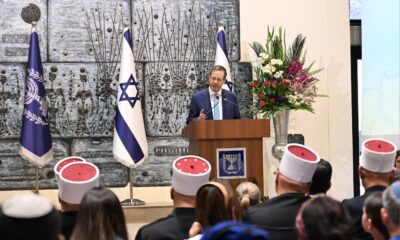
Herzog said Israel had “long believed in Africa”, and sees great importance in “expanding co-operation in the fields of trade, agriculture, innovation, science, and technology across Africa; addressing the common challenges of climate change, water, and food security; and broadening the circle of countries committed to working together for the good of all humanity.”
Speaking to the SA Jewish Report from the Israeli embassy in Zambia, where she is now based, Israeli Ambassador to Zambia, Ofra Farhi, says Herzog’s visit was “historic”. It was the first time that Israel’s new Wing of Zion aircraft – Israel’s “Air Force One” – landed on African soil.
“The presidents of the two countries are in constant contact and have a lot in common,” says Farhi. “Zambians know what is good for their country. Their foreign policy is smart and stable, including good relations with all nations.”
Since the embassy opened, there has been constant activity. This includes a thanksgiving service on 8 November celebrating the opening of the embassy, hosted by the Gospel Fellowship Ministries Church on the Copperbelt. Both Farhi and Hichilema addressed the large crowd, with Israeli and Zambian flags prominently displayed.
There, Hichilema said the event was “a celebration of the Zambia-Israel partnership that dates back to our country’s independence. We see G-d’s hand through what Israel has been doing for many years in critical fields such as education, health, trade, mining, and science, and technology. We will continue to celebrate this mutual partnership.”
He also called for peace in the Middle East. Farhi says she often hears him repeat the idea that stability between Israelis and Palestinians would lead to stability for all. She looks forward to seeing the relationship between Israel and Zambia continue to flourish.
Entrepreneur David Akinin, who is based in South Africa, does business in Zambia and was invited to join Hichilema on his state visit to Israel in 2023. He describes how, back then, the president said, “Let’s find the country that does the best security, the best technology, the best agriculture, and learn from them.” That state visit “opened a lot of doors in agriculture, healthcare, technology and security”, Akinin says.
Then came the opening of the Israeli embassy in Lusaka, “which was a huge step”, Akinin says, especially in today’s political climate of hostility towards Israel. “It re-centres the conversation to one of progress and peace, and that Israel is here to stay,” he says. Herzog’s visit is now “cementing the relationship for the long-term”.
Benji Shulman, the director of the Middle East Africa Research Institute, says, “Africans are some of the most supportive populations of Israel in the world, according to polls. Zambia and the DRC are some of Israel’s biggest allies in the region.”
The trip is important, he says, because both countries are southern African, and “it shows that Israel can operate in this region regardless of what South Africa thinks of its presence, given that South Africa is the major dominant country”.
For Marks, “the contrast is clear. African countries engaging with Israel are pursuing opportunity and progress, while South Africa, through its own decisions, is watching from the sidelines”.




Wenzile Mthiyane
November 13, 2025 at 8:12 pm
Saying SA is “Anti-Israel”, proves you are Anti-SA. The SA “government” for that matter is “Anti-genocide”. For you, no! Israel is the victim and
Disagreeing with Israel = Hating Israel.
We don’t hate Israel not even for it’s annoying propaganda.
I’ve always been inspired by Jewish people, but the current agrarian politics by the state, and throwing money at narrative, guys please.