





Featured Item
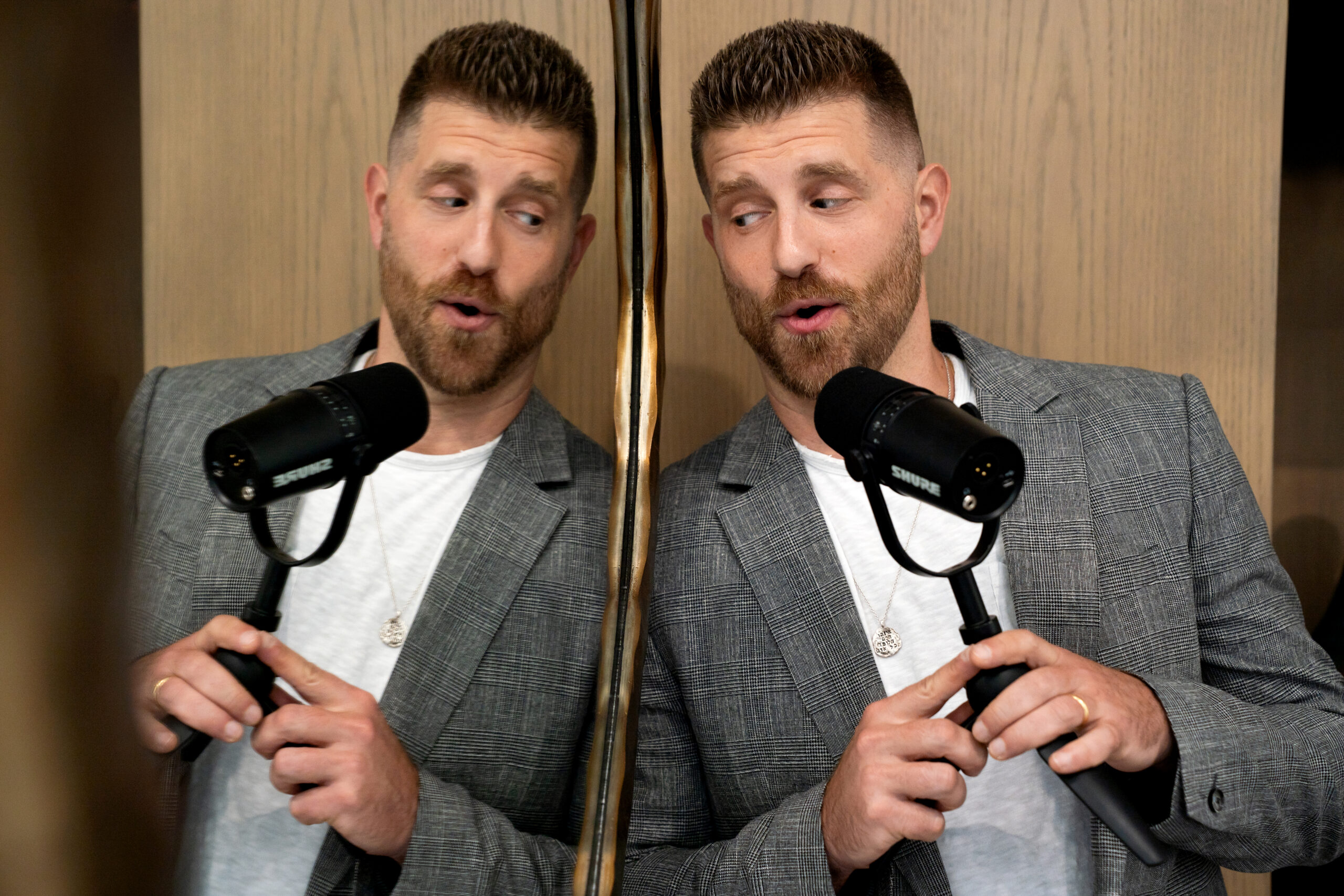
Many ways of Being Jewish with Jonah Platt

“Being Jewish is as compelling as it is complex and as beautiful as the people who embody it.”
This idea is at the heart of Being Jewish with Jonah Platt, the rapidly growing podcast hosted by American actor, singer, and advocate Jonah Platt, where conversations range from culture and comedy to antisemitism, identity, and belonging.
At a moment when headlines and social media increasingly shape discussions about Judaism, Platt’s approach feels deliberately human. Rather than debating issues from a distance, he invites guests to share personal stories, perspectives, and experiences, creating conversations that are thoughtful, honest, and often deeply emotional.
“I want to celebrate Jewish identity and empower and encourage, which is the core thesis of my advocacy, and also to help create the inclusive-looking Jewish community that I aspire to,” he says.
In the immediate aftermath of 7 October, Platt was very engaged as a Jewish advocate online, doing many videos and Q&As, and meeting with hostage families in real life and trying to put out fires in the media.
Although he has been advocating for Jews for some time, 7 October was “the generational occurrence of my lifetime”. And so the podcast was born.
“It felt natural to pour my time and energy into meeting this moment. After about six months, I had to ask myself whether this was becoming my new direction, whether I would continue pursuing acting as I had before, or fully commit to where my heart and energy were leading me. Ultimately, it wasn’t a difficult decision. I feel deeply fulfilled by this work and by the impact it’s having.”
It must be noted that Platt doesn’t concentrate only on Israel, politics, and antisemitism. He also focuses on the different issues and flavours that exist within Judaism.
“A lot is happening in the Orthodox world, which is beautiful, but that’s not the majority of Jews. That’s not the world that I generally come from, although I’m looking for ways to bring us all together under one umbrella more than ever,” he says. “And the shows that I was seeing were much more academic … more religious, and text-based … Or the people hosting those shows are educational professionals, or rabbis, or Jewish organisational professionals.”
His podcast has featured a diverse mix of entertainers, business leaders, rabbis, activists, and public figures. They include high-profile names such as businesswoman-philanthropist Sheryl Sandberg, actors Josh Gad and Marlee Matlin, and political voices like Josh Gottheimer, who spoke about antizionism within the Democratic Party. Other episodes have explored topics ranging from conversion and antizionist hate with screenwriter-singer Our Lady J, to entrepreneurship with business mogul Daniel Lubetzky, and antisemitism in Canada with entrepreneur Harley Finkelstein.
The podcast also highlights cultural voices, including Israeli chef Eyal Shani, TikTok creator Melinda Strauss, and Broadway composer Jason Robert Brown.
Through hosting such a variety of guests, Platt proves his belief that there is no one correct way to be Jewish.
“It continues to reinforce the importance of, and how lucky we are to be Jewish. What a beautiful tradition it is,” he says.
Platt says he is constantly learning from and being surprised by his guests.
“It’s very hard to find too many through lines that everybody falls under. Certainly, when I have really intelligent writers and thinkers whose job is to think and talk about this stuff, I’m always learning from those folks, like [writers] David Baddiel, Dara Horn, or Sarah Hurwitz. When I have people of that [calibre of] mind on, I think it’s amazing.
“Any time you have rabbis on the show, you’re going to learn something, whether that’s a religious tenet or how a spiritual leader is in this moment and how they’re responding to it. Something is interesting to learn there, about leadership or human behaviour or about the time we’re in.”
Recently, Platt hosted black, Christian, Republican influencer Xaviaer DuRousseau.
He’s had his own wife, father, and mother on the podcast, and was able to discuss things they’d never thought they would, such as antisemitism in Hollywood.
Platt intentionally creates a safe space not only on his podcast but in his advocacy in general. He says it allows for nuance when it comes to controversial or sensitive topics.
“Allowing for nuance is not that hard. I think we act like it is for some reason because the culture has become one that allows a lack of nuance, and has tacitly communicated to us that it’s fine to be polarised. It’s fine to speak hatefully to each other, like our politicians are doing … but we’re fully capable of not doing that. It’s almost like a mad smoke-and-mirrors thing. It’s like we’ve all got the muscle of [deciding], well, what if we just didn’t get really mad when we were talking and just disagreed and talked about it, and then had happy lives and went on our way without our blood pressure going up?
“We can all do that. And I can say from experience that it’s a muscle. The more you do it, the easier and easier it gets, to the point where you can’t believe everybody is not just doing it. It’s way better. It’s way easier. From the very beginning, my ethos was to create very intentionally a really safe space. The only way I am going to get these notable people to get really raw and honest with me and really speak their truth is if they trust me and know that I’m here not to judge anyone, but to listen.”
