


SA
Wannabe mayors debate how to fix Joburg

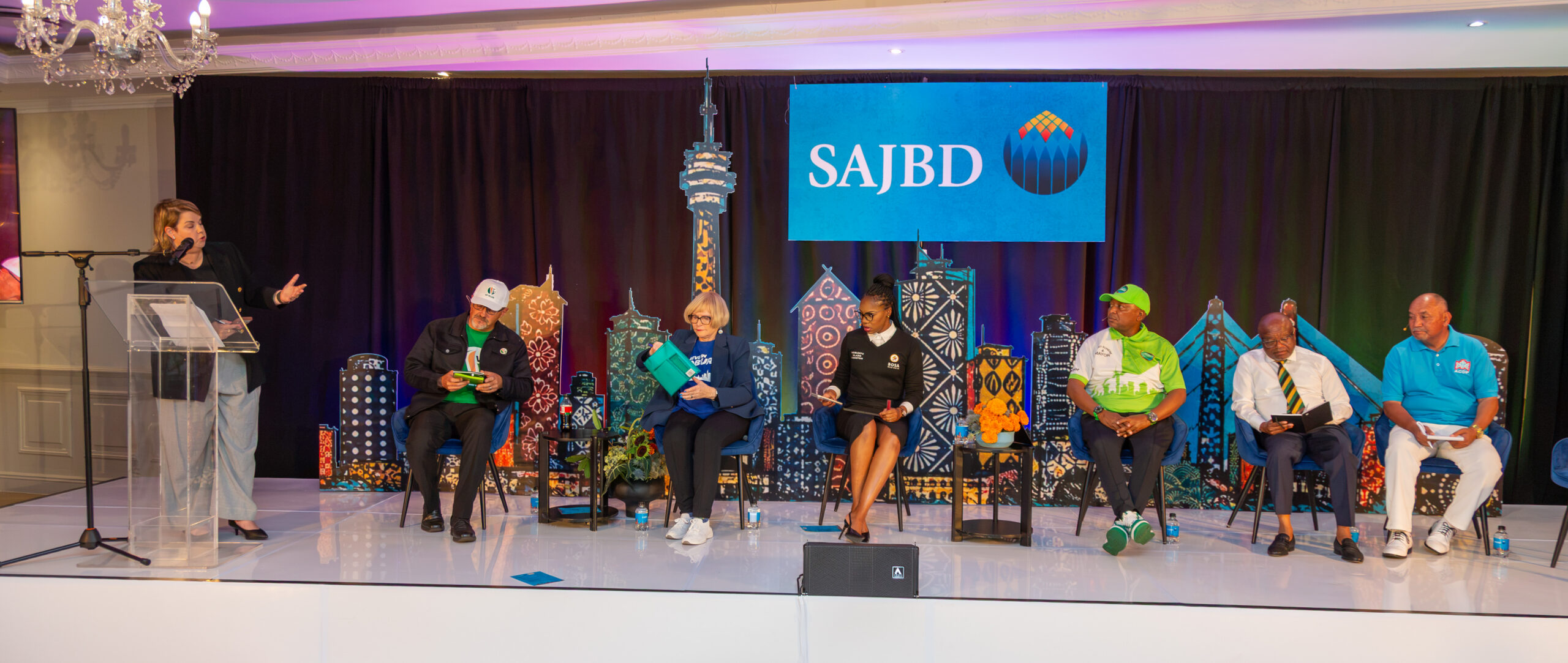
Johannesburg’s mounting problems took centre stage as mayoral hopefuls faced off on Sunday 11 October over how they would get the city working again.
Moderated by journalist Mandy Wiener, the South African Jewish Board of Deputies’ Great Mayoral Debate brought together candidates from the ANC, DA, Patriotic Alliance (PA), Build One South Africa (BOSA), Freedom Front (FF) Plus, and African Christian Democratic Party (ACDP). They were pressed on their plans to address Johannesburg’s most urgent issues and why voters should trust them to lead the city.
“For many Johannesburg residents, the challenges aren’t abstract,” said Wiener. “You feel them in many different ways, from potholes and traffic lights to refuse collection. But the bigger question is also one of governance: does the city, in fact, have the ability to manage its finances?”
“It is genuinely no exaggeration to say that this election is Joburg’s last chance to turn around,” said DA mayoral candidate and former party leader Helen Zille.
“Joburg is still South Africa’s most important city, but it is failing fast. I don’t have to summarise the collapse of infrastructure and the resulting collapse of basic services for you; you all know about that. But I want to make this point: It will be difficult enough to rescue Joburg now; in five years, I believe it will be too late,” said Zille.
Arguing that Johannesburg’s next government is likely to be a coalition, BOSA’s mayoral candidate, Nobuntu Hlazo-Webster said its success would depend on competent leadership, merit-based appointments, and a clear programme of action.
“We talk about big parties and small parties, but what we’re actually dealing with is old parties and new parties. Being a big party doesn’t necessarily make you a big solution,” she said. “If we are going to have coalitions that work, we have to make sure they are made up of competent people who appoint others on merit. Ultimately, the choice you’re making is between a party like BOSA and parties such as MK [the uMkhonto weSizwe Party] and the EFF [Economic Freedom Fighters]. From what we’ve seen of the leadership of those parties, including the incumbent party, appointments aren’t always made on merit and are often based on patronage.”
For ACDP mayoral candidate Bishop Dulton Adams, the challenge is not in the choice of mayor or 240 councillors; it’s whether they will value the people of Johannesburg.
“After 4 November, the city will not change immediately. The traffic lights will not suddenly be fixed, illegal dumping will not stop, the roads will not immediately be repaired, and the water problems will not disappear. What we need to do is mobilise communities. Communities are hurting, and people are saying there is no hope for Johannesburg,” he said.
“You cannot look to 10 MMCs [members of the mayoral committee] or a mayor alone to rebuild Johannesburg. You have to get the people involved in making the city work.
“If I become mayor of Johannesburg, I will ask my party to allow me to take the best people from across the different parties and appoint them as MMCs. Coalitions become unstable when you have parties with different ideologies and beliefs pulling in different directions,” Adams said.
There are some caveats for coalitions, though. FF Plus candidate Franco de Lange drew a hard line in the sand, saying, “MK, EFF never. Never, ever, ever. You don’t work with antisemitic parties. We have always supported Israel. It is the root of our religion, which comes out of the Holy Land.”
Zille, on the other hand, said there are definitely 490 000 people in Joburg who want to save the city, so they know what they need to do, which in her view is to vote for the DA.
“But if we don’t get the 50% plus one needed to implement our turnaround strategy, what happens will depend on the percentage we do get. If we get 40% or less, we are unlikely to be in government. The reason is that the ANC, EFF, MK, PA, ActionSA, Al Jama-ah, and a few other parties could get to 50% first. That would mean more of the same.
“If we get 45%, however, we could form a coalition with some of the parties with which we have successfully governed before.”
Incumbent Johannesburg Mayor Dada Morero, the ANC’s candidate, said that following Johannesburg’s amalgamation into a single municipality in 2000, the city had focused on addressing infrastructure backlogs and spatial inequalities, particularly in townships. He said this was followed by a 10-year infrastructure investment plan, which by 2015/2016 amounted to about R100 billion.
However, in 2016, those plans were reversed.
Following the turnaround strategy adopted on 6 March this year, the ANC made it clear that infrastructure investment had to be a priority. “In the 2026 budget, we increased capital expenditure to almost R9 billion and our maintenance allocation from about 5.6% to 8%, with the intention of investing in infrastructure and addressing Johannesburg’s challenges,” said Morero.
“Johannesburg cannot rebuild through government alone. We need partnerships with the private sector, such as in Midrand, where we are completing a 10-megalitre water reservoir with developers,” he said.
PA mayoral candidate and deputy president Kenny Kunene, Johannesburg’s MMC for Transport, identified financial sustainability as the city’s biggest challenge.
“We need to improve revenue collection. The city is bleeding money through illegal electricity and water connections, including at hijacked buildings and houses, and through water leakages,” he said.
Kunene called for Johannesburg’s financial model to be restructured, including ring-fencing revenue for entities such as the Johannesburg Roads Agency. He argued that the city needed to move beyond repeatedly repairing potholes and instead reconstruct ageing roads, bridges, and stormwater infrastructure, which he estimated would require R100 billion.
He also identified unfunded provincial mandates, including health services and libraries, as a drain on the city’s finances.