SA
HPCSA backs down on Mofokeng misconduct finding

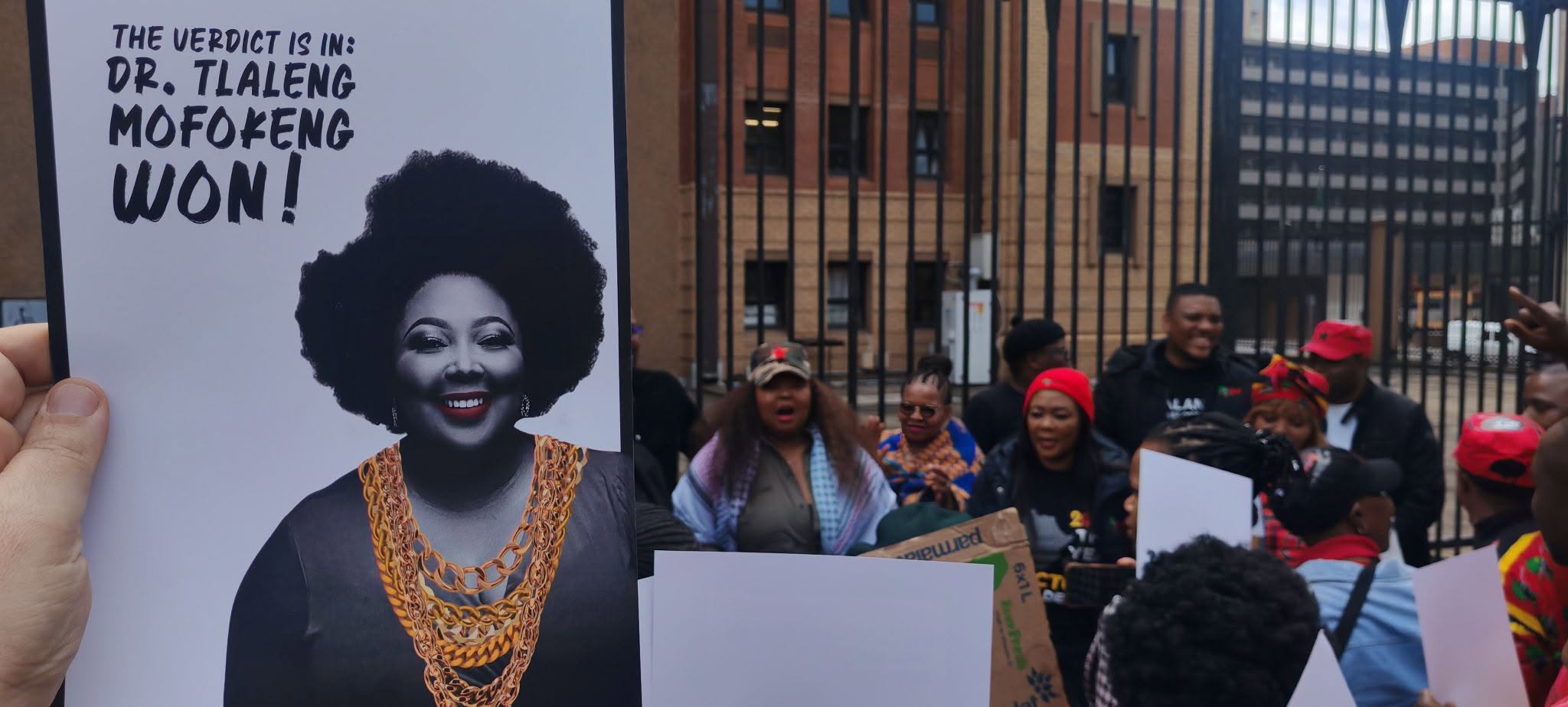
A finding of unprofessional conduct against controversial doctor and Economic Freedom Fighters (EFF) Johannesburg mayoral candidate Dr Tlaleng Mofokeng has been set aside by the High Court in Pretoria after the Health Professions Council of South Africa (HPCSA) refused to defend its own ruling.
The dramatic reversal followed intervention by the Department of International Relations and Cooperation (DIRCO), which advised the HPCSA that Mofokeng enjoyed immunity from “legal process” for words spoken or written while performing her duties as a United Nations (UN) Special Rapporteur. The HPCSA subsequently concluded that this immunity extended to its own professional-conduct proceedings and abandoned its opposition to Mofokeng’s High Court challenge.
The court order overturns the HPCSA’s finding that Mofokeng brought the medical profession into disrepute through inappropriate language on social media, as well as the R10 000 fine imposed on her.
However, the South African Zionist Federation (SAZF), whose complaint led to the disciplinary action, stressed that the application was unopposed and that the court was never asked to determine whether Mofokeng’s conduct met acceptable professional standards.
“Any other South African doctor who said that would have answered for it,” said SAZF national spokesperson Rolene Marks. “She held a UN title, a government department wrote a letter, and the finding vanished. Nobody has explained what changed.”
The controversy arose from inflammatory social media posts by Mofokeng while she was serving as the UN Special Rapporteur on the Right to Health.
In January 2025, in response to Israeli Prime Minister Benjamin Netanyahu and developments surrounding the Gaza ceasefire, Mofokeng posted: “F** you Netanyahu.”
When UN Watch executive director Hillel Neuer criticised the remark and called for UN action, Mofokeng responded, “You white man. Evil scum. Voetsek.”
The SAZF subsequently lodged a complaint with the HPCSA.
In September 2025, the First Medical and Dental Committee of Preliminary Inquiry found there was evidence of unprofessional conduct by Mofokeng and imposed a R10 000 fine for “bringing the profession into disrepute for using inappropriate language on social media”.
Mofokeng challenged the decision in the High Court, seeking to have both the finding and penalty reviewed and set aside.
But before the merits of that challenge could be tested in court, the HPCSA decided not to oppose her application.
At the heart of that decision was DIRCO’s intervention.
The HPCSA had approached the department for advice on whether Mofokeng enjoyed immunity arising from her role as a UN special rapporteur.
In a letter dated 2 June 2026, DIRCO director-general Zane Dangor advised the HPCSA that special rapporteurs were regarded as “experts on mission” under the Convention on the Privileges and Immunities of the UN and were immune from legal process for words spoken or written while performing their duties.
The HPCSA subsequently informed the SAZF that, taking the DIRCO letter, UN correspondence and its own legal advice into account, it had concluded that Mofokeng enjoyed immunity from “legal process” for words spoken or written while performing her UN duties.
It therefore resolved not to oppose Mofokeng’s High Court review and agreed to an order setting aside its earlier finding.
For the SAZF and UN Watch, however, this raises a fundamental question: whether Mofokeng’s social media insults could legitimately be considered words spoken or written in the performance of her mandate on the right to health.
Dina Rovner, legal adviser at UN Watch, said the organisation had written to UN Secretary-General António Guterres challenging the reliance on Mofokeng’s UN immunity to shield her from disciplinary proceedings.
“Special rapporteurs don’t have blanket immunity. They have functional immunity, which covers their words spoken or actions taken specifically in carrying out their mandate, and those limits are very clear in the UN Convention on Privileges and Immunities,” Rovner said.
She said the purpose of such immunity was to enable Mofokeng to carry out her mandate of promoting the right to physical and mental health.
“It is not a licence to insult or disparage people online, which of course has nothing to do with her mandate on the right to health.”
Rovner described allowing Mofokeng to avoid a disciplinary process on immunity grounds as “a complete abuse of her position which undermines the immunity convention”.
She also pointed to recent remarks by Guterres, who said certain special rapporteurs were “out of control”.
For Rovner, that explanation doesn’t remove the need for accountability.
“He needs to go further, he needs to reprimand or fire rapporteurs when they cross the line,” she said. “He should make it absolutely clear that immunity has limitations and won’t cover profane language and disparaging comments or insults on social media.”
Rovner also raised concerns about Mofokeng’s political involvement, saying UN special rapporteurs were required to serve as independent and impartial experts and signed an undertaking to that effect when taking office.
She said UN Watch had asked Guterres to address Mofokeng’s involvement with the EFF, both before she took up her UN position and, according to the organisation, while she was still serving as special rapporteur, arguing that this raised questions about the independence required of mandate holders.
In an opinion article published this week in BusinessDay, student activist Kamohelo Chauke questioned public-interest law centre Section27’s decision to represent Mofokeng, asking why an organisation traditionally associated with providing legal assistance to marginalised people was representing a politically connected professional seeking election as mayor of the country’s largest city.