





Lifestyle/Community
Darker Shade of Pale debunks Jewish migration myths

When Cape Town Jewish sociologist Deborah Posel began digging through her late father’s papers, she wasn’t looking for a book. She was simply sorting through “chaotically jumbled piles”, she says. What she found stopped her cold, a yellowing Union-Castle Line ticket dated 1902. Five names appeared: Mrs B. Posel, age 44, and four children.
Tucked with it was a British colonial permit issued in Libau on the Baltic coast (now known as Liepāja), allowing her to enter South Africa “on the grounds that her husband was already living in Longmarket Street, Cape Town”. That single discovery became the thread that pulled a hidden family history, and, ultimately, a larger communal one, into view.
“I grew up knowing almost nothing about my father’s father,” Posel recalls. “He was a Russian man from somewhere in Eastern Europe. He wasn’t a terribly nice man: embattled, difficult, not someone I enjoyed being around.” The family never spoke of him. “He and his family were kind of erased from our lives,” she says. “He was a blank.”
Posel realised she had stumbled upon a portal into a vanished world. Still, it would be a decade before she was ready to enter it. “I found it in 2012, but I was working on other things,” she says.
By the time lockdown came, Posel was back in Cape Town, frustrated with another writing project. “Lockdown was this strange interregnum where the rules didn’t apply,” she laughs. “I decided I felt like writing this book.
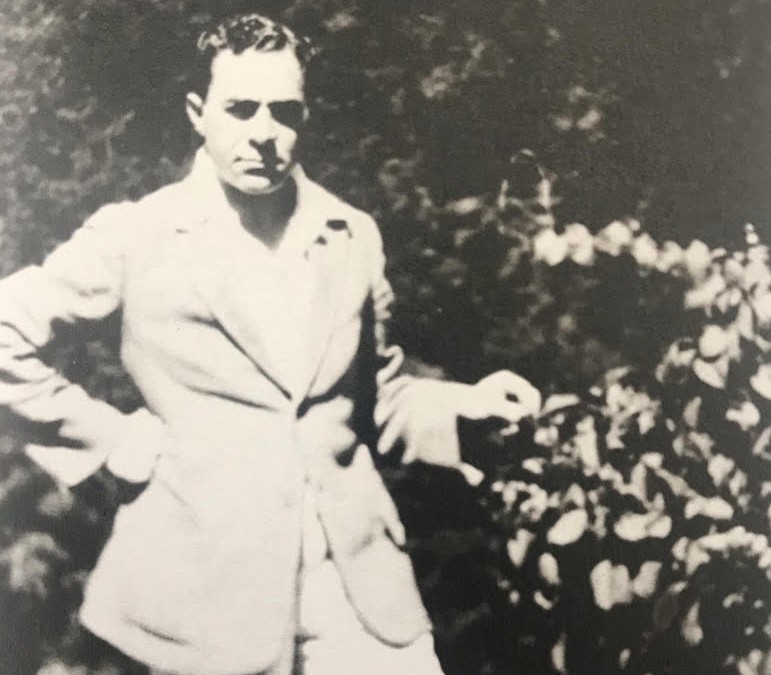
“I knew it was going to be a massive challenge. I had no diaries, no letters, no memoirs. Just a handful of photographs, and most of the people who could have helped me were dead. So, it became a kind of historical detective work.”
Darker Shade of Pale: Shtetl to Colony, published by Wits University Press, is the result of that detective story: a hybrid of family memoir and social history that re-examines the Jewish migration from Eastern Europe to South Africa around the turn of the 20th century.
Very quickly, Posel’s search became more than personal. “I realised that I’m not the only one with relatives who came from that part of the world but know almost nothing about that history,” she says. What she found was that much of what South African Jews think they know about their origins is clouded by mythology.
The first myth lies in the image of the shtetl itself, the archetypal “Fiddler on the Roof” village where everyone was poor but united, oppressed but spirited. “That’s really not what it was like at all,” she says. “Even the smallest shtetl was very status-conscious, hierarchical, very inegalitarian.”
The second myth is what she calls “the myth of Jewish exceptionalism”: the tidy rags-to-riches tale in which penniless immigrants make fortunes within a generation. “Of course, it’s not entirely untrue,” Posel say. “There were some exceptional individuals. But they were the minority. Most Jews who arrived here had mixed fortunes.”
Her grandfather was one of the ordinary ones. “He never made terribly much of his life. He was completely undistinguished, mediocre actually. And he was ashamed of that.” That shame, she believes, silenced many similar stories.
In tracing where her family first lived, Posel found another paradox in District Six, the neighbourhood that became home to many Eastern European Jews in early-twentieth-century Cape Town. “I call it a shtetl that wasn’t,” she says. “In some ways it was familiar, you could speak Yiddish, there were mikvahs and synagogues. But in other ways, it was absolutely alien. It was an extraordinary mix of people from all over Africa, Europe, and Asia.
“For people used to being a majority in their own shtetl, suddenly finding themselves a small minority in this dense, multiracial community must have been bewildering,” she says.
Her own great-grandparents, she discovered, barely assimilated. “My great-grandmother lived in District Six for 26 years, but when her husband died, she couldn’t sign her name in English, she marked it with a cross,” Posel says. “That’s about the most extreme statement of a failure to assimilate.” Others adapted more quickly: a great-uncle who moved to Johannesburg learned English, naturalised, did business across ethnic lines, and prospered.
Posel also traces the economy of ambition that shaped the early Jewish community. “Many who achieved wealth began as travelling salesmen,” she notes. “It was lonely, stressful, and dangerous work. Some were killed on the road. Success didn’t come easily, and it often came at social and familial cost.”
Across generations, she observes a familiar migrant rhythm. “The first generation works its butts off in commerce or any job available so the second generation can be educated and enter the professions.” She cites a study by Divane Nzima, a contemporary Zimbabwean sociologist, showing how modern migrants feel they can’t return home without visible success. “That’s exactly the same dynamic that shaped early Jewish immigrants.”
In colonial South Africa, Jewish newcomers confronted another reality: the ambiguous privilege of whiteness. Jews eventually won legal acceptance as white, but as what officials sometimes called “dark white”. “It was a precarious and ambiguous status,” Posel says.
That fragile positioning, she argues, shaped how Jewish migrants understood assimilation and how they internalised pride and prejudice.
Darker Shade of Pale began as a historical mystery, it ended as an emotional reckoning. “I started out not liking my grandfather very much,” Posel admits. “But the more I learned about him, the more empathy I felt.”
By the book’s end, that empathy had deepened into grief. “I felt sad for him,” she says. “For what he had to go through, and for how little of him I had understood when he was alive.”
Posel hopes her book opens two windows.
First, she wants readers to see that “there are many ways of being Jewish”. Eastern European immigrants argued fiercely about what Jewish life should look like. “They were always debating identity, observance, aspiration,” she says. “Even when communal authorities claim to speak for all Jews, it’s really an assertion of power. There’s no essential Jew.”
Second, she wants to lift the lid on the deeper Eastern European roots of South African Jewry. “Yes, many South African Jews have Holocaust survivors in their lineage,” she says, “but a much bigger portion trace their origins to the late nineteenth-century east, long before the war.”
Along the way, she even clears up an enduring piece of folklore, the claim that many Jews “meant to go to America but ended up in South Africa by mistake”. The Union-Castle Line, run by shipping magnate Sir Donald Currie, actively recruited Eastern European Jews, arranging passage from the Pale of Settlement through Libau and London to Cape Town.
Darker Shade of Pale ends where it began: with the man she once couldn’t bear to talk to. The final chapter is written as a series of questions she wishes she could ask her grandfather, the ones that family silence made impossible.
“It’s a way of acknowledging that some stories can’t be completed,” Posel says. “But also that silence itself is part of the inheritance.”
- Darker Shade of Pale: Shtetl to Colony by Deborah Posel is published by Wits University Press. It is available at Love Books, Exclusive Books, and online.
