Featured Item
No kids, no regrets

In a community where having children is largely expected, choosing not to be fruitful and multiply often comes with some level of judgement, regardless of broader societal shifts. Yet these women, confident in their decision not to have children, prove that motherhood isn’t inevitable but a personal choice.
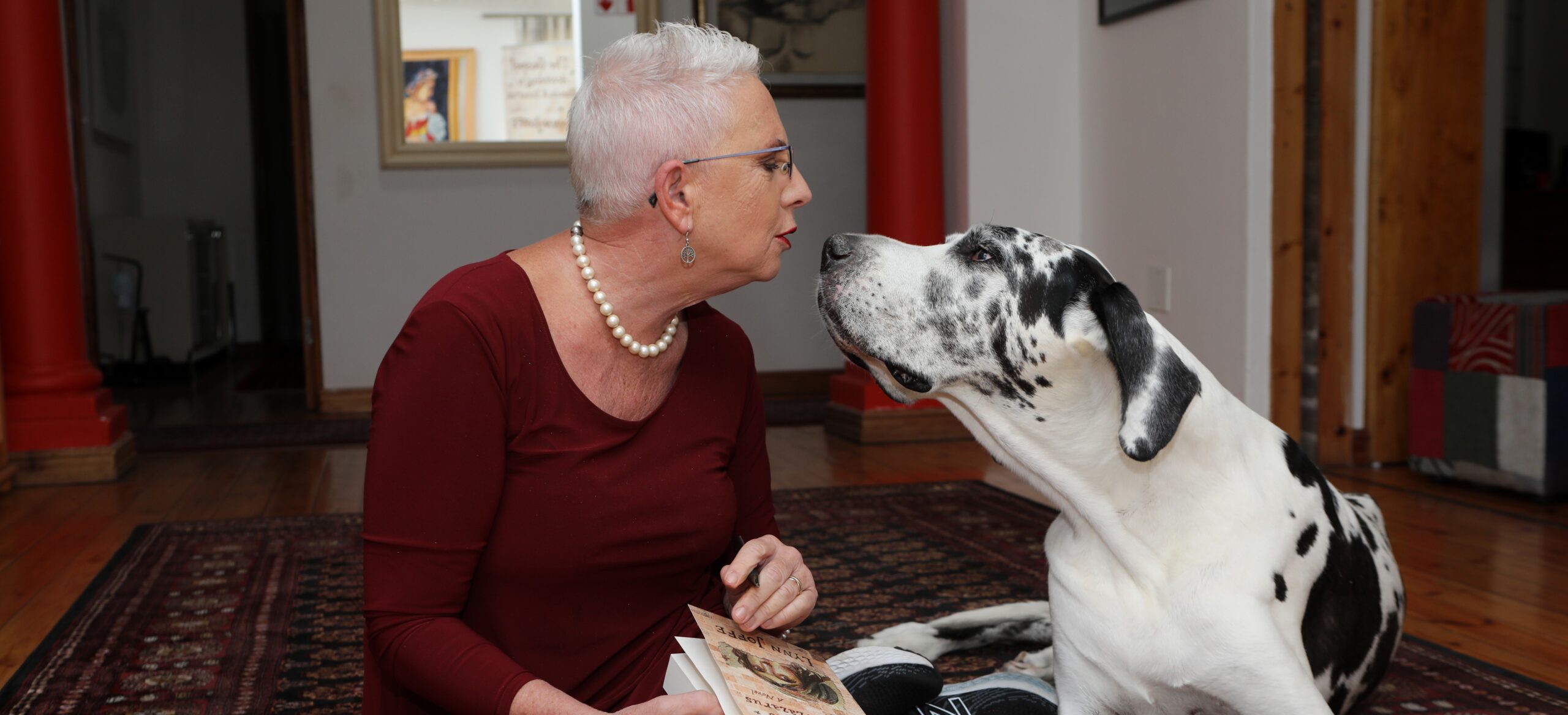
“Perhaps my own unlived life in my early twenties was more important than the theoretical life of an unborn baby,” says Lynn Joffe, the author and chief executive of Creatrix, a multicultural storytelling agency. “I’ve always thought of childbearing like a man would. Lovely idea, but someone else can do it. The idea of birthing a live human being never honestly attracted me. I never felt the urge.”
Married young to “an orthodox boy from the ’burbs who just wanted me to have babies”, Joffe experienced a life-threatening ectopic pregnancy at the age of 20. Her husband’s desire for babies endured, and she eventually ran out of excuses. While her grandmother used to joke that she’d have a “B.A.B.Y before she had a B.A”, Joffe says that she got the Bachelor of Arts first and never got round to having the B.A.B.Y. “I’m totally indifferent towards social, religious, or cultural pressures,” she says.
“One Shabbat evening, walking a few disrespectful steps behind my husband and the rabbi, I saw my whole future before me in the pinkening dusk,” she recalls. “No greater identity than as wife and mother. It was untenable. I’d never have gotten out alive if I’d had a kid. I’d never been particularly maternal, and neither my mother nor my grandmother were stellar role models. I still had so much I wanted to do, to discover, and to become.”
The couple ultimately divorced, and Joffe forged her own path. Now in her 60s, Joffe says that throughout her 30s and 40s, she couldn’t bear the sight or sound of babies, joking that they all looked like Winston Churchill. She also witnessed two births, an experience she calls “a powerful form of birth control”. When she entered her second and enduring marriage, she reconsidered her parenting stance for “two nanoseconds” before dismissing the idea.
“By the time I reached my 50s, I’d quite simply run out of eggs, to paraphrase Lauren Bacall,” she says. “You don’t miss what you never had – or wanted. Not having had my own human children has literally freed me to love all children. At all ages. Even babies. When I transitioned into menopause, children’s songs and stories just started pouring out of me. My stories are my pregnancies, and my books are my children.”
Joffe challenges the negative connotations inherent in the word “childless”. “What about ‘childmore?’” she asks. “I can frolic with a doggie or coddle a kitty – my pets are my children – or draw upon my own inner child with any kid that crosses my karma. I don’t have to have birthed them to connect with their little lives.”
Joffe also sees her staff, many of whom have become directors under her guidance, as “symbolic and real substitutes for having my own children”. Passionate about empowering others to reach their potential, she’s deeply fulfilled by this mode of nurturing. “And you can give them back when you’re done!”
“I often heard, ‘When you meet the right guy, you’ll change your mind’,” says Stacey-Lee Bolon, discussing her decision to not have children. “I think the people closest to me initially struggled to understand how I could make such a big a decision that was so against the norm.” Yet, she says her confidence in her decision meant that people’s judgements didn’t phase her.
Bolon, the co-founder and chief executive of technology start-up, STiiNT-iT, never grew up dreaming of children. “It just seemed like something women did, not a real choice,” she says. “After I finished university and started working, I found myself immersed in the thrill of business.” She simultaneously juggled a full-time job at a bank with helping to launch a start-up, and serving on the council of a leading South African university.
“I saw the difference in how women’s careers and passions typically evolved, and that reinforced my thinking about whether I really wanted children.” She says her work as chief executive of STiiNT-iT is a luxury that would be very difficult to pursue if she became a parent.
“When I met my husband, he’d never dated someone who said they didn’t want kids, so it was a bit of a mindset shift for him,” she admits. “Once I explained my perspective, he got it.” Married for almost six years now, the two have never second guessed their decision not to have children. “We are fortunate to have a wonderful marriage and the freedom of time to invest in each other and in our passions,” Bolon says.
“You can be fulfilled with or without kids,” she says, “but the decision needs to be made with a true and realistic understanding of the dedication it takes to raise children and run a family.”
Psychologist Zelma Opland says that she never wanted to have children, a decision that had a lot to do with her own upbringing. “My mother grew up in Paris during World War II, and was in hiding in the French countryside. She was very damaged by the Holocaust. As a result, she found it difficult to parent. So, even though I had a very caring dad, I was scared of being anything like my mother if I parented, and of the possibility of hearing her voice come out my mouth.”
Opland says she’s never second guessed or felt judged for her decision to not have children. “I just knew it would be wrong for me to have children and risk not being a good parent, which I think is unusual. I’ve always had lots of furry children, and that’s been an absolute joy. I think it’s about listening to what one feels.” Yet, she stresses the importance of acknowledging that each person’s situation is different, especially when it comes to managing societal expectations and pressures.