





Featured Item
From brisket to beyond: the journey of Jewish delis

There are few food traditions as deeply woven into Jewish life as the delicatessen. Step inside one, and you’re met with the aroma of bread fresh from the oven, the distinct tang of a half-pickle, pastrami piled high on rye, and cheesecakes cooling on the counter. In South Africa, these delis are more than eateries, they are living snapshots of history. Every bite embodies the story of Jewish immigrants who carried secret family recipes on ships across oceans, preserved and shared from one generation to the next.
With heaping sandwiches, jars of herring, brisket cooked low and slow, trays of rugelach and blintzes, the Jewish deli has always been more than just a place to eat. It’s where Eastern European heritage meets New York swagger, and where South African Jewish families – from Cape Town to Johannesburg – found ways to both preserve and reinvent tradition.
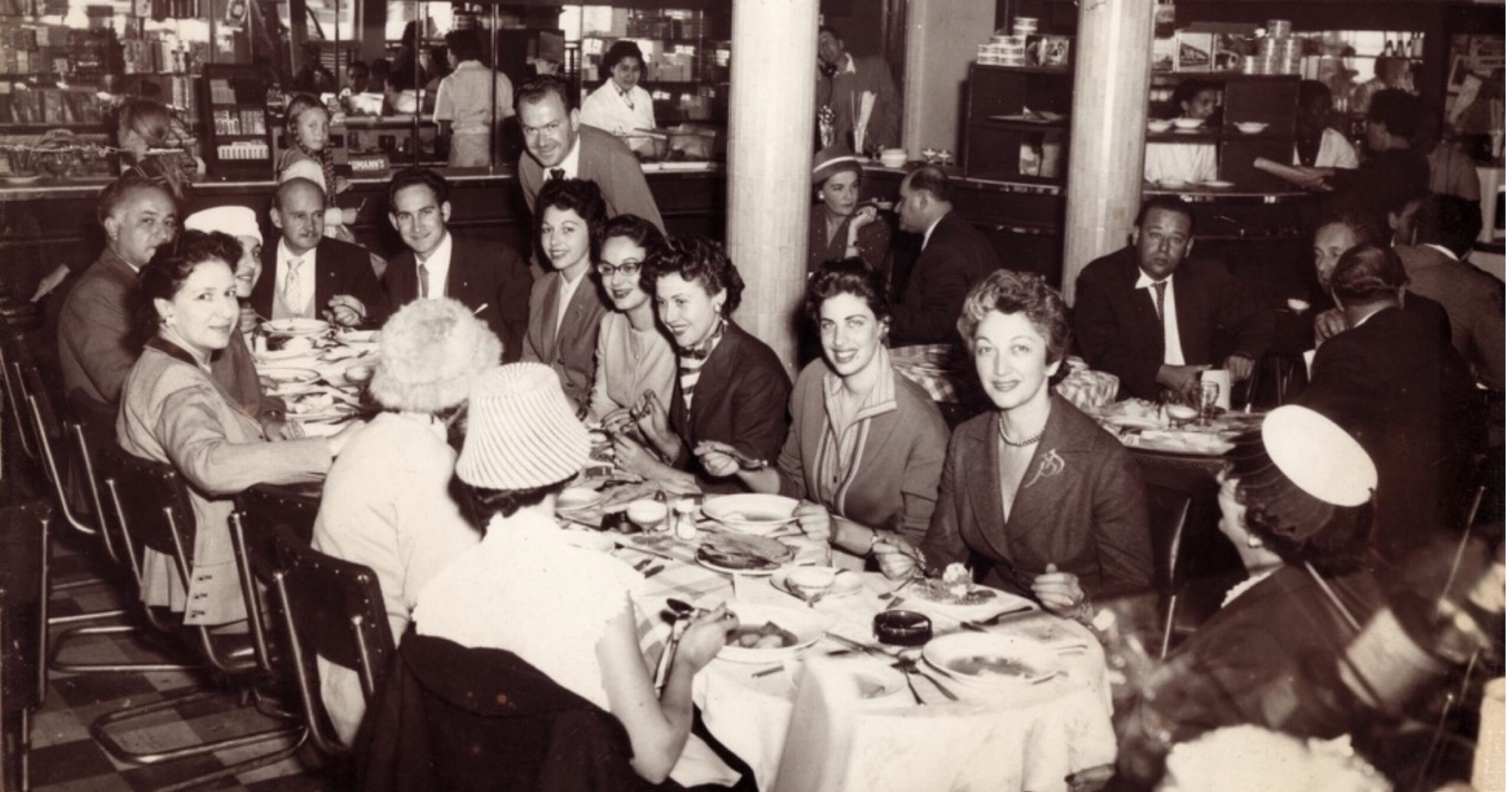
In Cape Town, that story begins in Mill Street, Gardens. It was here that many Jewish immigrants settled, creating a vibrant hub of synagogues, schools, and shops that anchored communal life. Among those shops was Milly’s, opened in 1940 by Simon and Judith Milner. Serving up all the classics, Milly’s quickly became more than a deli, it was a taste of home in a new country, and soon a beloved institution in the heart of Jewish Cape Town.
Longtime patrons remember it fondly. One recalls, “I remember visiting Mr Milner as a kid, and the smell of that barrel of pickles. We didn’t know how good we had it, that deli was incredible!” Another says, “They had the best minestrone soup, so well-priced, and their cakes were heavenly.” A third adds, “My father-in-law loved Milly’s. Every Saturday after he’d finish at the barbershop, he’d stop off at Milly’s. Besides the best bagels in town, they had an unforgettable corned beef on rye, and chicken pies to die for.”
Their only son, Les, inherited not only the shop but a deep passion for food and innovation. He expanded the business, establishing a production factory that specialised in frozen meals and pickled cucumbers, constantly modernising the deli. Travelling abroad, he brought back European bakers and introduced new cakes and pastries long before “food trends” became a phrase. Today, his son Bernard Milner, the third generation in the family business, reflects on his father’s impact, saying, “He revolutionised the deli business in South Africa. He was way ahead of his time.”
After running a wholesale bagelry in London supplying Harrods and Waitrose, Les and his wife, Dot, returned to Cape Town in 1990 and opened New York Bagels in Sea Point. “You need passion, guts, and a love for food,” says Dot, 95, now living in Hermanus. “Les and I made a great team. We dreamed big, worked hard, and built something that still carries our passion today.”
By the late 1990s, New York Bagels had expanded into a 250-seat sit-down deli. But as supermarket chains like Woolworths and Checkers improved their bakery and deli offerings, old-school Jewish delis struggled.
“Where we had once been the only place for bagels and rye bread, now the big stores were doing it too,” Milner says. In 2014, they relocated to Harrington Street in District Six – the cultural fringe of Cape Town – where the shop still thrives today.
“Long live the bagel and everything it means to us,” Milner says. “Hand-rolled, fermented, boiled, and baked the old-fashioned way. Not all bagels are created equal – it’s a hard product to make well. Our food reflects our Jewish heritage, but it also carries subtle flavours of Cape cuisine, thanks to the chosen family who’ve worked alongside us in the kitchen over decades. We wouldn’t have it any other way,” he says.
Today, New York Bagels caters to a younger, more diverse crowd. While chopped liver and gefilte fish no longer fly off the shelves, the team focuses on fewer, higher-quality items: pastrami; rare roast beef; smoked salmon trout; baked cheesecake; and, of course, its famous bagels, available in 13 flavour varieties.
And while Cape Town was feasting at Milly’s, Johannesburg had its own deli darling: Feigel’s. Founded in 1968 by Lithuanian immigrant Feigel Hadassin and her children, Patsy and Jos, the deli first opened in Rockey Street, Yeoville, then the beating heart of Jewish Johannesburg. Feigel’s quickly became a go-to spot for blintzes, latkes, and boiled bagels. Over the decades, as the community shifted northwards, so did Feigel’s, eventually settling in Glenhazel, where it remains a beloved kosher institution.
If Milly’s and Feigel’s laid the foundations, Kleinsky’s represents the fresh face of South African deli culture. Founded in 2014 in Sea Point by brothers Adam and Joel Klein, Kleinsky’s blends inspiration from New York and Montreal delis with recipes from their own bubbe. The brothers have since opened new locations, including in Birdhaven in Johannesburg and even a branch in London’s Mayfair, exporting South African deli culture abroad. Kleinsky’s is as much about atmosphere as food – with its hip interiors, artisanal coffee, and a menu that nods to tradition while appealing to a new generation of foodies.
What is it about Jewish deli food that resonates so widely? Part of the answer lies in nostalgia. Dishes like chopped herring and kneidlach soup evoke grandparents’ kitchens and holiday tables. For others, they carry the cosmopolitan charm of New York all the while offering the simple comfort of honest, hearty food. Bagels, once a distinctly Jewish specialty, are now mainstream, much like pizza before them. “Most people don’t even know bagels were originally Jewish,” Milner notes. “They’ve become part of the global food language.”
Yet despite shifting tastes and supermarket competition, the Jewish deli continues to thrive, evolving with the times while staying true to its roots. From Simon and Judith Milner’s humble shop on Mill Street to the bustling counters of New York Bagels on Harrington Street, from Feigel’s in Johannesburg to the contemporary buzz of Kleinsky’s, each generation has found ways to innovate – new pastries, locations, and audiences. A delicate balance of reinvention and tradition keeps the story alive: recipes preserved, flavours refreshed, and a sense of community nurtured, proving that heritage isn’t static – it grows, adapts, and endures.



Janet Simon
October 5, 2025 at 2:33 pm
In 1978, my husbands Grandmother, Sadie Goldreich opened the Deli Birnam Food Centre. For 30 years this deli supplied all the best Jewish foods, from chopped liver and herring to Gefilte fish and Chicken Soup. The pre Yomtov queues were legendary and the name still lives on the memory of thousands of Jews in South Africa and all over the world