Voices
Competitive fasting

Every year, immediately after Yom Kippur, somebody asks me how my fast was. It’s a surprisingly complicated question. Do they want a spiritual answer? A medical report? Or should I provide a chronological account of when I first developed a headache and began hallucinating about steaming oats and cinnamon?
This year, I am approaching the fast with pharmaceutical technology on my side. My brother brought me some very fancy slow-release caffeine capsules from Israel. Apparently, you take one before the fast and, at precisely the time you would normally wake up and reach for coffee, the caffeine is released into your system. I don’t fully understand how it knows what time I wake up, but it came from Israel, so I assume that both G-d and military technology are involved.
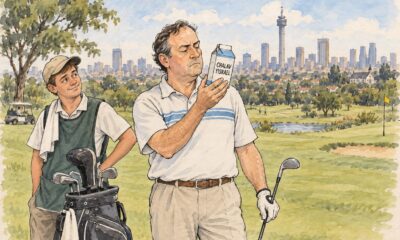
The capsule promises to change my life. It certainly beats the caffeine suppositories I used to take. Those were just weird, particularly when you bumped into other guys heading towards the bathroom for what was, technically, a quick coffee break.
It says something about us that even on the holiest and most spiritually demanding day of the Jewish year, we are looking for hacks.
We want to fast, but without the headache. We want to repent, but preferably without being too uncomfortable. We want the full Yom Kippur experience, provided there is pharmaceutical assistance, a synagogue that is climate controlled, and a rabbi that says exactly what we want to hear.
And then, once the fast is over, the comparisons begin. “My fast was so easy.” “I wasn’t hungry at all.” “I could have gone another three hours.” There is always one person who says that. Nobody likes them. Nobody has ever liked them.
The rest of us are pale, dehydrated, and emotionally attached to a slice of honey cake, while they announce that they feel “surprisingly energised”. They are the same people who finish a marathon and say, “I could easily have done another 10km.” Perhaps they could have. The important thing is that nobody asked them to.
Then comes the competitive suffering. “My head started pounding during Mussaf.” “You were lucky. I stopped producing saliva before Kol Nidrei.” “By Mincha, I could hear colours.”
Soon, people are exchanging fasting symptoms with the intensity of war veterans comparing injuries. Every headache is documented. Every wave of nausea is given its own chapter. One person claims to have briefly left their body somewhere around Unetaneh Tokef but returned because they remembered there was cheesecake at home.
Within minutes, the conversation has divided into two camps: those who believe an easy fast is evidence of spiritual superiority, and those who regard extreme physical collapse as proof that they did Yom Kippur properly.
Neither group asks the more relevant question. Not “How was your fast?” But “How was your Yom Kippur?”
The problem is that the first question is easy to answer. The second might take the rest of the year.
I know when I became thirsty. I know when the headache started. I know exactly which point in the service caused me to wonder whether toothpaste might technically qualify as a beverage. What I don’t always know is whether the day changed anything.
Perhaps that is because we like achievements we can measure. We completed the fast. We made it to shul. We stood when we were meant to stand, sat when we were allowed to sit, and avoided checking how many pages remained more often than was strictly necessary.
By nightfall, Yom Kippur was “done”.
But Yom Kippur may not be something we “do”. And maybe the best answer to “How was your fast?” is, “Ask my family in a week”, and, “Ask me in a year.”
Maybe then we will know whether it worked.
And if it didn’t, I will at least be alert enough to hear their feedback. Assuming the capsule knows when to wake me up.