OpEds

Our sons pay price for endless war

I had a brother, once. For the first twenty-one years of my life, I had a brother, and then he was gone. That was 44 years ago. So, I say “once”, because I have lived twice as long without a brother than I did with one.
You know the feeling amputees have – that they still have their limbs? The phantom-limb sensation? Well, I guess I have a phantom-brother sensation. Sometimes I believe I can feel his presence, observing me. I think it’s pretty common when a family member commits suicide. It’s not only because his death was so sudden and unexpected. It’s also because it’s so hard for your psyche to come to terms with it.
With suicide, there’s a whole additional dimension. In addition to the shock and the grief, the anguish of suicide survivors – that’s what I call us siblings and family members of people who have committed suicide – is augmented by a sense of shame and stigma, accompanied by an almost crippling angst regarding what people think of us. Even today, although so much has been done to remove the stigma of suicide, like an obstinate stain that won’t wash out, the stigma never really disappears. It lingers. And then there’s the nagging self-doubt, a creeping fear that flows through you that if he had the capacity to take his own life, maybe we also have a propensity within us to commit suicide. Even today, after so long, when I hear people joke about suicide, my heart reflexively clenches and for a moment, all those feelings flow through my body again. It’s a trauma from which you never really get over.
It took me a long time to come to terms with his suicide. I would find myself choosing to shroud the circumstances of his death in uncertainty. I was in denial, even though deep inside, I knew. I struggled with myself, trying to understand what drove him to it. Until one day, it dawned on me that from the place where he was, choosing to end his life on his terms was the logical decision to make. At long last, I understood that he couldn’t see a life beyond the way it was for him then, and he had no desire to live the way he saw the rest of his life would be. I found that I now respected his decision. After that acceptance, a calm came over me, and I felt comfortable with his choice.
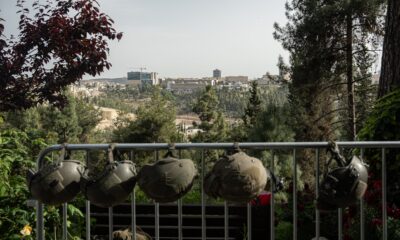
In the past two weeks, four soldiers have chosen to take their own lives – two regular soldiers and two reservists. Just imagining the despair that they must have felt, unable to contemplate their lives beyond the hell that they had become, just wanting it to stop, is deeply saddening and sobering. And for the reservists, even the thought that they had wives and children couldn’t make them step back from the dark abyss they saw before them. That’s how deep their despondence had sunk. Since 7 October 2023, 28 soldiers have taken their own lives. It’s the highest number of deaths by suicide in the Israel Defense Forces (IDF) in decades.
We are now entering the 22nd month of war, and as soldiers are going back into Gaza for the fourth and fifth time, as has been witnessed over the past two weeks, the phenomenon of suicide is growing. Meanwhile, pushed by this government, probably the worst government imaginable to lead us to war, to fight until “total victory”, the IDF seems not to care. Rather than addressing the precarious mental state of our soldiers, it chooses to dismiss callously their emotional distress and deny the significance of the disturbing statistics of suicide in the army.
Only two days ago, legendary army and defence reporter, Carmella Menashe, spoke of a soldier who attempted suicide twice after refusing to enter Gaza. He even put the barrel of his rifle into his mouth, saying, “I can’t anymore, I’m not going in.” The response of the company commander was to send him into Gaza anyway, threatening to punish him by docking a day off his next furlough home. This combat soldier, who had already served in Gaza during several previous rounds of fighting, had repeatedly requested to see a mental-health officer (kaban), and was denied. While inside, his mental state deteriorated further, and he again requested to be evacuated, repeatedly asking to see an army psychiatrist, and was again denied. His comrades saw what their commander refused to acknowledge, that the soldier was in crisis, and the entire unit demanded, in solidarity with their friend, to be taken out of Gaza.
“If you’re not letting him out, we’re all leaving,” they said. They tried to explain to the battalion commander that the soldier was in danger, that he was in a state of mental collapse and at risk of shooting himself. The battalion commander refused to listen, cut them off, and threatened to charge them with mutiny. Eventually, thanks to his comrades’ intervention, the soldier was referred to a mental-health officer, who, after hearing the full story, recommended that the soldiers be taken out of the field for a recovery period. The soldier in question was immediately released from the IDF on the grounds of mental health.
These soldiers are our sons! When we send them to the army to do their duty, many of whom willingly volunteer for combat service, we trust that the army will take care of them. The IDF is entrusted with their welfare. We expect to get them back whole and of sound mind. If cavalier disregard for the welfare of our sons, as displayed in this incident, is indicative of the army’s attitude to the emotional welfare of our children – and we have no evidence to prove otherwise – the IDF has a big problem.
It has broken the bond of trust between parents and the army, which will make parents think twice about encouraging their children to do combat service. This will undermine the army’s ability to fulfil its operational needs in the future. And, if this is the state of morale in the ranks of our fighting units, we can forget about “total victory” and defeating Hamas, no matter how long we prolong the war, with catchy, prosaic operational names like “Gideon’s Chariots”.
As a suicide survivor, I wouldn’t wish anyone else the emotional torture and anguish of losing a family member to suicide.
This war has gone on for too long. It has passed it sell-by date in terms of achieving any further effective goals. This government, half of which has never served in the army and half of which has no intention of sending their sons to serve, has shown that it doesn’t see our soldiers as sons, but as pawns in its politically motivated war games.
It needs to end now, for the sake of the mental health of our children, for all our sakes, and for the sake of the emotional strength, the indispensable morale, and resolve of our soldiers.
- Zimbabwean-born Paul Mirbach moved to Cape Town at 16, and matriculated at Herzlia School. In 1982, he made aliya to and still live on Kibbutz Tuval, which was then a new kibbutz he helped build. He served in the Israel Defense Forces, participating in the first Lebanon War.