





OpEds
Ripples of hope in troubled times

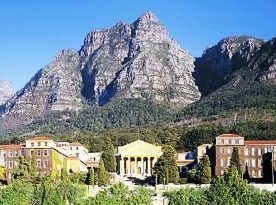
On 6 June 1966, United States Senator Robert Kennedy delivered a stirring address at the University of Cape Town (UCT).
“Each time a man stands up for an ideal, or acts to improve the lot of others, or strikes out against injustice, he sends forth a tiny ripple of hope,” Kennedy declared. “Crossing each other from a million different centres of energy and daring, those ripples build a current that can sweep down the mightiest walls of oppression and resistance.”
Known formally as the Day of Affirmation speech, but colloquially as the Ripple of Hope address, it shone a searing light on the apartheid system, which would continue to plague South Africa for almost three more decades until Nelson Mandela’s historic election in 1994.
The two years since 7 October 2023 have been a nightmare for the Jewish world. Unquestionably, they have been the most traumatic period in the history of the Jewish people since the Holocaust, manifesting in different ways in different countries, yet collectively effecting an all-pervasive and unprecedented tsunami of anti-Jewish racism.
For Jewish Australians, who number 120 000, including a healthy infusion of South African immigrants who began making their presence felt in the aftermath of Sharpeville, the maelstrom began 48 hours after 7 October. That night, before Israel had sent its troops into Gaza, a mob gathered outside the iconic Sydney Opera House and gave vent to threatening jeers, yelling “Where’s the Jews?” and other menacing taunts.
It marked the beginning of a descent into a vortex of antisemitism which has prompted observers abroad to ask, “What happened to your country?”
In the two years since that moment, Australian Jewry has been subjected to a sustained wave of assaults, from doxing and cancelling hundreds of artists, racist graffiti at Jewish institutions and abuse in the street to incendiary speeches, fire-bombings, and arson attacks on synagogues, politicians’ offices, private homes, and cars. Overt anti-Jewish racism became normalised.
Compounding this troubling scenario is that Australia is one of the most multicultural nations in the world, and until moments ago, was one of the most successful. It’s the only country, apart from Israel, whose army has been led by a Jewish general, Sir John Monash, after whom a university, a suburb, and schools are named. There have been two Jewish governors-general – Sir Isaac Isaacs and Sir Zelman Cowen – while Jews have been in a position to contribute massively across the breadth of civil society, establishing think-tanks, serving as Supreme Court judges, holding senior government portfolios, winning gold at the Olympics.
The community feels overwhelmed and abandoned by longtime colleagues. It’s concerned about what tomorrow holds for its children and grandchildren. The fact that Australia has been home to more Holocaust survivors per capita than any other nation outside Israel exacerbates the concern.
Yet Australia 2025 isn’t Germany 1933. Though the community feels under siege, it’s resilient, strong, unbowed, and continues to be proudly Jewish. Though the situation is top of mind at every Shabbat table – or perhaps because it is – increased numbers attend synagogue and communal events; significant support is forthcoming from leaders of other faiths; and the vast majority of Australians are reportedly supportive of the community and condemn antisemitism.
Jews across the globe inhabit a world today which is infinitely more distressing than the one we faced on 6 October 2023. And South Africa’s Jewish community knows this all too well, having endured and overcome its own unique challenges. Whether in Sydney, Johannesburg, Cape Town, or New York, the same toxin permeates our shared reality.
It’s tempting to despair. Yet history teaches us that despair isn’t what we do. Those who came before us withstood pogroms and prejudice yet still contributed immeasurably to the societies they called home.
Which brings us back to Senator Robert Kennedy’s profound words at UCT. His message was that while hatred seeks to intimidate, self-belief, dignity, and courage create ripples that no prejudice can silence. And when those ripples intersect – between Australians and South Africans, between people of goodwill who find the strength to speak – they build a current which has the momentum and force to overcome bigotry and reaffirm our shared humanity.
The challenge is not only to endure, but to lead. And in so doing, to send out our own ripples of hope.
- Vic Alhadeff is an ex-South African and former chief executive of the NSW Jewish Board of Deputies in Sydney, Australia.




yitzchak
October 10, 2025 at 12:24 pm
my understanding of the Rietbok crash in 1967 was the same aircraft that the Robert Kennedy entourage had hired during his visit to RSA in 1966.
Sirhan Sirhan his assassin is still incarcerated